

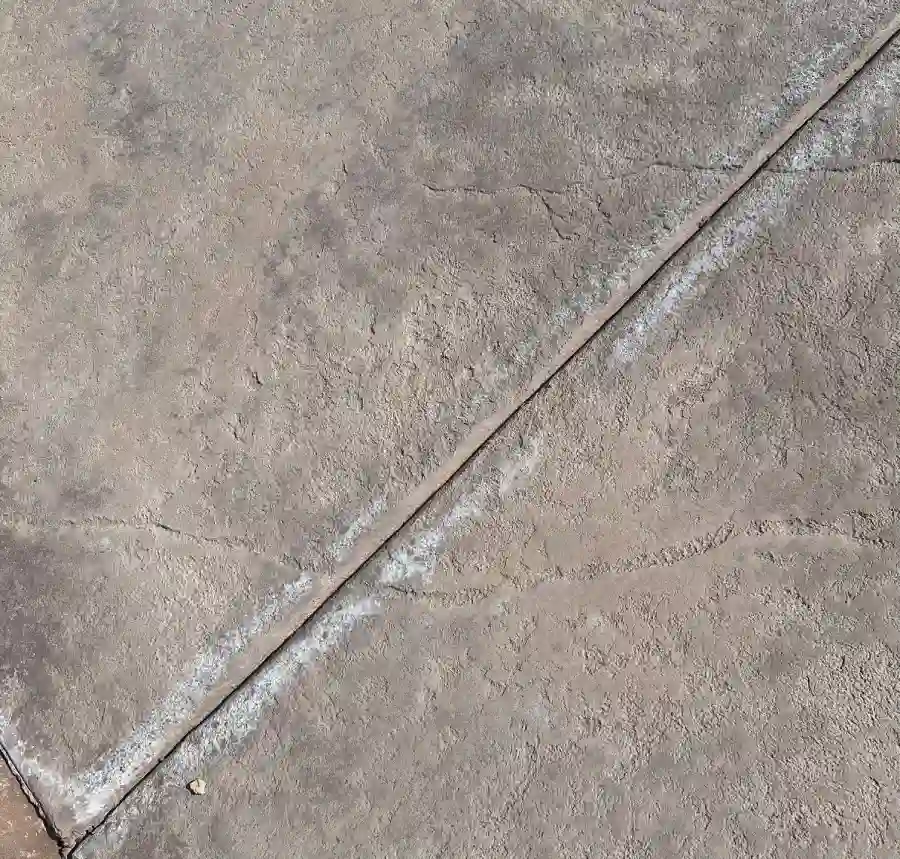
Remove the ugly white efflorescence that appears on concrete or brick after rain or flooding with hypochlorous acid (HOCl).
Efflorescence arises when water-soluble salts migrate to the surface of porous materials like concrete, brick, or stucco. This happens when moisture moves through the material and carries dissolved salts towards the surface. For homeowners, this powdery buildup can leave concrete and masonry looking stained or poorly maintained.
What Causes the White Powder on Concrete?
That white powder on concrete may become more noticeable when surfaces are repeatedly exposed to moisture. As the water travels through concrete, brick, or stucco, it can pick up naturally occurring salts. When the moisture reaches the surface and evaporates, those salts are left behind.
White salt deposits on concrete can become more noticeable where drainage is poor, gutters leak, or water pools near the surface. These conditions can keep the material damp for longer and make repeated buildup more likely.
Efflorescence is mainly a surface issue, but repeated buildup can be frustrating. Understanding where the moisture is coming from can help reduce the chance of it returning after cleaning.
Why Use HOCl for Efflorescence Removal?
Scrubbing with bleach or other types of chemicals is always a tedious and unhealthy choice. HOCl offers a safe and efficient remedy for this issue.
A low-cost and environmentally friendly option, HOCl can help restore concrete surfaces without harsh chemicals. Hypochlorous acid is a natural cleaning agent that breaks down organic and inorganic material. When applied to efflorescence, it penetrates surface pores and helps dissolve the salt deposits.
How to Clean Efflorescence Without Damaging Concrete
If you are wondering how to clean efflorescence, start by removing any loose deposits with a dry brush. This can make the remaining buildup easier to treat.
Concrete efflorescence removal does not need to involve aggressive scrubbing or harsh cleaners. In fact, excessive force may damage some surfaces. It is also a good idea to test any product on a small, less visible area first.
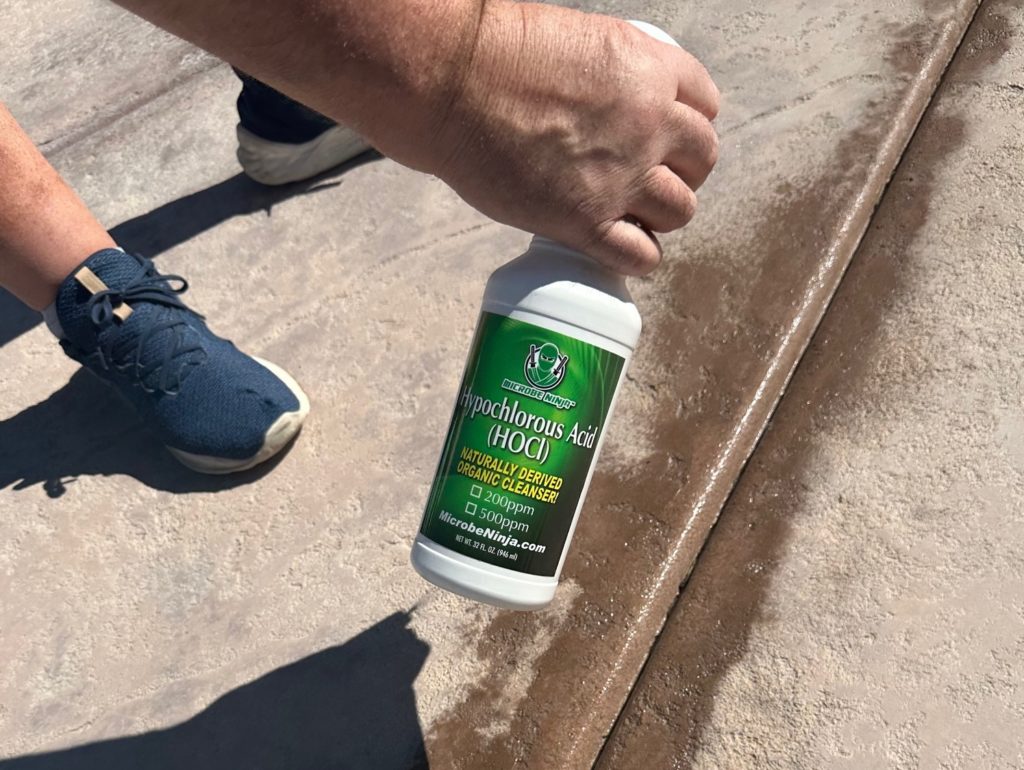
Choose an efflorescence remover for concrete that is easy to apply. It should also rinse away easily. HOCl offers a straightforward approach and can be sprayed directly onto affected areas before light scrubbing and rinsing.
Follow these steps to safely remove efflorescence with HOCl
- Prepare a solution of 500ppm HOCl by diluting it with water. A ratio of 1 part HOCl to 3 parts water.
- Spray the HOCl solution directly onto the affected areas of concrete using a spray bottle or sponge.
- Leave the solution on the surface for several minutes so it can break down the efflorescence.
- Scrub the surface with a brush or sponge to help loosen any remaining deposits if necessary.
- Rinse the area thoroughly with clean water to remove any residue left behind by the HOCl solution.
- Repeat as necessary until the efflorescence is completely removed.
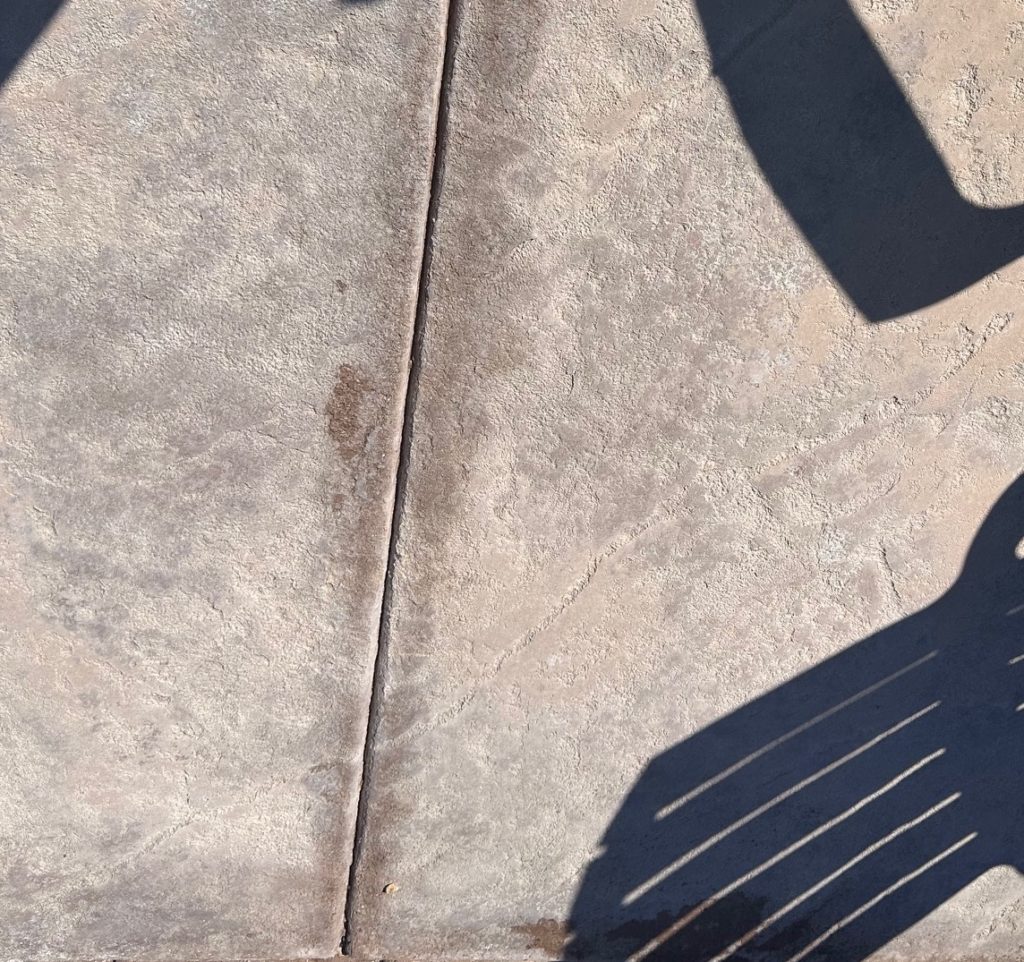
By using HOCl to erase efflorescence, you can safely restore the appearance of concrete and brick surfaces without chemicals.
A Practical HOCl Solution for Homes and Businesses
Regular use of HOCl can help reduce future efflorescence buildup and keep surfaces looking clean year-round.
For many homeowners, the aim is simple: remove white deposits from concrete without making the job harder than it needs to be. HOCl offers a straightforward option for routine cleaning and maintenance.
So next time you notice efflorescence forming on your concrete surfaces, reach for a bottle of Microbe Ninja HOCl. Watch as those unsightly white stains disappear before your eyes!
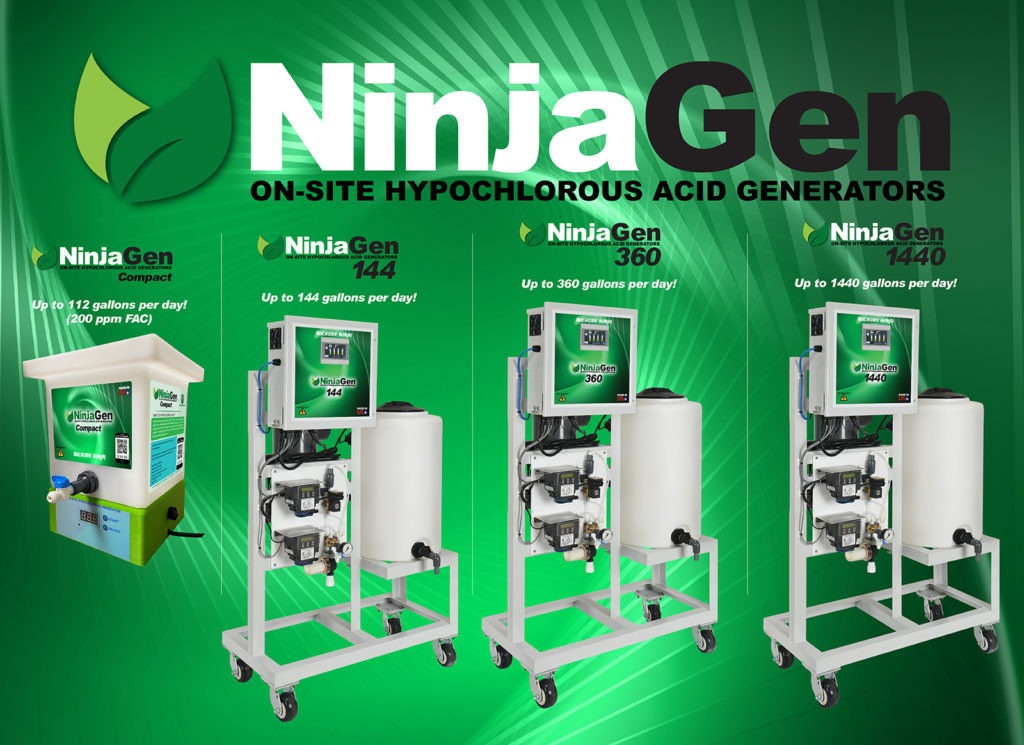
Concrete and pool contractors, as well as masons, can benefit from using an HOCl generator. Producing HOCl for pennies per gallon gives contractors a cost-effective way to remove efflorescence from concrete and brick.
Read more about Microb Ninja’s NinjaGen Onsite Hypochlorous Acid Generators.
Comments are closed