

HOCl is a food-safe, residue-free antimicrobial that inactivates avian influenza virus at 100–200 ppm and costs less than 3 cents per gallon to generate on-site
- A 100 ppm HOCl solution kills AIV on contact. A 200 ppm solution handles indirect spray applications within 10 minutes.
- HOCl requires no PPE, leaves no residue, and animals can re-enter treated spaces immediately after application.
- On-site generation via NinjaGen costs less than 3 cents per gallon, compared to ongoing bleach and quat purchasing.
- HOCl degrades within 30 days into water and trace chloride, with no synthetic stabilizers or toxic byproducts.
- HOCl can be applied via direct surface spray, fogging systems, irrigation lines, and boot bath stations — covering every biosecurity touchpoint on a poultry farm.
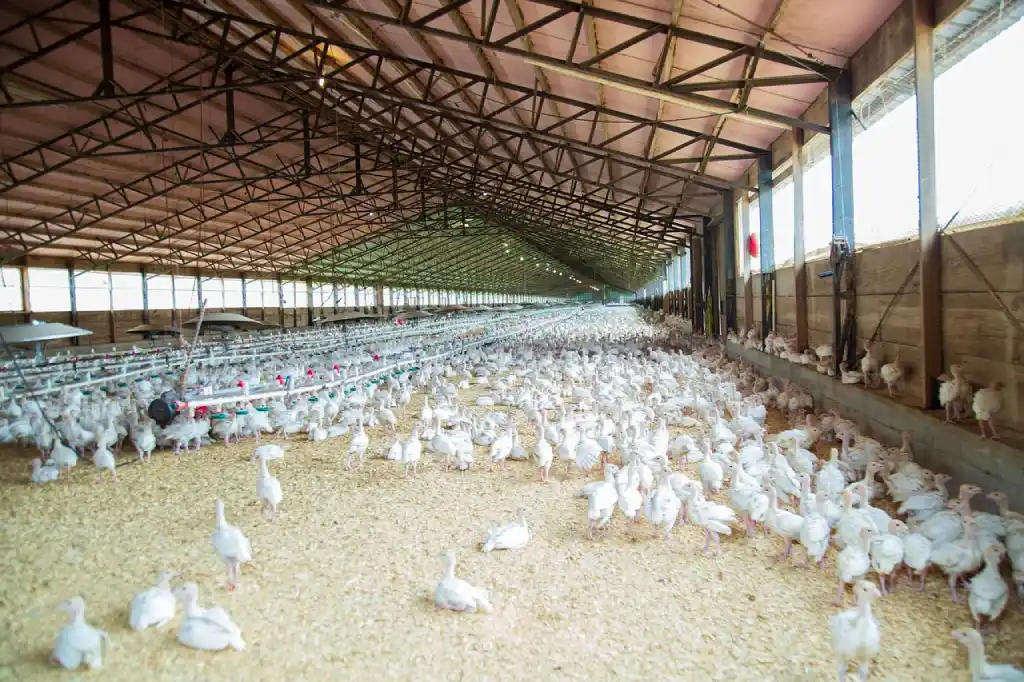
Bird flu doesn’t politely wait until it is a convenient time to hit your flock. If you’re managing poultry, you already know how devastatingly fast H5N1 can move through your barn. And you know how little margin you have before a single outbreak redefines your entire season.
Traditional disinfectants like bleach and quats have been the go-to for decades. But they come with a cost beyond the price tag: residue on surfaces, mandatory PPE, ventilation requirements, and chemical burnout on your equipment. There’s a better option, and it’s one your own immune system already uses.
What is Hypochlorous Acid and Why Is It Essential for Bird Flu?
Hypochlorous acid (HOCl) is the same oxidizing molecule your white blood cells produce to destroy pathogens. It’s generated through electrolysis of a simple salt-and-water solution with a small amount of organic vinegar. The result is a powerful antimicrobial that’s food-safe, residue-free, and requires no PPE to apply.
For poultry farmers and agricultural operations facing hypochlorous acid bird flu threats, HOCl isn’t a fringe alternative. It’s a peer-reviewed, USDA-recognized biosecurity tool.
Does Hypochlorous Acid Truly Kill Bird Flu?
Yes — and the data is specific.
Research on HOCl against avian influenza viruses (AIV) shows clear, concentration-dependent results:
- A 100 ppm solution inactivated AIV immediately upon direct spray contact
- A 50 ppm solution required a minimum of 3 minutes of contact time for full inactivation
- In indirect spray applications, a 200 ppm solution inactivated AIV within 10 minutes of contact
- 50 ppm and 100 ppm concentrations were less effective in indirect spray scenarios
For growers and farmers asking, “Does hypochlorous acid kill bird flu?” the answer is yes — at the right concentration and contact time.
How to Choose the Right PPM for Your Operation?
Concentration selection matters. For direct surface disinfection in poultry housing, 200 ppm HOCl is your most reliable choice. It meets the contact-time window for indirect applications and gives you a buffer when surface conditions aren’t ideal.
Microbe Ninja’s ready-to-use HOCl solutions are available at 200, 500, and 1,000 ppm. Verify output concentration with chlorine test strips before any high-stakes application.
On-Site Generation: The Agricultural Standard
Pre-purchased HOCl has a 30-day shelf life before degradation. That degradation is actually a trust signal — it means no synthetic stabilizers, no toxic byproducts, just water and trace chloride returning to the environment.
For continuous biosecurity, on-site generation solves the shelf-life problem entirely. The NinjaGen Compact generates fresh 200 ppm HOCl on demand from salt, water, and organic vinegar. Operational cost runs less than 3 cents per gallon — a meaningful difference when you’re treating a large poultry barn daily.
Larger operations can scale to the NinjaGen 144, 360, or 1440, each designed for higher daily volume without sacrificing HOCl quality or electrode longevity. NinjaGen units use titanium-grade components with a reverse-polarity cell design that extends electrode life significantly.
HoC1 Bird Flu Application Methods for Farms
HOCl spray for bird flu applications works across multiple formats:
- Direct surface spray on housing, feeders, waterers, and equipment
- Fogging and dry mist with the NebulaOne for full-room pathogen knockdown between flocks
- Irrigation line treatment to reduce biofilm and waterborne pathogen load
- Boot and wheel bath stations at entry points for biosecurity checkpoints
No rinsing is required after application. No residue remains on treated surfaces or produce. Animals can re-enter treated spaces immediately after fogging.
Where to Access HOCl for Bird Flu Biosecurity
Microbe Ninja offers both ready-to-use HOCl solutions and on-site NinjaGen generators for agricultural operations. If you’re managing a poultry operation and evaluating hypochlorous acid for H5N1 biosecurity, the NinjaGen Compact 90-day free trial is the lowest-friction entry point.
Shop the Microbe Ninja Store for immediate access to bottled solutions, or schedule a consultation to match a generator to your operation’s daily volume.
When H5N1 pressure is high, and your current disinfectant protocol is costing you time, money, and chemical exposure, hypochlorous acid bird flu defense gives you a science-backed path forward that your flock, your team, and your bottom line can all support.
HOCl and Bird Flu: Questions Poultry Farmers Ask First
Is hypochlorous acid safe around poultry?
Yes. HOCl is non-toxic to animals and humans at standard application concentrations. It leaves no residue and requires no PPE during application.
What concentration of HOCl kills H5N1?
Peer-reviewed data supports 100–200 ppm for direct AIV inactivation. Use 200 ppm for indirect spray applications.
How does HOCl compare to quats for avian influenza?
Quats leave a residue film and require contact times of 5–10 minutes. HOCl achieves comparable or superior kill rates with no residue and full food-contact safety.
Can I generate HOCl on my farm?
Yes. The NinjaGen Compact generates continuous 200 ppm HOCl on-site. A 90-day free trial is available for qualified operations.
Does HOCl work in fogging systems?
Yes. HOCl is compatible with cold foggers, ULV machines, and the NebulaOne dry mist system for whole-room disinfection.
How do I verify HOCl concentration?
Use standard chlorine test strips immediately after generation or before application. This confirms active ppm output and validates your biosecurity protocol.
Comments are closed