

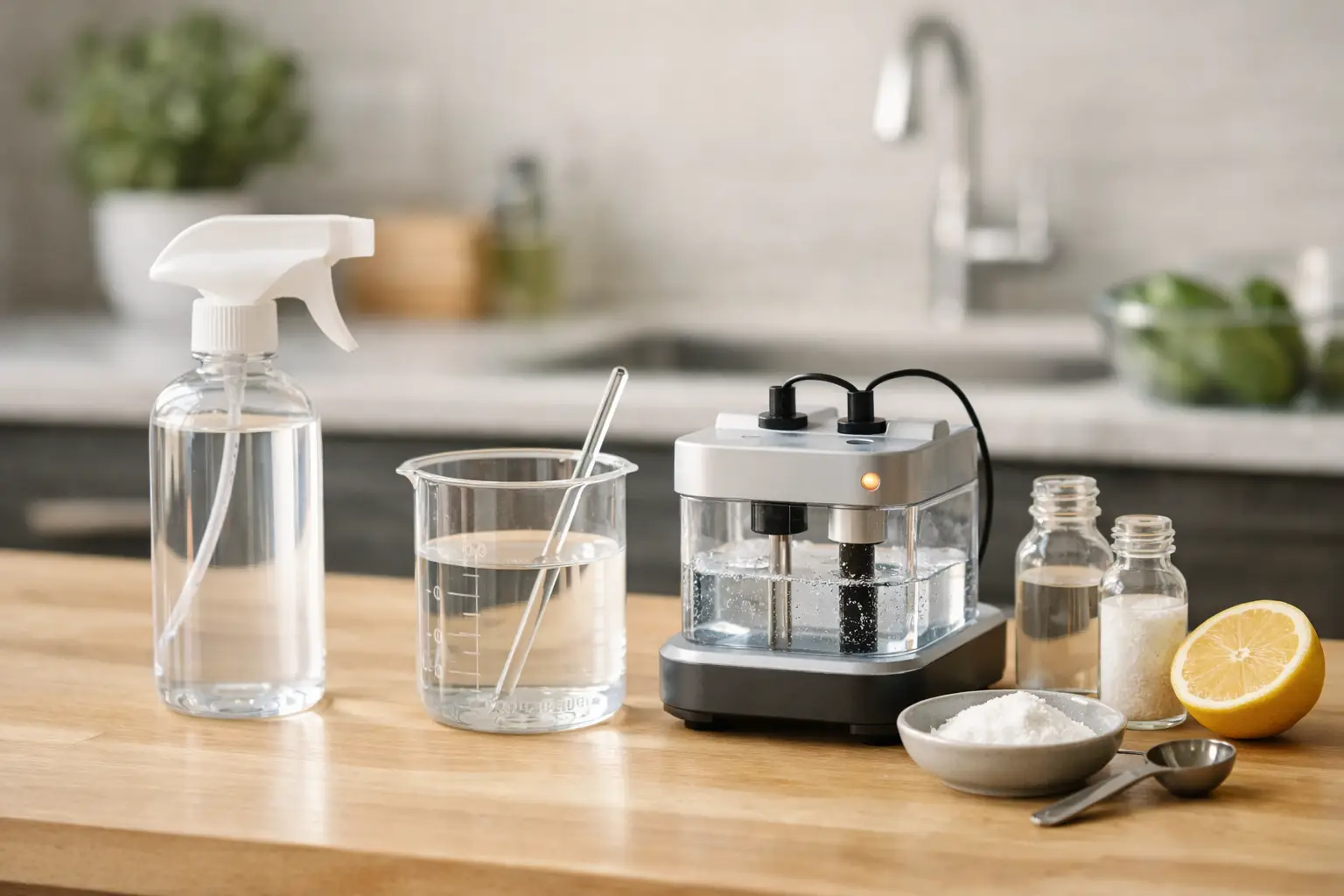
A spray bottle of hypochlorous acid can replace a surprising number of harsh products under the sink – but only when the solution is made and maintained correctly. If you are researching how to make hypochlorous acid at home, the safest answer is not to experiment with household bleach or random online recipes. It is to use a purpose-built electrolyzed water generator, follow its formula exactly, and verify the solution before putting it to work.
Hypochlorous acid, commonly called HOCl, is a powerful sanitizer created when saltwater is electrolyzed under controlled conditions. Your body also produces hypochlorous acid as part of its immune response. In a properly made cleaning solution, it can offer effective odor control and surface sanitation without the heavy fumes, sticky residues, or storage concerns associated with many conventional chemical products.
What It Takes to Make Hypochlorous Acid at Home
At its simplest, on-site HOCl generation uses water, salt, electricity, and an acidifying ingredient to produce a solution containing hypochlorous acid. The simplicity is real, but so is the chemistry. The quality of the final product depends on water quality, ingredient purity, electrical settings, pH, concentration, and storage.
That is why a dedicated generator is the practical route for homes, small businesses, and facilities. The equipment controls electrolysis far more consistently than improvised setups. Systems such as Microbe Ninja’s NinjaGen line are designed to produce pH-neutral HOCl at defined concentrations, including 200, 500, and 1,000 ppm, using water, salt, and a small amount of organic vinegar.
The goal is not merely to create a liquid that smells like chlorine. The goal is to create a stable, usable solution with the intended free available chlorine level and pH. Those measurements determine whether you have a mild cleaning solution, a stronger sanitation solution, or a batch that needs adjustment or replacement.
Never Substitute Bleach for a Generator
Bleach is sodium hypochlorite, not the same thing as a properly generated hypochlorous acid solution. Mixing bleach with vinegar or any acid can release dangerous chlorine gas. Do not attempt to acidify bleach, and do not combine bleach with ammonia, alcohol, peroxide, or other cleaners.
A purpose-built HOCl generator uses electrolysis and controlled inputs. It is a different process from mixing products in a bucket. Treat that distinction as a safety requirement, not a technical detail.
How to Make Hypochlorous Acid at Home With a Generator
Start with a generator built specifically for HOCl production and use only the ingredients and measurements specified by its manufacturer. Home units are designed to take the guesswork out of batch-making, but they still depend on disciplined use.
First, begin with a clean generator reservoir and clean bottles. Residue from soaps, disinfectants, fragrances, or old cleaning chemicals can affect the batch and create unnecessary uncertainty. Rinse equipment thoroughly before making a new solution.
Next, add the recommended water. Many generators work best with distilled, purified, or otherwise low-mineral water because hard water can interfere with consistency and leave mineral deposits inside the machine. Your equipment instructions should identify the preferred water type for your local conditions.
Then add the specified amount of salt and approved acidifying ingredient. Use measured ingredients, not estimates. Small changes in salt concentration can alter electrical conductivity and final output. The acidifying ingredient helps bring the solution into the pH range where hypochlorous acid is the dominant, effective form of chlorine.
Run the generator’s selected cycle. Choose the concentration based on the job, not the assumption that stronger is always better. A lower concentration can be appropriate for routine deodorizing and everyday surface cleaning, while higher concentrations may be selected for heavier sanitation needs when the product directions and applicable requirements support that use.
Once the cycle is complete, label the bottle with the concentration, production date, and intended use. This simple habit matters in homes with multiple cleaners and is essential in commercial environments where staff need to use the correct solution every time.
Test the Batch Instead of Guessing
HOCl is most useful when it is measurable. At minimum, test free available chlorine with compatible test strips or a meter. Depending on your generator and application, checking pH can also be valuable. The correct target range comes from the equipment manufacturer and the use case.
Why does this matter? A solution can appear clear and still be outside its intended concentration. Water mineral content, ingredient measurements, electrode condition, and storage all affect performance. Testing provides a quick quality-control step before you rely on a batch for sanitation work.
For a home user, testing can confirm that the machine is operating as expected. For a restaurant, medical office, school, hotel, or service business, routine testing helps standardize results across staff, shifts, and locations. It turns on-site generation from a convenient idea into a repeatable sanitation program.
Do not assume a ppm number alone tells the whole story. pH affects how much of the available chlorine is present as hypochlorous acid rather than other chlorine species. A properly designed generator and its recommended formula are built to manage that relationship.
Match HOCl Concentration to the Job
A fresh, properly tested HOCl solution can support a wide range of cleaning and deodorizing tasks. For everyday use, people commonly apply it to nonporous counters, sinks, bathroom surfaces, trash bins, pet areas, high-touch fixtures, and odor-prone spaces. In commercial settings, it can fit into cleaning workflows for guest rooms, food-adjacent areas, offices, retail spaces, restrooms, equipment exteriors, and agricultural facilities.
The right concentration and contact time depend on the surface, the level of soil, the target organism or odor issue, and any product label or facility protocol. Cleaning still comes first when visible dirt, grease, or organic debris is present. Spray-on sanitation is not a shortcut around physically removing buildup.
For pathogen-control claims, use only directions supported by the specific product, registration, or validated protocol in your setting. A facility with regulatory obligations should document its concentration testing, dilution procedures if applicable, contact times, and staff training. HOCl is a powerful tool, but good sanitation also requires consistent process control.
Storage Is Part of Making HOCl Correctly
Freshness matters. Hypochlorous acid can lose strength over time, especially when exposed to heat, direct sunlight, air, contamination, or unsuitable containers. Make only as much as you can use within the storage window recommended for your generator and bottle system.
Store the solution in a clean, opaque or UV-protective container when possible. Keep it sealed, away from sunlight and high heat, and clearly labeled. Do not return unused liquid to the generator reservoir or pour it into a bottle that previously held another cleaning chemical.
If a solution has been stored beyond its recommended period, has been left in a hot vehicle, or no longer tests within range, do not rely on it for a sanitation task. Generate a fresh batch. With on-site equipment, replacing a questionable solution costs pennies compared with the risk of using an unverified one.
Common Mistakes That Undercut Results
The most common problem is treating HOCl as a DIY chemistry project instead of a controlled process. Too much salt, the wrong water, unmeasured vinegar, or an unclean reservoir can produce inconsistent output. So can worn electrodes or skipping routine maintenance.
Another mistake is mixing HOCl with other products. Do not add fragrances, detergents, essential oils, bleach, acids, ammonia, or peroxide to a finished HOCl solution. Use it as generated. Combining cleaning chemicals can reduce effectiveness, create unwanted residues, or introduce safety hazards.
Finally, avoid using one unlabeled bottle for everything. A clear label protects your household, helps employees follow procedures, and makes it easier to rotate older solution before making a new batch.
A Better Home Cleaning Supply Model
Learning how to make hypochlorous acid at home is really about changing the cleaning supply model. Instead of stockpiling multiple harsh products, hoping they are in stock, and managing a cabinet full of warnings, you can generate a versatile solution on demand from simple inputs.
For homeowners, that means a practical way to keep high-touch and odor-prone areas cleaner without relying on heavy chemical fumes. For small businesses and larger facilities, it can mean more dependable supply, lower per-batch cost, and a consistent solution that is easier to deploy across routine cleaning programs.
The best batch is not the one made with the most aggressive ingredients. It is the one generated with the right equipment, tested for the job, stored correctly, and used while fresh. That is how HOCl becomes a safer, sustainable, and cost-effective part of everyday sanitation.
Comments are closed