

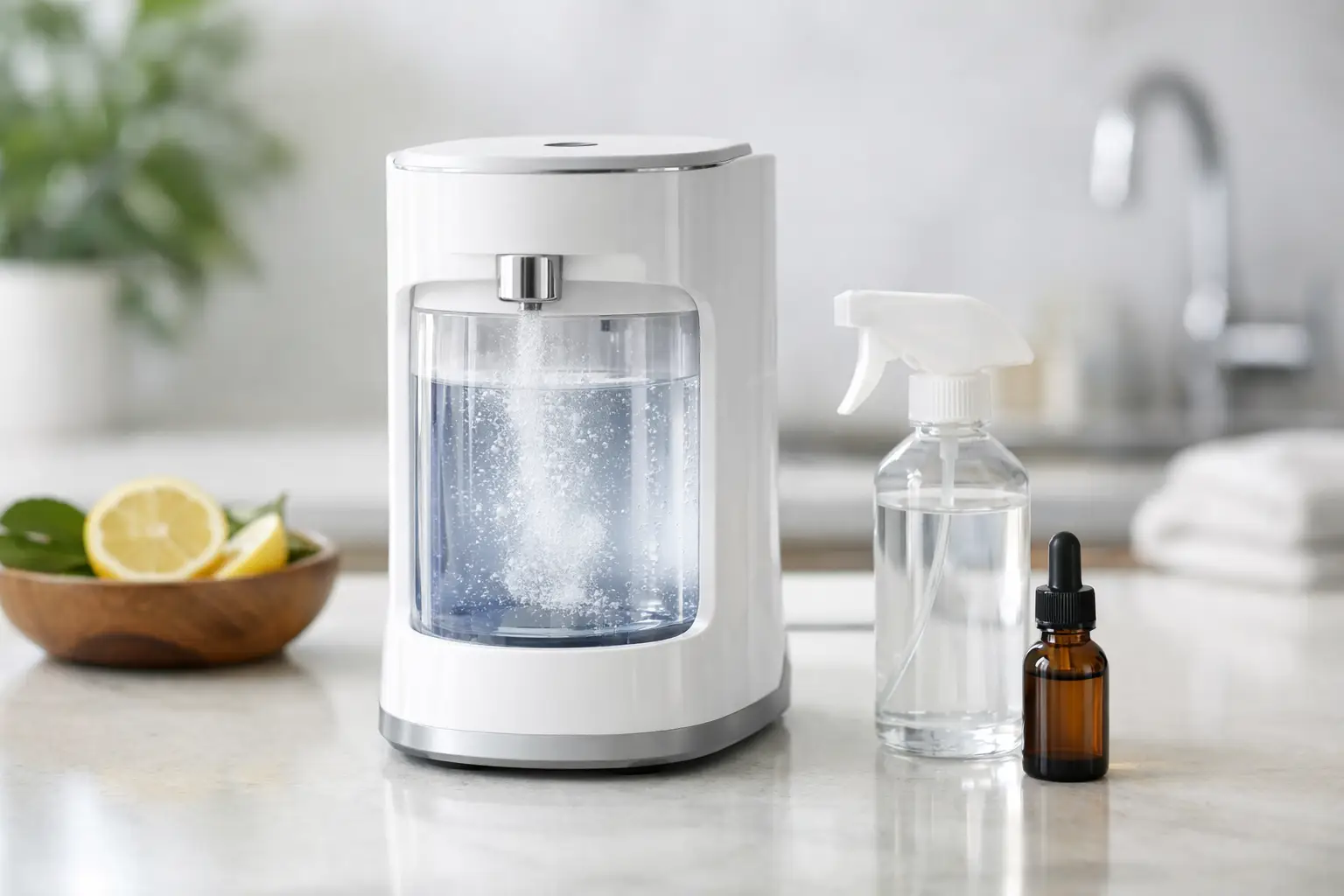
A supply closet full of harsh chemicals, empty spray bottles, and last-minute reorders is not a sanitation strategy. A hypochlorous acid generator gives homes and businesses a more practical option: make fresh HOCl solution on site using water, salt, and a small amount of organic vinegar. The result is a powerful, pH-neutral cleaner and deodorizer that can support daily cleaning without depending on a constant stream of conventional chemical products.
For a homeowner, that may mean reliable cleaning solution for kitchens, bathrooms, pet areas, and high-touch surfaces. For a facility manager, it can mean a lower-cost, repeatable way to keep spray bottles, refill stations, and larger cleaning operations supplied. The value is not just the chemistry. It is the control.
What a Hypochlorous Acid Generator Actually Does
Hypochlorous acid, or HOCl, is a compound associated with the body’s natural immune response. When produced correctly for cleaning applications, it offers a compelling combination: strong cleaning and odor-control performance with a profile that is far less harsh than many traditional chemical cleaners.
A hypochlorous acid generator uses a controlled electrochemical process to convert simple inputs into HOCl solution. Microbe Ninja NinjaGen systems use water, salt, and a small amount of organic vinegar to produce pH-neutral solutions at 200, 500, and 1,000 ppm concentrations. PPM means parts per million, a measurement that helps operators select the right solution strength for their intended application.
That matters because cleaning needs are not all the same. Routine wipe-downs, odor control, restroom care, food-service environments, agricultural spaces, and heavy-use commercial areas can require different concentrations and dispensing methods. A generator replaces the one-size-fits-all approach with a system designed to make the solution you need, when you need it.
Why On-Site Generation Changes the Cleaning Equation
Ready-to-use products have a role, especially when convenience or portability is the priority. But on-site generation can solve problems that packaged chemistry cannot: recurring cost, storage demands, supply interruptions, and unnecessary shipping of mostly water.
Instead of ordering, receiving, storing, and replacing multiple chemical products, an operator keeps a small set of inputs on hand and creates fresh solution as needed. That can dramatically reduce dependence on conventional supply chains while making it easier to standardize what staff members use across a property.
The economics become more compelling as volume increases. A small business that goes through cases of cleaning products each month may find that producing solution for pennies per batch changes its operating costs. Larger facilities can apply the same principle at a much broader scale, using commercial systems to support custodial teams, housekeeping departments, food-service operations, or distributed refill points.
There is also a practical safety benefit. Reducing reliance on harsh chemical cleaners can make daily cleaning more approachable for employees and families while helping protect many common surfaces from the damage associated with aggressive products. That does not mean every surface or situation is identical. Always follow equipment guidance, test an inconspicuous area when needed, and use the right concentration and contact time for the job.
Choosing the Right Generator Size
The best generator is not necessarily the largest one. It is the one that matches how much solution you use, where it will be deployed, and how consistently people can follow the production process.
Home and small-business systems
Compact generators are a strong fit for households, small offices, salons, studios, independent restaurants, and similar environments. These users usually need dependable batches for everyday cleaning and deodorizing, but do not need a dedicated production room or high-volume storage.
The biggest advantage is convenience. Rather than rationing expensive bottles or switching among harsh products, users can make fresh HOCl for regular use and refill appropriately labeled applicators.
Commercial-scale systems
For schools, medical offices, hospitality properties, grocery stores, large restaurants, agricultural operations, and multi-building facilities, volume and workflow matter more. Systems such as the NinjaGen 360, 144, and 1440 are designed for commercial-scale operations where teams need consistent access to solution throughout the day.
Before selecting a system, look at your actual consumption rather than guessing. How many gallons or bottles does the team use in a week? Which areas create the highest demand? Will staff refill centralized stations, or do you need solution delivered to multiple departments? Those answers determine whether a compact unit, a larger system, or several distributed units make the most operational sense.
The Details That Determine Real-World Results
HOCl generation is straightforward, but it should not be treated casually. The output depends on following the manufacturer’s instructions for water quality, ingredient amounts, cycle time, concentration setting, and storage. More is not automatically better. A higher ppm level may be appropriate for some applications, while a lower concentration may be the efficient choice for others.
Freshness also matters. Like many active cleaning solutions, HOCl can change over time depending on light exposure, heat, container type, and storage conditions. Make only what you can use within the recommended timeframe, store it properly, and label bottles clearly with the concentration and production date. A reliable process is more valuable than a generator that sits unused because no one knows what is in the bottle.
Applicators deserve equal attention. Trigger sprayers, fogging equipment, electrostatic tools, refill stations, and other dispensing methods affect coverage, labor time, and consumption. A facility that needs fast, routine surface cleaning may prioritize durable labeled spray bottles. A hotel or large office may need a broader application plan that balances housekeeping speed with consistent results.
If a particular use requires regulated product claims, follow applicable requirements and use products only according to their labels and approved directions. Generation equipment is a powerful operational tool, but responsible sanitation still depends on sound procedures, staff training, and clear documentation.
Where HOCl Generation Makes the Most Sense
A generator is especially valuable when cleaning and odor control are frequent, recurring parts of operations. Restrooms, break rooms, kitchens, fitness areas, patient waiting rooms, classrooms, pet spaces, trash areas, and agricultural facilities all create ongoing demand. In these settings, the ability to produce a consistent solution on site can reduce friction for the people doing the work.
For homes, the appeal is simpler: fewer harsh products under the sink and a practical way to maintain everyday cleanliness. Families with children, pets, odor concerns, or a desire to reduce chemical clutter often appreciate having one versatile solution available when it is needed.
For entrepreneurs, an on-site generation system can also become the foundation of a differentiated service. Cleaning and deodorizing businesses can use commercial equipment to create a sustainable, cost-conscious offering for clients who want effective results without the baggage of conventional chemical programs. The opportunity is not merely selling a bottle. It is providing a repeatable sanitation solution with reliable operating economics.
Is It Worth the Investment?
A hypochlorous acid generator is worth considering when your cleaning needs are ongoing and predictable. The more solution you use, the more meaningful the savings, storage reduction, and supply independence can become. It is also a strong fit when safety, sustainability, and simpler daily workflows are priorities.
It may be less compelling for someone who only cleans occasionally, lacks a place to store solution properly, or is unwilling to establish a basic production and labeling routine. On-site generation is not magic. It works best when it becomes part of a disciplined cleaning system.
The practical question is not whether you can keep buying bottles. It is whether your home or operation would be better served by making a powerful, safe, sustainable, and cost-effective cleaning solution on demand. For many users, that shift turns sanitation from a recurring purchasing problem into a capability they control.
Comments are closed