

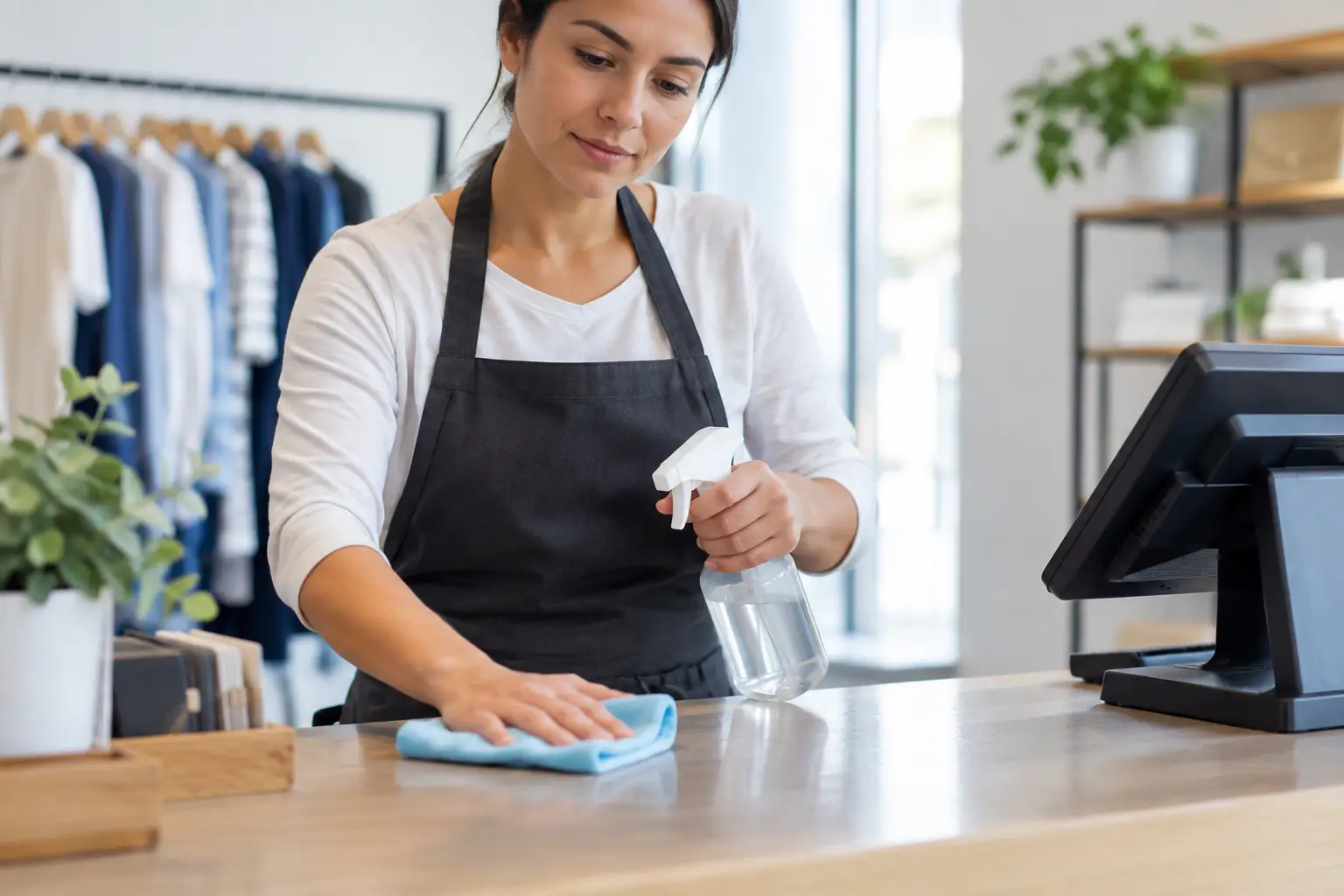
A customer may touch a door handle, shopping basket, payment terminal, fitting-room hook, and checkout counter in one short visit. Employees touch many of those same surfaces hundreds of times per shift. That is why knowing how to sanitize retail touchpoints is less about a single cleaning pass and more about building a repeatable routine that fits the pace of the store.
The best retail sanitation plan protects people without creating another operational problem: strong fumes, damaged finishes, complicated mixing, empty chemical shelves, or a process staff cannot realistically follow during a rush. Hypochlorous acid (HOCl) offers a practical alternative. It can support daily surface sanitation with a solution that is powerful, low-odor, and gentle on many common retail surfaces when used as directed.
Start With the Touchpoints That Carry the Most Traffic
Not every surface needs the same attention at the same interval. A wall display is not handled like a payment keypad, and a stockroom shelf does not have the same exposure as a fitting-room door. Begin by walking the customer and employee path from entrance to exit. Mark the surfaces people grip, press, lean on, or pass products across.
In most retail settings, the priority list includes:
- Entry and exit door handles, push plates, and cart or basket handles
- Payment terminals, PIN pads, counter ledges, pens, and pickup counters
- Fitting-room doors, hooks, benches, hangers, and call buttons
- Restroom handles, faucets, dispensers, stall locks, and changing stations
- Employee breakroom tables, refrigerator handles, time clocks, and shared devices
- Service counters, display cases, queue rails, elevator buttons, and touchscreen kiosks
This assessment should reflect how your store actually operates. A grocery retailer may prioritize cart handles, freezer doors, and scale keypads. A beauty store may need a tighter routine around testers, mirrors, product trays, and consultation stations. A furniture showroom might focus on counter surfaces and shared tablets rather than every upholstered item on the floor.
The goal is not to spray everything constantly. It is to direct attention where repeated human contact creates the greatest need.
Clean First When Soil Is Visible
Sanitizing works best on a surface that is already free of visible dirt, food residue, makeup, spills, grease, and product buildup. A touchscreen covered in fingerprints or a counter with dried syrup needs cleaning before it receives a sanitation application. Otherwise, residue can interfere with surface contact and leave the area looking unfinished.
Train employees to make this distinction simple: remove the mess first, then sanitize the touchpoint. In a café counter or grocery prepared-food area, that may mean wiping away food debris before applying the sanitation solution. At a checkout counter, it may be as quick as removing dust and spills with a clean cloth before treating the keypad and surrounding surfaces.
Use clean, dedicated microfiber cloths where wiping is needed. Reusing a heavily soiled cloth from one area to another can move residue around the store. Color-coding cloths for restrooms, food-adjacent areas, and general retail surfaces is a small operational change that makes training easier and helps protect cross-contamination controls.
Choose a Solution That Fits Daily Retail Use
Retail teams need a sanitation approach they can use often without turning every shift into a chemical-handling task. HOCl is made from simple inputs – water, salt, and a small amount of organic vinegar in Microbe Ninja’s NinjaGen systems – to create a pH-neutral solution for cleaning, deodorizing, and surface sanitation.
For operators, the advantage is not just performance. On-site generation reduces dependence on trucked-in bottles and recurring orders of harsh conventional cleaners. Instead of storing a growing collection of chemicals for different zones, a store can produce fresh solution on demand and dispense it into the applicator best suited to the job.
Concentration matters. A solution produced at 200, 500, or 1,000 ppm should be selected according to the intended application, the surface, and your facility procedures. More concentration is not automatically better for every task. The right choice balances the sanitation objective, material compatibility, frequency of use, and the directions for the specific system or ready-to-use product.
How to Sanitize Retail Touchpoints During Service Hours
A touchpoint routine must work when customers are in the building. If it interrupts checkout, leaves surfaces dripping, or requires employees to disappear into a supply closet, it will not happen consistently.
Set up easy-to-reach sanitation stations near checkout areas, fitting rooms, customer service desks, and employee work zones. Keep applicators clearly labeled and ready to use. Staff should not need to measure, dilute, or guess which bottle belongs at which station.
For most hard, nonporous touchpoints, the process is straightforward. First, remove visible soil if present. Apply the HOCl solution evenly to the surface or to a clean cloth when direct spraying could affect electronics or nearby merchandise. Keep the surface visibly wet for the product’s specified contact time, then allow it to air dry or wipe it with a clean cloth if your procedure calls for it.
Payment terminals and touchscreens deserve extra care. Do not flood openings, card readers, ports, or seams. Applying solution to a microfiber cloth rather than directly to the device gives employees better control. Follow the equipment manufacturer’s cleaning guidance as well, especially for coated screens and specialty electronics.
For small, frequently handled items such as basket handles, counter pens, or fitting-room hooks, a fine, controlled spray may be more efficient than a soaked cloth. The surface should be treated thoroughly, not misted so lightly that it dries immediately.
Build a Schedule Around Store Traffic, Not Hope
The phrase “clean as needed” leaves too much room for inconsistency. Retail sanitation needs defined triggers and assigned ownership. A high-volume checkout lane might need attention at opening, after peak periods, after a visible spill, and at closing. A low-traffic fitting room may need treatment between customers and during scheduled floor walks.
Create a schedule with three layers. Opening procedures prepare high-contact areas before customers arrive. During-shift procedures cover touchpoints at intervals based on traffic and events. Closing procedures allow for a more complete reset of counters, equipment, breakrooms, restrooms, and shared staff areas.
It also helps to build sanitation into existing work. For example, when an associate returns baskets, they can treat handles before putting them back into circulation. When a cashier changes receipt paper or tidies a counter, the payment terminal and counter ledge can be addressed at the same time. When fitting rooms are checked for apparel and hangers, hooks and door hardware can be included in the routine.
This approach reduces missed steps because it connects sanitation to tasks employees already understand.
Train for Consistency, Then Verify It
The most effective product will not solve a process problem by itself. Employees need clear instructions on what to treat, when to treat it, how much solution to apply, and how to handle special surfaces. Keep training visual and specific. A simple map of each zone is often more useful than a long binder of general rules.
Managers should periodically check the routine in real conditions: the lunch rush, a weekend promotion, a shipment day, and closing time. Ask practical questions. Are applicators full? Are cloths clean? Is the checkout team able to complete the process without holding up customers? Are staff treating the actual touchpoints, or only the most obvious ones?
Documentation can be useful in settings with formal facility requirements, but it should not become paperwork for its own sake. A short shift checklist or digital log creates accountability and shows where the schedule needs adjustment.
Protect Surfaces, People, and Product Displays
Retail environments contain more material variety than many cleaning programs account for. Painted fixtures, acrylic displays, chrome hardware, laminate counters, glass, coated electronics, wood finishes, and fabric-covered furniture may all sit within a few feet of each other.
Before broad use, test any sanitation solution on a small, inconspicuous area when surface compatibility is uncertain. Avoid overspray around open food, delicate merchandise, unsealed wood, and sensitive electronics. For display items that customers handle directly, use a method that provides coverage without leaving excess moisture or residue.
This is also where a low-odor, non-toxic approach can make daily work more comfortable. Harsh chemical smells can affect the customer experience, aggravate employee complaints, and make teams reluctant to complete frequent sanitation tasks. A practical system is one employees can use confidently throughout the day.
Make Retail Sanitation Easier to Sustain
The real test of a retail touchpoint program is whether it remains dependable after the first week. Supply interruptions, rising chemical costs, staff turnover, and seasonal traffic can quickly expose a plan that depends on too many specialty products or too much manual effort.
On-site HOCl generation gives stores a way to keep solution available using basic inputs while reducing plastic bottle waste and chemical storage demands. For a single boutique, that may mean a compact system that keeps checkout and fitting-room routines simple. For multi-area operations, larger generation capacity can support a more centralized sanitation program across retail floors, restrooms, receiving areas, and employee spaces.
A clean store is felt before it is explained. When touchpoints look cared for, odors are controlled, and staff have a routine they can maintain, customers notice the difference. Build the process around the way your store actually moves, and sanitation becomes part of a better retail experience rather than another task waiting to be skipped.
Comments are closed