

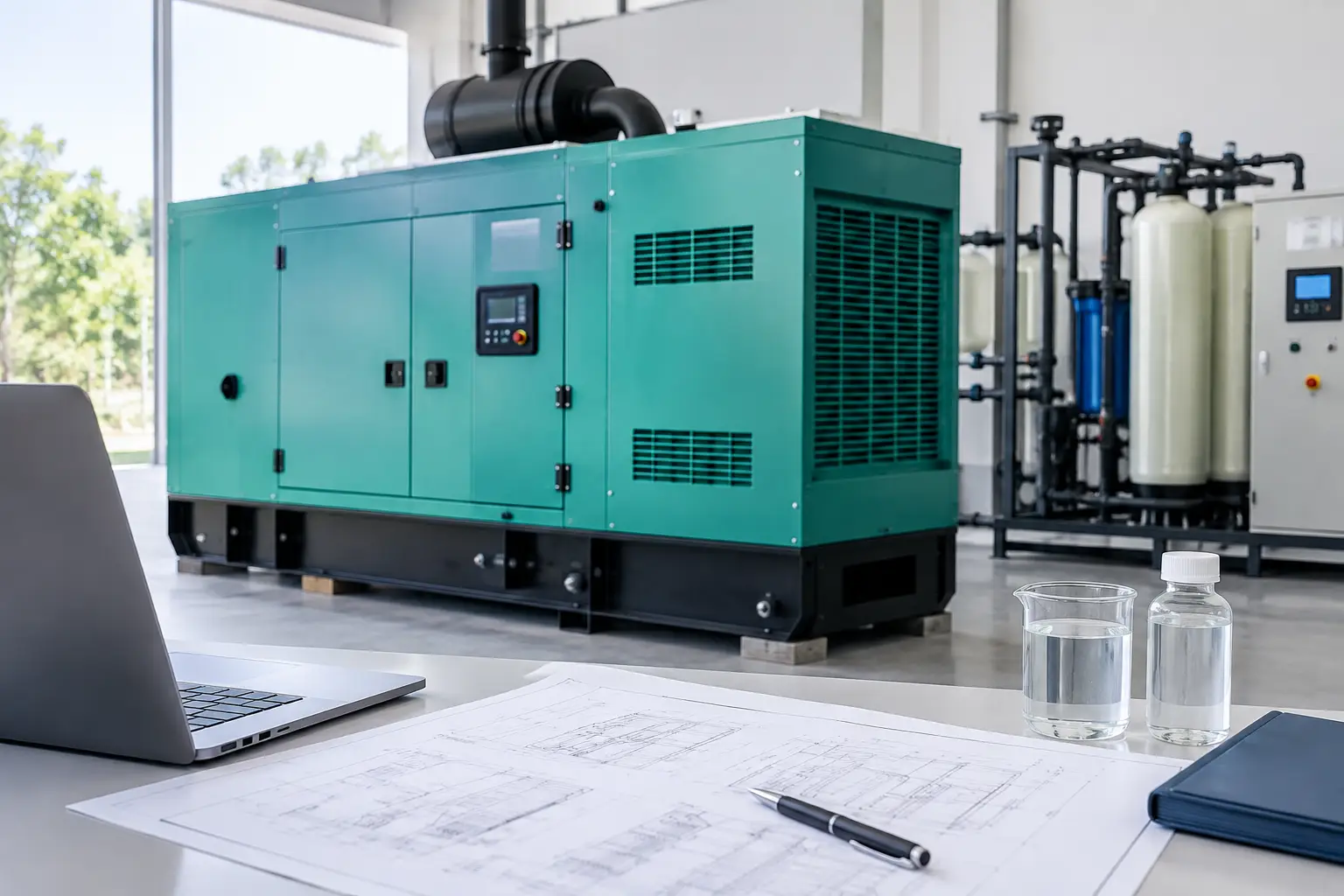
A commercial HOCl generator that is too small creates a daily scramble: empty bottles, delayed room turns, and staff reaching back for conventional chemicals. One that is too large can tie up budget and floor space without improving results. This commercial generator sizing guide helps facilities choose production capacity based on how much solution they actually use, how they deploy it, and how much operational margin they need.
For schools, medical offices, hospitality teams, food-service operations, farms, and cleaning businesses, the right answer is rarely a guess based on square footage alone. The right system supports consistent cleaning and deodorizing without turning solution production into another task your team has to manage.
Start With Daily Solution Demand
Generator sizing starts with gallons, not machine labels. Before comparing commercial equipment, identify how much ready-to-use HOCl solution your operation consumes on a normal day, a heavy-use day, and during seasonal peaks.
Look at every place solution is used: spray bottles, refill stations, floor-care equipment where appropriate, odor-control applications, housekeeping carts, back-of-house cleaning, and service vehicles. A hotel may use modest volumes in guest rooms but need significantly more solution during high-turnover periods. A greenhouse may have routine application needs that change with crop cycles. A cleaning contractor must account for every client location on the route, plus the bottles and containers loaded before the crew leaves.
A practical starting formula is:
Daily production requirement = daily use volume + refill volume + operating buffer
The operating buffer matters. It covers spills, unexpected cleaning events, new staff who use more solution than expected, and days when production time is limited. For many operations, planning for 20% to 30% above average daily use creates breathing room without overbuilding the system.
Do not size only for the quietest week of the year. Size for the workload your facility must handle reliably.
Commercial Generator Sizing Guide: Measure the Real Workflow
Square footage can provide context, but it does not tell the whole story. A lightly used 50,000-square-foot warehouse may need less solution than a busy 12,000-square-foot daycare, restaurant, or clinic. Occupancy, turnover, odor sources, cleaning frequency, and the number of touchpoints all change demand.
For one to two weeks, track how many bottles and containers each department refills. Record container size, refill frequency, and where that solution goes. If a 32-ounce bottle is filled twice per shift across 20 stations, that is 10 gallons per day before adding any larger containers or specialty uses.
This audit also exposes waste. If every department keeps partially filled bottles, the apparent consumption number may be higher than actual application needs. Standardized bottles, clearly labeled refill points, and simple procedures make volume estimates more accurate while helping teams use the solution consistently.
Separate routine demand from surge demand
Routine demand is what the facility uses during normal operations. Surge demand is what happens during event cleanup, higher occupancy, odor incidents, staffing shortages, or a large delivery and receiving day. Both matter.
A generator should comfortably cover routine demand within the time available for production. Surge demand can be handled through extra production capacity, planned storage, or a combination of both. The best choice depends on your staffing model. A facility with a dedicated environmental-services team may run scheduled batches throughout the day. A small business owner may prefer producing enough solution in one planned window and storing it in appropriate labeled containers.
Consider shift timing, not just total volume
Two facilities can use the same number of gallons per day and need different equipment. If one facility can generate solution throughout a 16-hour operating day, it can work with a lower hourly production rate than a location that needs all of its solution ready before a morning crew arrives.
Ask three practical questions: When must solution be available? Who will make it? Where will it be filled? A right-sized system fits the answers. It should not require a manager to become a full-time bottle-filling operator.
Match Concentration to the Job
Capacity and concentration are related, but they are not the same decision. Microbe Ninja NinjaGen systems produce pH-neutral HOCl solutions at 200, 500, and 1,000 ppm concentrations. Your operation may use different concentrations for different cleaning, deodorizing, and pathogen-control protocols.
Higher ppm is not automatically the better choice for every task. The right concentration depends on the use case, your internal procedures, contact time requirements, surfaces, and applicable regulations or product directions. A facility that needs several concentrations should plan its production schedule and storage so teams can clearly identify what they are using.
When evaluating a generator, confirm whether its stated output reflects the concentration you need. Production volume at 200 ppm may not match production volume at 1,000 ppm. Compare like with like: gallons per batch or per hour at the concentration required for your actual workflow.
Plan the Refill and Storage Setup
A generator is only part of the system. The refill station determines whether teams will use it efficiently or bypass it when they are busy.
Place production and refill equipment near the point of highest demand when possible, while maintaining an orderly area for water access, ingredients, containers, and routine cleaning. Large facilities may benefit from one central production area with scheduled distribution. Others operate better with smaller, strategically placed refill points. There is a trade-off: centralization can simplify oversight, while distributed access can reduce walking time and help keep carts stocked.
Storage capacity should support your planned production rhythm. If you make several days of solution at once, you need enough compatible containers, a clear labeling process, and a storage method that aligns with your operating procedures. If storage space is tight, select a system that can produce the day’s expected volume quickly enough to keep up.
Account for Growth Before You Need It
The least expensive system today is not always the lowest-cost choice over the next two years. A restaurant group opening two more locations, a janitorial company adding contracts, or a farm expanding its growing area should include that growth in the sizing conversation.
That does not mean every buyer needs the largest commercial system. Oversizing has real costs. But selecting equipment with enough headroom to accommodate predictable growth can prevent a premature replacement or a fragmented mix of small machines.
Microbe Ninja commercial options, including the NinjaGen 360, 144, and 1440, are designed for different operating scales. The right fit comes from comparing verified production capacity with your required ppm, daily volume, available production hours, and future workload. For a service business, also factor in off-site demand: every account added to the route changes the number of gallons, bottles, and refill containers needed each week.
Avoid the Most Common Sizing Mistakes
The first mistake is choosing based on facility size alone. Cleaning intensity is a better predictor than square footage. The second is treating nominal machine capacity as usable daily capacity without considering batch time, staff availability, container handling, and refilling.
A third mistake is forgetting that adoption drives consumption. When a safer, on-demand cleaning and deodorizing solution is readily available, teams often use it more consistently. That is a positive operational change, but the generator must be ready for it.
Finally, do not ignore water and workflow basics. Confirm the installation location has the necessary utilities, enough room for safe operation, and a simple path for moving filled containers to the people who need them. A technically capable generator cannot solve a poorly designed refill process.
Choose Capacity That Makes Daily Work Easier
The goal is not to maximize gallons produced. It is to make powerful, safe, sustainable, and cost-effective HOCl solution available when your team needs it, without dependence on recurring shipments of harsh chemical cleaners.
Start with a short usage audit, build in a realistic buffer, and compare production rates at the concentration your procedures require. A correctly sized commercial generator turns water, salt, and a small amount of organic vinegar into a dependable part of your cleaning and deodorizing operation – and gives your team one less supply problem to solve.
Comments are closed