

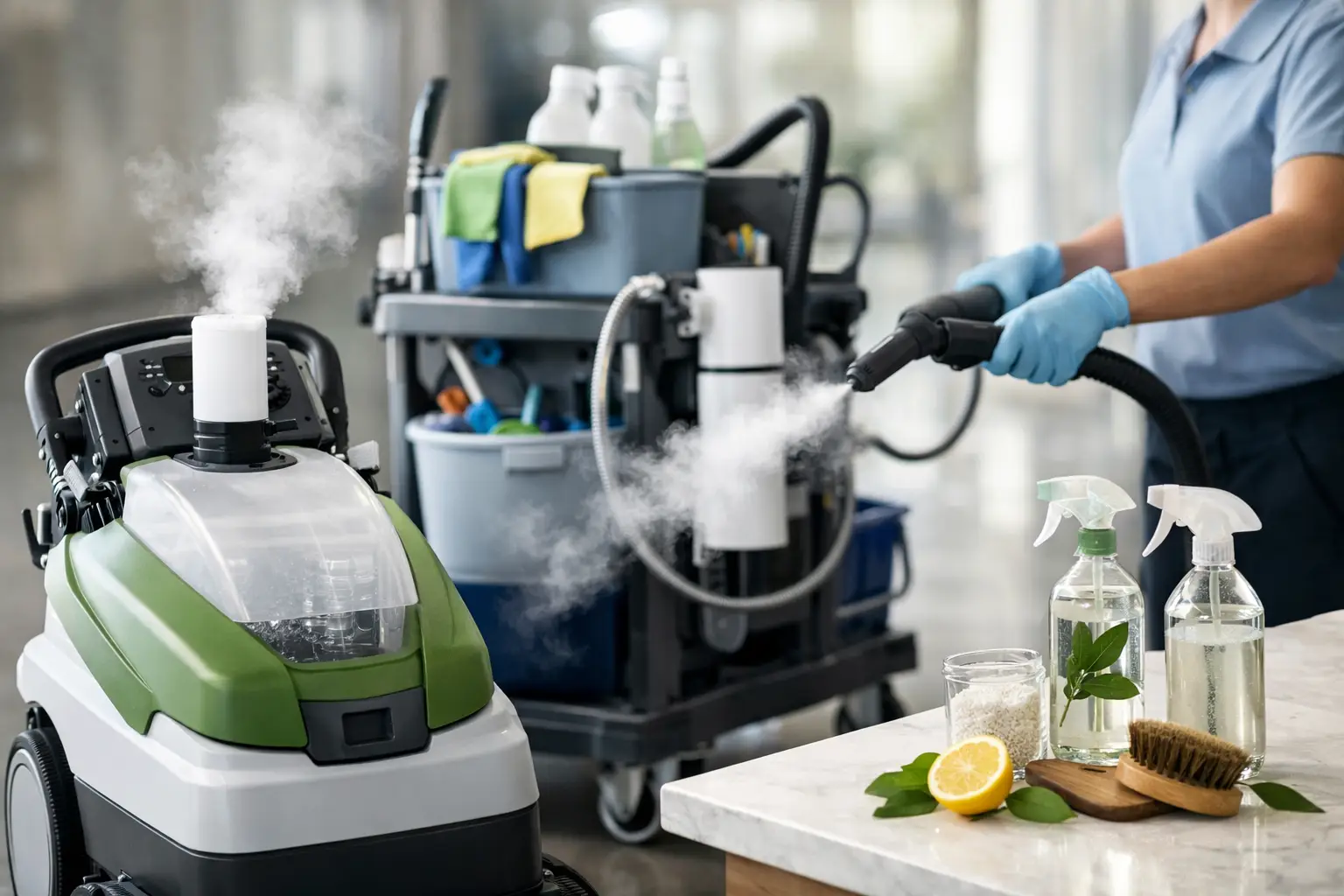
A facility can have a full closet of cleaning products and still be unprepared when odors spike, supply deliveries are delayed, or staff need a safer way to clean high-touch spaces. The right sanitation equipment changes that equation. Instead of treating sanitation as a recurring cycle of ordering, storing, diluting, and replacing harsh chemicals, it gives teams a dependable process they can operate every day.
For homes, small businesses, and large commercial properties, the most useful systems do more than produce a cleaner-looking surface. They support odor control, routine cleaning, pathogen-control protocols, employee confidence, and predictable operating costs. The key is choosing equipment that fits the work rather than adding another complicated machine to the back room.
What Sanitation Equipment Should Solve
Sanitation equipment is often discussed as a product category, but buyers should think of it as an operating system. It includes the equipment that creates, stores, applies, and manages cleaning solutions, from compact on-site generators and spray applicators to larger commercial production systems.
A strong setup should address four practical problems: inconsistent results, chemical exposure, supply dependence, and wasted labor. If a team has to hunt down multiple bottles, measure concentrates, or wait for an outside shipment before it can respond to an odor or cleaning issue, the process is already working against the operation.
That does not mean every location needs the biggest machine available. A dental office, daycare, restaurant, greenhouse, hotel, and family home all have different volumes, surfaces, staffing levels, and usage patterns. The goal is not more equipment. It is a reliable supply of the right solution, where and when it is needed.
Why On-Site HOCl Generation Is Different
Hypochlorous acid, commonly called HOCl, is a powerful sanitation option made from simple inputs. An on-site generation system converts water, salt, and a small amount of organic vinegar into a pH-neutral HOCl solution. This allows users to create fresh cleaning and deodorizing solution on demand rather than relying entirely on premixed chemical inventory.
That difference has operational value. Conventional cleaners can require separate products for floors, restrooms, odor problems, food-service areas, fixtures, and touchpoints. Each product brings its own storage needs, handling instructions, scent, residue, and reorder schedule. An HOCl-based program can simplify daily work while reducing reliance on harsh chemical formulas.
Concentration matters, which is why equipment should provide consistent output. Solutions produced at 200, 500, and 1,000 ppm can support different cleaning and sanitation applications. The right ppm depends on the task, the surface, the required contact time, and the procedures your facility follows. More concentration is not automatically better. A well-designed program matches the solution to the real job and trains staff to apply it correctly.
Freshness matters, too. On-site production gives users control over batch timing, so solution can be made for expected demand instead of sitting in storage for long periods. For organizations managing multiple shifts or frequent cleaning cycles, that control can be more valuable than another pallet of bottles.
The cost conversation is bigger than price per bottle
A low sticker price on a conventional cleaner can hide the real cost of use. Consider delivery fees, rush orders, shelf space, damaged containers, unused partial bottles, personal protective equipment requirements, and time spent mixing or tracking products. Those costs add up across a school, clinic, grocery store, or hospitality operation.
An on-site system has an upfront equipment cost, so it is not the right choice for every low-volume user. But when a location uses cleaning and deodorizing solution consistently, making HOCl from basic inputs for pennies per batch can create a far more predictable cost structure. It also reduces exposure to supply interruptions that can leave operations short when they need sanitation materials most.
How to Choose Sanitation Equipment for Your Facility
Start with usage volume, not square footage alone. A compact retail shop may have limited floor space but a high number of touchpoints and recurring odor needs. A warehouse may cover a large footprint while requiring solution only in targeted zones. Track how much solution your team uses during a normal week, then account for peaks caused by events, seasonal traffic, illness-related cleaning procedures, or production changes.
Next, look at how solution will move from the generator to the work. Equipment that makes HOCl is only one part of the system. Staff also need appropriate dispensing applicators, labeled containers, and accessible refill points. If filling spray bottles requires a long walk to a utility room, people may revert to whatever product is closest. Good sanitation design makes the preferred process the easiest process.
Consider the surfaces and environments involved. Medical offices need a practical, repeatable approach for exam rooms and common areas. Restaurants need dependable cleaning around dining rooms, restrooms, kitchens, and waste areas. Farms and growing facilities may need odor management and sanitation support across equipment, workspaces, and non-porous surfaces. In each case, confirm material compatibility and use procedures before expanding a new solution across the facility.
Finally, assess the people who will operate the system. The best equipment is clear enough for a new employee to use confidently and consistent enough for a manager to verify. Look for straightforward batch production, dependable concentration options, simple maintenance expectations, and training that connects the machine to everyday tasks.
Match capacity to the workday
Small generators can make sense for homeowners, independent cleaners, salons, small offices, and local businesses that want an affordable source of fresh solution without carrying excess inventory. They offer a practical entry point for teams moving away from a cabinet full of harsh cleaners.
Larger operations need more production capacity and a more deliberate deployment plan. Systems such as the NinjaGen 360, 144, and 1440 are designed for commercial-scale environments where solution demand may span departments, shifts, or multiple application points. Capacity should leave room for busy periods. A system that barely covers average daily use can become a bottleneck when demand rises.
For service entrepreneurs, capacity also affects the business model. A portable or commercial generation setup can support recurring cleaning and deodorizing services while giving customers a more sustainable alternative to conventional chemical-heavy programs. The operator still needs sound procedures, accurate labeling, and disciplined service delivery, but on-site generation can make the offering more independent and cost-controlled.
Make Equipment Part of a Better Process
Buying sanitation equipment without changing the process behind it is a missed opportunity. Establish where solution is made, who is responsible for batches, how containers are identified, and when applicators are cleaned and refilled. Keep procedures short enough that they are followed during a busy shift.
Staff training should focus on the reason behind the routine. Explain which areas need regular attention, how long surfaces should remain wet when a procedure calls for it, and why mixing products is never acceptable. A safer chemistry does not remove the need for responsible use. Teams still need to follow equipment instructions, facility policies, and applicable local requirements.
Measure practical results. Are odor complaints decreasing? Are employees using fewer separate products? Is the supply closet easier to manage? Are rushed chemical orders becoming less common? These indicators show whether the system is improving operations, not just adding a new capability.
Microbe Ninja approaches on-site HOCl generation as a practical replacement for costly, harsh, supply-dependent cleaning routines. The point is not to make sanitation more technical. It is to give people a powerful, safe, sustainable, and cost-effective tool they can use with confidence.
The best sanitation equipment earns its place through ordinary workdays: a restroom that stays fresher, a classroom that is easier to reset, a hotel team that can respond quickly, or a facility manager who no longer wonders whether next week’s order will arrive. Choose a system that makes those everyday outcomes easier to repeat.
Comments are closed