

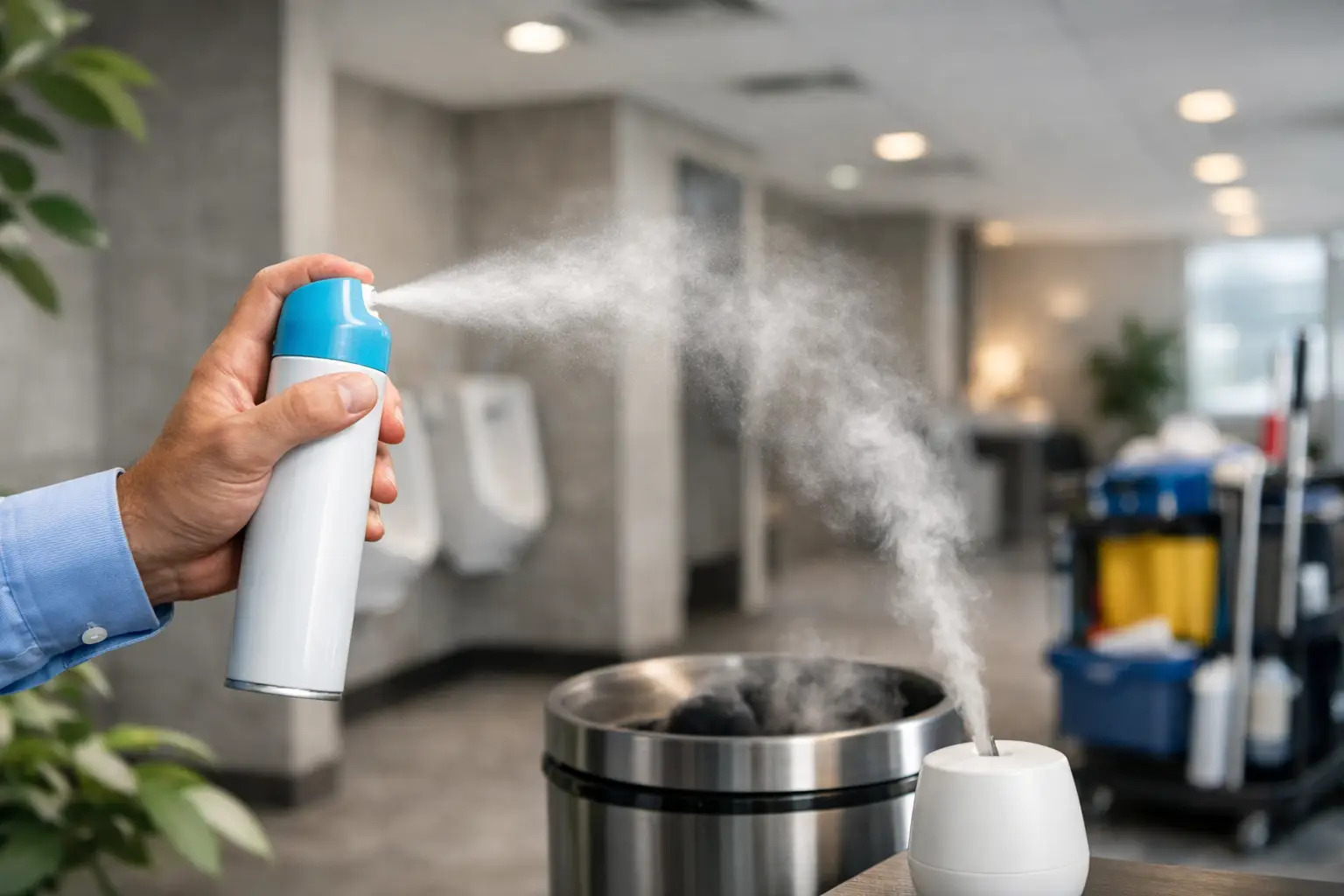
A lobby can look spotless and still tell visitors something is wrong the moment the door opens. Odor travels faster than a maintenance report, and in hospitals, schools, restaurants, hotels, retail spaces, and growing operations, it can shape perceptions of cleanliness, safety, and care. This commercial odor management guide focuses on the practical work behind lasting odor control: finding the source, correcting the conditions that feed it, and building a safer daily sanitation routine.
Commercial Odor Management Starts at the Source
Odor is not the problem by itself. It is a signal. Most persistent facility odors come from organic residue, moisture, microbial activity, poor airflow, waste buildup, or a combination of these factors. A fragrance may cover that signal temporarily, but it does not remove the material producing it.
That distinction matters operationally. When a restroom smells sour by midafternoon, the cause may be residue around toilets, floor drains, grout, trash receptacles, mop heads, or moisture trapped beneath a mat. If a guest room smells stale, the source may be fabric, HVAC components, bathroom humidity, or spills that reached carpet backing. Treating only the air leaves the actual odor reservoir in place.
Start each odor investigation by asking three questions: Where is the odor strongest? When does it become noticeable? What surfaces, materials, or processes are nearby? Those answers help a facility team move from repeated masking to targeted correction.
Follow the Pattern, Not Just the Complaint
Odors often follow a schedule. A kitchen odor may peak after prep and dishwashing. A locker room issue may worsen overnight when humidity remains trapped. A medical office may notice odors after waste collection delays. Tracking time, location, weather conditions, occupancy, and cleaning activity turns vague complaints into usable maintenance information.
It also prevents teams from overcorrecting. If an odor appears only when an HVAC unit runs, the solution may involve condensate management or filter maintenance rather than heavier floor cleaning. If the smell is strongest near a drain, pouring more fragrance into the room will not solve the problem.
Build an Odor Control Routine Around Removal
Effective odor management has two jobs: remove odor-producing soils and reduce the conditions that allow odors to return. Both require consistency. A single deep clean can improve a space quickly, but recurring odors need a repeatable process with clear ownership.
First, remove visible soil and residue from high-contact and high-moisture areas. Floors, baseboards, trash cans, restroom fixtures, drains, food-prep zones, equipment exteriors, and fabric surfaces all deserve attention based on the facility’s use. The correct method depends on the material and soil load. Grease-heavy kitchen surfaces may need a dedicated degreasing step, while porous flooring may require extraction or specialized treatment.
Then address moisture. Drying is an odor-control task, not merely a housekeeping detail. Damp mop heads, dirty recovery tanks, wet textiles, leaking lines, and saturated entry mats create ideal conditions for recurring smells. Use adequate airflow, empty and rinse equipment promptly, and replace materials that cannot be fully cleaned or dried.
Finally, make the routine easy to execute. A complicated protocol that staff cannot complete during a busy shift will fail no matter how good it looks on paper. Define which areas receive attention daily, which are checked weekly, and which require periodic deep cleaning. Assign responsibility by role and document exceptions, especially in high-turnover environments.
Why Fragrance-First Programs Fall Short
Air fresheners have a place when used thoughtfully, but they should not be the foundation of a commercial odor program. Strong scents can compete with a bad odor rather than eliminate it. In sensitive settings, including healthcare spaces, classrooms, hospitality properties, and food-related operations, excessive fragrance can also create an unpleasant experience for occupants.
The better approach is odor neutralization after source removal. That means cleaning the surface or material carrying the residue, treating the odor at its origin, and maintaining the space so new buildup does not take hold. Fragrance, if used at all, should be a light finishing choice rather than a substitute for sanitation.
This is where product selection matters. Facility managers should consider worker safety, surface compatibility, training requirements, storage demands, cost per use, and the reliability of supply. A product that works well but requires complicated dilution, harsh handling procedures, or frequent emergency ordering can create its own operational problems.
Using HOCl in a Commercial Odor Management Guide
Hypochlorous acid, or HOCl, offers a practical option for cleaning and deodorizing routines because it can be used without the heavy fumes and harsh chemical profile associated with many conventional products. When properly generated and applied according to directions, pH-neutral HOCl can support odor-control work on suitable hard surfaces and in a range of facility environments.
For commercial operations, on-site generation changes the economics and logistics of routine cleaning. Instead of relying entirely on prepackaged chemical inventory, a system can produce HOCl from water, salt, and a small amount of organic vinegar. That can reduce storage needs, shipping dependency, and the cost of maintaining ready-to-use solution across multiple departments or sites.
Concentration should match the task and the equipment instructions. Systems that generate 200, 500, and 1,000 ppm solutions give operators flexibility for different cleaning and deodorizing workflows. More concentration is not automatically better. Surface type, soil level, contact time, application method, and the facility’s own procedures all affect the right choice.
Microbe Ninja commercial NinjaGen systems are designed to help facilities produce solution on demand, from smaller business setups to higher-volume NinjaGen 360, 144, and 1440 operations. For teams that clean continuously, that on-site capability can mean fewer supply interruptions and more consistent access to a fresh, cost-effective cleaning and deodorizing solution.
Application Method Changes the Result
Even a well-chosen solution cannot compensate for poor application. Spray-and-wipe use can be appropriate for counters, fixtures, and hard surfaces when soil has been removed first. Foaming or targeted application may help crews keep product on vertical surfaces. For large floors or broad open areas, applicators and electrostatic equipment may improve coverage, but they should be used only with training, appropriate PPE, and manufacturer guidance.
Do not use any odor-control product as a shortcut around cleaning. Heavy residue, grease, and buildup should be physically removed. On soft surfaces, test in an inconspicuous spot and follow material-care guidance. In food-service settings, separate odor-control workflows from food-contact procedures and train staff on the required rinse or handling steps for their operation.
Put People and Process Ahead of Product
Odor control succeeds when staff understand why the process exists. A rushed employee may spray the air because that seems faster than cleaning a drain cover or emptying a bin. A trained employee recognizes that the source must be removed and knows where odor-producing residue typically collects.
Keep training specific. Show teams how to inspect restrooms, waste rooms, break areas, loading docks, laundry zones, and equipment closets. Teach them how to recognize standing water, residue, blocked airflow, and forgotten cleaning tools. Give them a simple way to report recurring conditions before they become customer complaints.
Facilities should also review whether their cleaning schedule matches actual demand. A retail store may need more attention at entrances during wet weather. A restaurant may need additional waste-area checks after peak service. A greenhouse may need humidity-focused routines that would be unnecessary in an office. The best program is not the most intensive one. It is the one that responds to the realities of the space.
Measure What Is Improving
Odor management can feel subjective, but improvement can be tracked. Record complaint locations, frequency, time of day, cleaning response, and any recurring source found. Managers can also use inspection checklists for drains, waste containers, floor edges, mats, HVAC areas, and cleaning equipment.
Look for trends instead of judging the program by one good day. Fewer recurring complaints, faster resolution times, cleaner equipment, reduced product waste, and more consistent staff execution are meaningful signs that the system is working. If one area continues to fail, revisit the source diagnosis before adding more product or fragrance.
A facility does not need to accept persistent odors as part of doing business. When teams remove the source, manage moisture, use practical on-demand sanitation tools, and stay consistent, the result is more than a better-smelling building. It is a space that feels cared for from the first step inside.
Comments are closed