

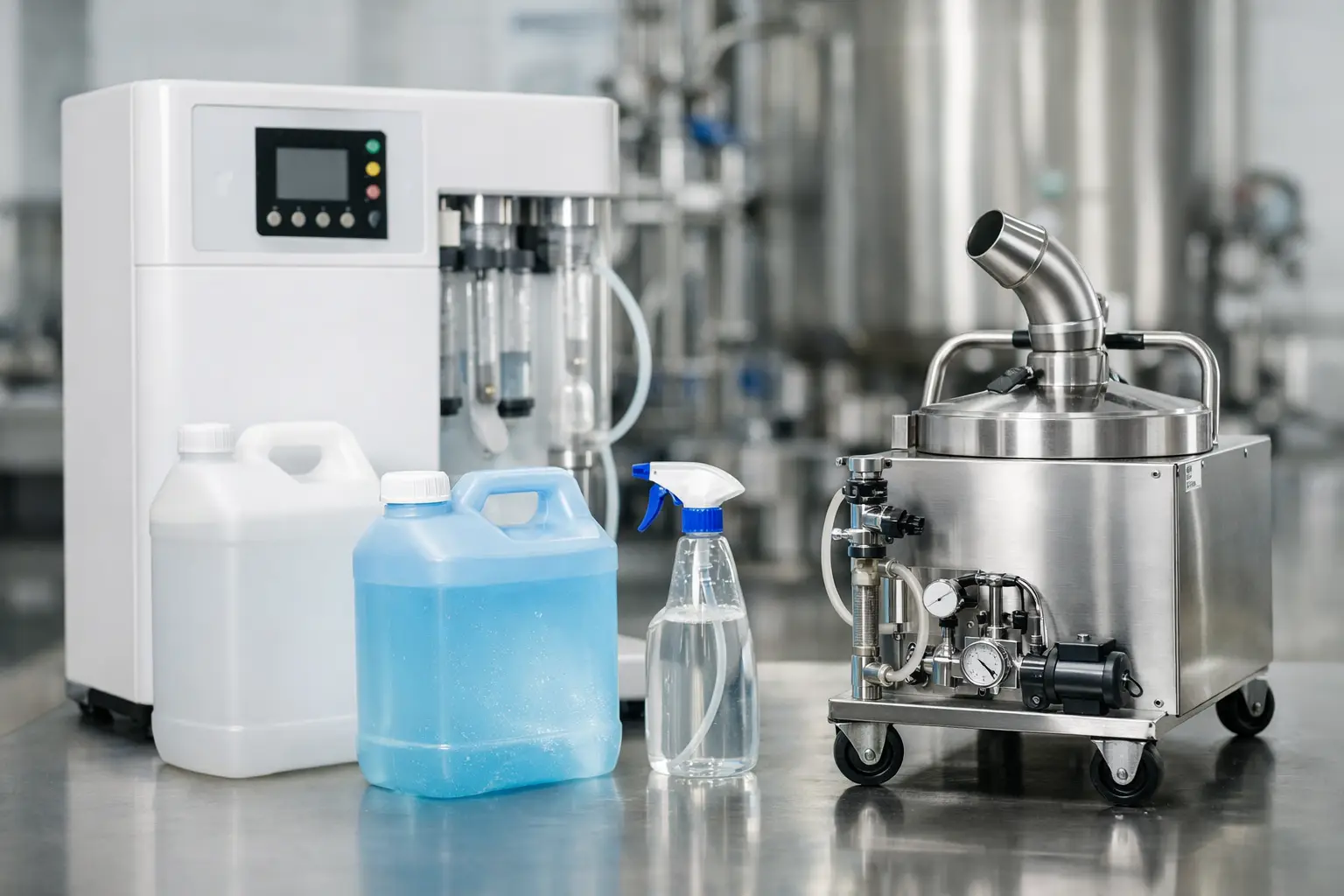
A commercial HOCl equipment review should begin where many facility purchases end: with the daily reality of carts, refill stations, staff turnover, odor complaints, storage constraints, and rising chemical spend. An on-site hypochlorous acid system is not simply another cleaning device. It can change how a facility supplies, applies, and manages sanitation solutions across the operation.
For hospitals, schools, hotels, restaurants, offices, retail spaces, and growing facilities, the best equipment is not automatically the largest unit or the lowest-priced option. It is the system that consistently produces the right solution strength, fits the pace of the work, and gives staff a practical alternative to harsh, ready-to-use chemicals.
What Commercial HOCl Equipment Should Solve
Commercial HOCl equipment generates hypochlorous acid on site using water, salt, and, in some systems, a small amount of organic vinegar. The appeal is straightforward: instead of repeatedly ordering, receiving, storing, and disposing of multiple chemical products, a facility can make a fresh cleaning and deodorizing solution as needed.
That matters most when supply reliability and labor efficiency are real operating concerns. A housekeeping team should not need to stop work because a particular product is backordered, a concentrated chemical requires special handling, or the right dilution was missed during a busy shift. A well-designed generator and dispensing setup reduces those friction points.
Still, HOCl equipment is not one-size-fits-all. A small medical office may need compact production for spray bottles and routine surface care. A hotel laundry, school district, food operation, or contract cleaning company may need enough volume to support several teams, refill locations, or large-area application. The right review looks at the full workflow, not just the machine specifications.
Start With Daily Volume, Not Tank Size
Capacity is the first serious comparison point. Ask how many gallons of solution the operation actually uses per day and when that demand occurs. A facility that uses 10 gallons steadily throughout the day has a different requirement than one that needs 40 gallons ready before an evening cleaning shift begins.
Equipment size should be matched to peak demand, refill frequency, and the number of users drawing from the system. Undersizing creates bottlenecks and encourages staff to return to old products when the station is empty. Oversizing can tie up capital and floor space without improving the work.
Microbe Ninja’s NinjaGen commercial line illustrates why scale matters. Systems such as the NinjaGen 360, 144, and 1440 are intended for different commercial production needs, from smaller operations to high-volume environments. The useful question is not which number sounds biggest. It is whether the equipment can support the site’s actual schedule without creating a new task for the team.
Estimate use by application method
Spray bottles, electrostatic applicators, mop buckets, floor equipment, fogging applications where appropriate, and refillable containers all consume solution differently. A food-prep area may use frequent small-volume applications, while a large property may require bulk refills for several carts at once.
Before selecting equipment, track a normal week of use. Count bottles refilled, gallons mixed, shifts covered, and locations served. Include seasonal peaks, occupancy changes, and special events. This simple baseline is more valuable than buying based on square footage alone.
Review Output Quality and Concentration Control
Commercial equipment should make the intended HOCl concentration reliably, not merely produce a solution that looks or smells acceptable. Concentration is typically measured in parts per million, or ppm. Different cleaning, deodorizing, and sanitation tasks can call for different working strengths, so output flexibility matters.
For example, NinjaGen systems are designed to produce pH-neutral HOCl solutions at 200, 500, and 1,000 ppm concentrations. That range can help an operation organize use by task while keeping the ingredient list simple. But concentration options are only useful when staff understand which setting and application procedure belongs to each job.
Ask equipment providers how output is verified, what normal production time looks like, and what factors can affect consistency. Water quality, ingredient measurements, maintenance practices, and operator training all influence results. A system that is technically capable but difficult to run correctly can become an expensive refill station with inconsistent output.
Freshness and storage deserve attention
On-site production is a major advantage, but generated solution still needs sensible handling. Review the recommended storage containers, labeling process, batch tracking, and expected shelf-life guidance for the system being considered. If teams fill bottles across multiple departments, clear procedures protect consistency and prevent confusion.
This is also where simple design wins. Color-coded bottles, fixed refill points, labeled concentration settings, and a short standard operating procedure can make adoption easier. The goal is not to add paperwork. The goal is to make the safer choice the easiest choice during a rushed shift.
A Commercial HOCl Equipment Review Must Include Workflow
The equipment itself may occupy only a few square feet, but its effect reaches storage rooms, janitorial closets, employee training, procurement, and waste handling. Review the installation requirements carefully: water access, power, drainage if required, ventilation guidance, counter or wall space, and proximity to the people who will refill containers.
A generator placed far from the cleaning team may look tidy on an operations diagram and fail in practice. If staff must walk across a building for every refill, they may stockpile old products or make fewer refills than intended. Convenient placement increases use and makes the system part of the normal routine.
Applicators deserve the same level of review. The right dispenser, spray bottle, or commercial application tool should deliver solution evenly, hold up to daily use, and be easy to clean. A high-capacity generator paired with unreliable bottles creates avoidable frustration. Evaluate the complete system from production to point of use.
Compare Cost Beyond the Purchase Price
A commercial generator has an upfront cost, installation considerations, and routine maintenance needs. Those costs should be acknowledged directly. The stronger financial case is usually built over time through reduced purchases of conventional chemical products, fewer empty containers, less storage demand, and fewer supply interruptions.
Calculate current spending honestly. Include ready-to-use cleaners, deodorizing products, shipping, emergency purchases, storage cabinets, disposal costs, and the labor spent checking inventory or mixing products. Then compare that with the cost of water, salt, organic vinegar where required, replacement components, and scheduled maintenance.
The operating cost of on-site HOCl can be pennies per batch, but savings depend on adoption. If a facility keeps buying most of its previous chemicals because the new system is inconvenient or poorly introduced, the return will be weaker. A disciplined rollout matters as much as the equipment selection.
Safety, Claims, and Training Need a Straight Answer
HOCl is attractive because it offers a practical, non-toxic alternative to many harsh cleaning chemicals when used as directed. That can improve the daily experience for staff and help reduce the strong odors associated with traditional products. It also supports organizations looking to reduce chemical clutter in shared spaces.
However, safe use still requires training. Staff need to know how to generate the solution, select the correct ppm level, label containers, follow contact-time instructions provided for the intended application, and avoid mixing products. They should also understand that equipment instructions and applicable regulatory requirements govern what claims a facility can make.
For healthcare, food service, agriculture, and other regulated environments, purchasing teams should confirm that their sanitation protocols, documentation, and product-use claims align with the requirements that apply to their setting. A responsible vendor should be clear about what the equipment produces, how it should be used, and where additional validation may be necessary.
Service Support Separates Equipment From a Program
Commercial buyers should ask what happens after installation. Is training included? Can the provider help size the system? Are replacement parts and maintenance guidance readily available? How quickly can an operator get help if a unit stops producing during a busy week?
For entrepreneurs building a cleaning or deodorizing service, these questions are even more important. The equipment becomes part of the business model, so production consistency, transportable application methods, customer training, and dependable support affect reputation as much as revenue.
The best commercial HOCl equipment purchase is a practical commitment to cleaner operations, safer routines, and less dependence on harsh chemical supply chains. Choose the system that your team can produce from, refill from, and trust every day – because the value of on-site sanitation begins when it becomes the easy habit.
Comments are closed