

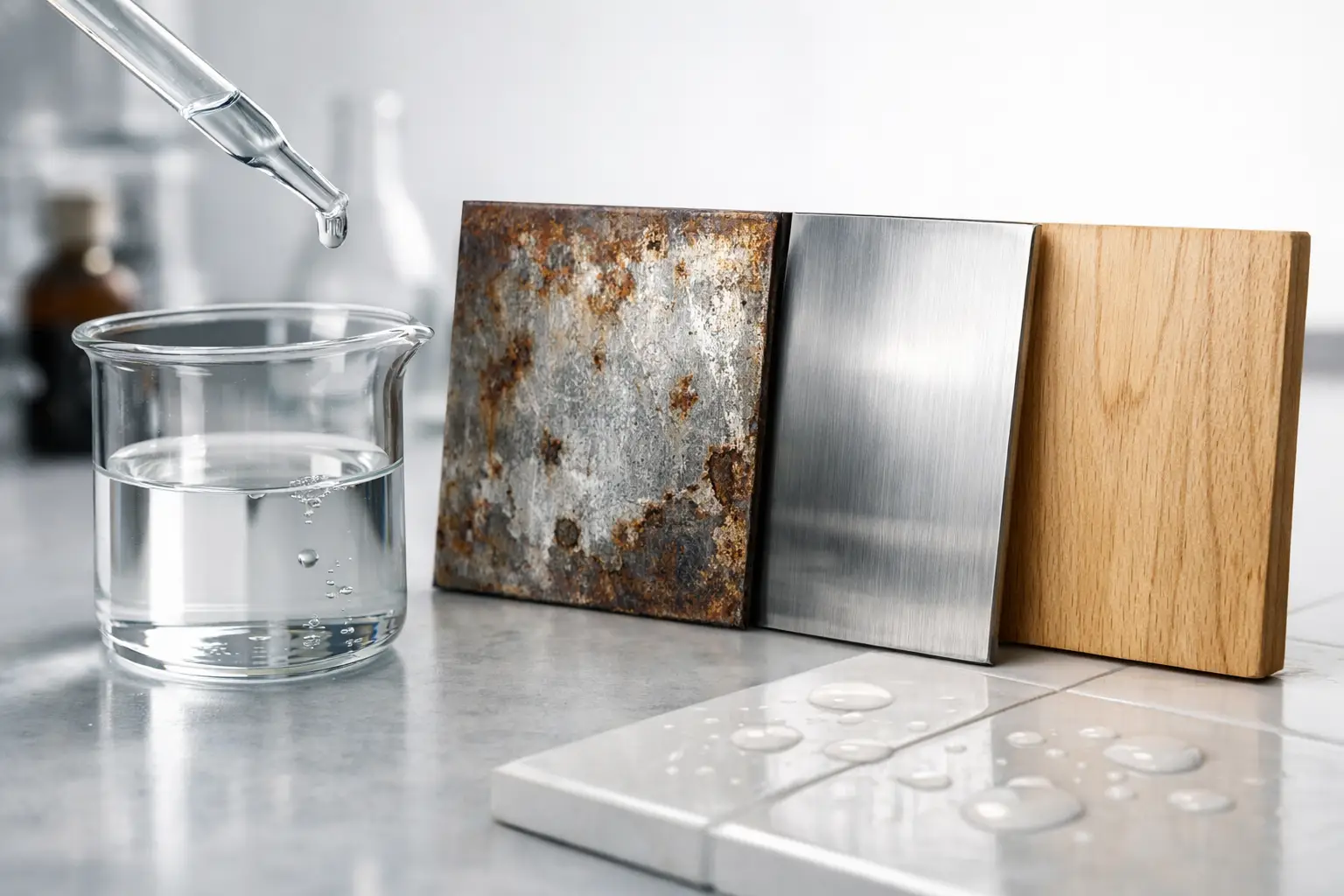
A cleaner can be powerful against odors and unwanted microbes without being harsh on the places where it is used. Still, asking is HOCl corrosive is the right question before introducing any sanitation solution into a home, medical office, restaurant, school, farm, or commercial facility.
The practical answer is: it depends on the solution and the surface. Properly made, pH-neutral hypochlorous acid (HOCl) is generally much gentler on common surfaces than traditional bleach-based cleaners. But HOCl is still an active oxidizing solution. Concentration, pH, contact time, application method, storage, and the material being treated all affect the outcome.
For operators who want safer, lower-cost cleaning without creating a new maintenance problem, understanding those variables matters.
Is HOCl Corrosive at Neutral pH?
HOCl can contribute to corrosion under certain conditions, especially when it is acidic, highly concentrated, repeatedly left on sensitive metals, or made and stored incorrectly. That does not mean every HOCl solution will corrode every surface.
pH is one of the biggest factors. Chlorine-based solutions become more aggressive to metals as they move toward a lower, more acidic pH. A properly produced, near-neutral HOCl solution is designed to provide effective sanitation performance while reducing the surface harshness commonly associated with strong bleach or acidic chemical products.
This is why solution quality is not a minor detail. A generator that consistently controls the inputs and output helps create predictable results. Microbe Ninja NinjaGen systems use water, salt, and a small amount of organic vinegar to produce pH-neutral HOCl solutions at 200, 500, and 1,000 ppm, giving users an on-site option for different cleaning, deodorizing, and sanitation needs.
“Non-corrosive” should never be treated as a blanket promise for any active solution. The more accurate statement is that fresh, properly made, pH-neutral HOCl can be a surface-friendly choice when it is used as directed and matched to the material and task.
What Makes HOCl More or Less Likely to Cause Corrosion?
Corrosion is not caused by one ingredient alone. It is a process influenced by chemistry, exposure, and the condition of the surface. In day-to-day operations, five factors deserve attention.
1. pH and solution quality
A near-neutral solution is typically less aggressive to surfaces than a strongly acidic chlorine solution. If the pH drifts, the balance of active chemistry changes, along with the potential for material impact. Use equipment designed to produce a consistent solution, follow the prescribed ingredient ratios, and avoid improvising with extra salt, vinegar, or additives.
2. Concentration in parts per million
Higher ppm does not automatically mean “better” for every job. It means more available active chemistry, which may be appropriate for certain sanitation or odor-control applications. It can also increase the need for careful material compatibility decisions.
For routine wiping and general cleaning, choose the concentration that fits the use case rather than defaulting to the highest available setting. This is a smarter approach for both surface care and operating cost.
3. Contact time and repeated exposure
A quick spray-and-wipe on a compatible surface is different from soaking a metal component overnight. Even materials that tolerate occasional HOCl exposure may develop issues if solution is allowed to pool, dry repeatedly in seams, or remain trapped beneath gaskets and fittings.
After the desired contact time, wipe off excess liquid where practical. In high-use facilities, make this part of the standard cleaning procedure rather than leaving it to individual judgment.
4. The material itself
Many sealed, nonporous surfaces handle properly made HOCl very well. These commonly include glass, ceramic tile, many plastics, finished countertops, sealed flooring, and stainless steel used in routine food-service, healthcare, retail, and office environments.
Uncoated or reactive metals require more caution. Copper, brass, aluminum, galvanized metal, and low-grade steel can be more vulnerable to oxidation or corrosion, particularly with frequent exposure or solution left to sit. Natural stone, unfinished wood, damaged coatings, and porous materials should also be evaluated carefully because their response depends on the finish, age, and condition of the surface.
5. Soil, salt residue, and equipment design
HOCl solutions are made using salt, so good generation practices and clean dispensing equipment matter. Residue around caps, nozzles, metal threads, and storage areas can create localized problems over time. A clean, dry bottle exterior and well-maintained applicator protect both the equipment and the workspace.
Complex equipment has its own risks. Hinges, crevices, electrical housings, and mixed-metal assemblies can trap liquid where it is difficult to inspect. Applying only the amount needed and avoiding oversaturation are simple ways to reduce that risk.
Surface Compatibility: Use Common Sense, Then Verify
The goal is not to treat HOCl as dangerous to every surface. The goal is to use it intelligently. Commercial teams already make material decisions for degreasers, sanitizers, floor products, and odor-control products. HOCl deserves the same thoughtful approach.
For standard hard surfaces, begin with the product or equipment manufacturer’s care guidance. When you are cleaning a newer surface, specialty coating, valuable fixture, or sensitive equipment, test a small hidden area first. Watch for changes in color, gloss, texture, pitting, or coating adhesion after the surface dries.
This is especially relevant for facilities with decorative metal finishes, older plumbing fixtures, aluminum food-prep components, painted machinery, or specialty medical and laboratory equipment. A short compatibility check can prevent an expensive replacement later.
If a surface is visibly damaged, chipped, or already corroding, treat it as a separate maintenance issue. No cleaning solution can restore a compromised protective coating, and applying liquid into exposed metal areas may accelerate the existing problem.
Practical Ways to Use HOCl Without Damaging Equipment
Good sanitation practices protect the people in a space and the assets inside it. A few habits make a meaningful difference:
- Use fresh, correctly generated HOCl at the ppm level appropriate for the task.
- Apply a light, even spray instead of flooding surfaces, seams, controls, or electrical areas.
- Do not mix HOCl with bleach, acids, ammonia, detergents, or other cleaning chemicals.
- Wipe away standing liquid on metal, especially around joints, fasteners, and edges.
- Keep spray bottles, nozzles, and generator components clean so residues do not accumulate.
- Store solution in its intended container, away from heat and direct sunlight, and follow the system’s guidance for use life.
These steps are not burdensome. They are the same kind of disciplined handling that makes any sanitation program safer, more consistent, and easier to manage at scale.
Why HOCl Can Be a Better Fit Than Harsh Chemical Cleaners
The corrosion question becomes more useful when it is compared with the alternatives. Many conventional cleaners depend on highly alkaline, highly acidic, or bleach-heavy formulas. Those products may require stronger ventilation practices, more personal protective equipment, separate storage controls, and stricter limits around sensitive surfaces.
Properly generated HOCl offers a different path: an active solution made on site from simple inputs, with a pH profile intended for everyday environments. For homes and businesses, that can mean fewer harsh chemical odors, less dependence on shipped chemical inventory, and the ability to produce solution as needed for cleaning and deodorizing routines.
That does not eliminate the need for training. Facilities should still document procedures, label bottles, establish approved uses, and teach staff which surfaces need a test patch or a wipe-dry step. The benefit is that the process can be straightforward without relying on a cabinet full of aggressive chemicals.
When to Be Extra Careful With HOCl
Use additional caution if you are working with exposed aluminum, copper or brass fixtures, vintage metal hardware, unsealed natural stone, electronics, or any surface with an unknown coating. The same is true for equipment that cannot tolerate moisture, such as control panels, open motors, and powered appliances.
In these situations, apply HOCl to a cloth rather than spraying directly, use the minimum effective amount, and avoid allowing solution to collect. If the item is mission-critical or expensive, get written compatibility guidance from its manufacturer before making HOCl part of the routine.
HOCl is not a magic exemption from material science. It is a practical sanitation tool that performs best when solution chemistry, surface type, and application method are aligned. Choose a well-made, near-neutral solution, use only what the job requires, and give sensitive materials the attention they deserve. That is how a powerful, safer sanitation system stays sustainable for the long term.
Comments are closed