

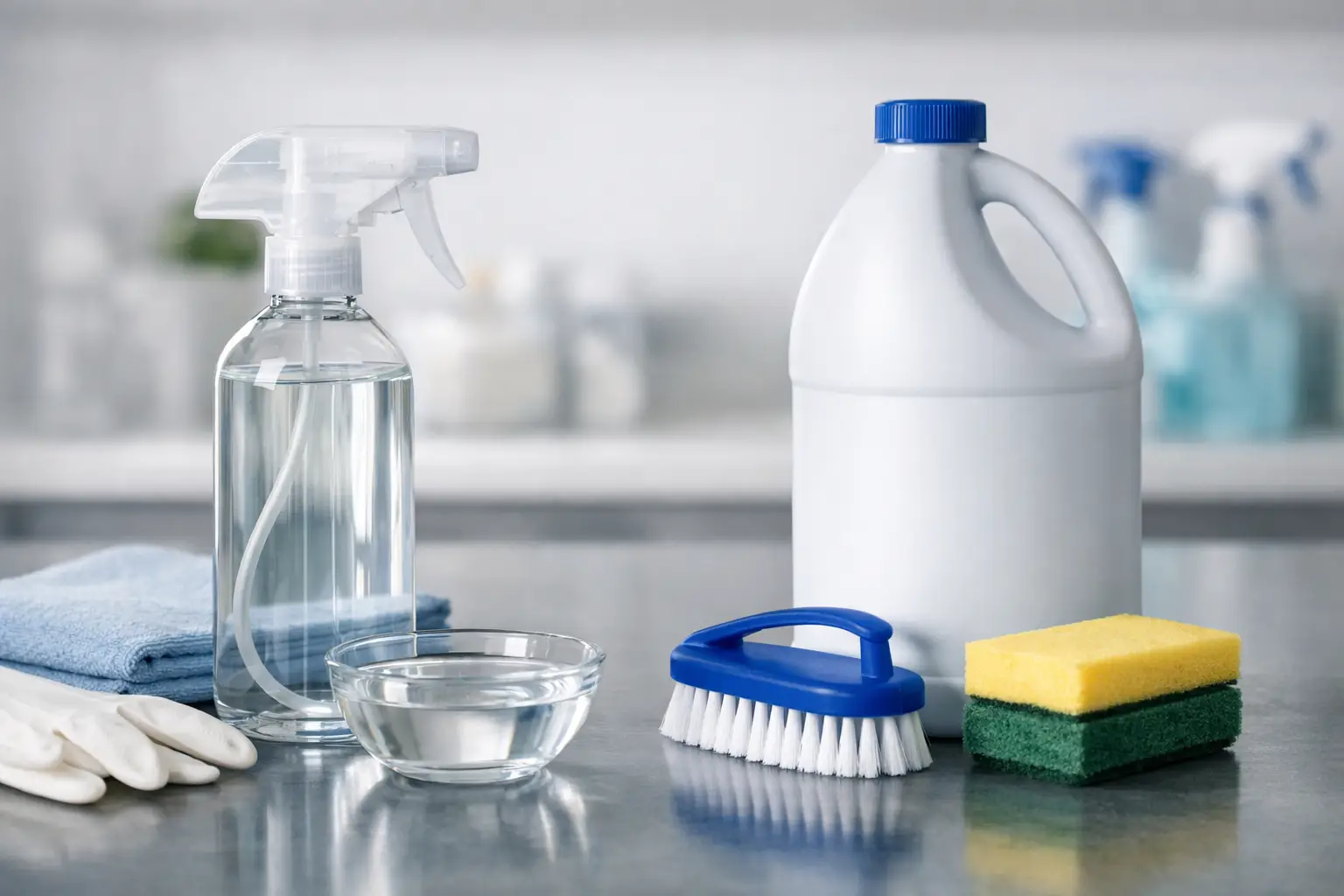
A bleach smell may signal “clean” to some people, but it can also clear a room, fade fabrics, irritate skin, and create a storage problem. The real question in hypochlorous acid vs bleach cleaning is not which chemical has a tougher reputation. It is which option gives your home, facility, or service business the sanitation results it needs without adding unnecessary risk, labor, waste, and supply dependence.
Bleach still has a place in certain demanding situations. Yet for frequent cleaning, deodorizing, and sanitation across occupied spaces, hypochlorous acid (HOCl) offers a powerful, safer, and more practical path. It is made from simple inputs, can be generated on site, and works without turning every cleaning task into a chemical-handling event.
Hypochlorous Acid vs Bleach Cleaning: The Core Difference
Bleach is typically sodium hypochlorite, a strongly alkaline chemical that has long been used for whitening, stain removal, and sanitation. It is inexpensive at the bottle level, widely available, and familiar to cleaning teams. But familiarity does not remove its trade-offs. Bleach can be hard on many surfaces, damaging to colored fabrics, unpleasant to work around, and demanding to store and dilute correctly.
Hypochlorous acid is different. HOCl is a chlorine-based active molecule produced when salt, water, and electricity are carefully converted into a balanced solution. It is also a compound the human immune system naturally produces as part of its response to unwanted microbes. In a properly made, pH-neutral solution, HOCl provides effective cleaning and sanitation support while being far more compatible with routine use around people, pets, and sensitive environments.
The distinction matters because chemical strength is not the same as cleaning quality. A product that forces workers to ventilate a room, wear extra protective gear, rinse delicate surfaces, or avoid using it near guests may not be the best daily operational choice. The best system is the one your team can use correctly and consistently.
Why Bleach Creates Friction in Daily Operations
Bleach can be useful, but its limitations show up quickly in real-world routines. It has a sharp odor that can make bathrooms, classrooms, hotel rooms, and food-service back areas uncomfortable. Its high alkalinity can contribute to corrosion on certain metals and repeated wear on finishes, grout, fabrics, and equipment components.
It also requires discipline. Concentrated bleach must be diluted according to the intended task, and diluted solutions do not last indefinitely. Staff need clear procedures for measuring, labeling, storing, and disposing of it. A rushed employee can easily use too much, make an old solution, or apply it where it does not belong.
The most serious issue is incompatibility. Bleach should never be mixed with acids, ammonia, or other cleaning products. That includes vinegar. Mixing incompatible chemicals can release harmful fumes, which is why bleach cleaning programs require training and strict separation from other supplies.
For a homeowner, those issues may mean another bottle under the sink and another set of cautions to remember. For a facility manager, they can mean employee exposure concerns, more complicated chemical inventories, damaged surfaces, and recurring purchasing headaches. For a cleaning-service operator, they can limit the types of accounts and environments where a cleaning solution feels like a good fit.
Where HOCl Changes the Equation
HOCl is designed for frequent, practical use. Rather than relying on a harsh, high-odor product, users can apply an appropriately prepared HOCl solution for everyday cleaning, odor control, and sanitation needs. It is well suited to high-touch surfaces, restrooms, kitchens, break rooms, waiting areas, classrooms, fitness spaces, pet areas, and many other places that need attention more than once a day.
Its odor-control benefits are especially valuable. Odors are not always solved by covering them with fragrance. A properly applied HOCl solution helps address the organic sources that contribute to unpleasant smells, making it useful in trash areas, locker rooms, bathrooms, animal-care settings, hospitality spaces, and agricultural operations.
On-site generation is where HOCl becomes more than another bottle. Microbe Ninja NinjaGen systems convert water, salt, and a small amount of organic vinegar into pH-neutral HOCl solutions at 200, 500, and 1,000 ppm concentrations. That lets users make the volume and concentration appropriate for their operation instead of continually ordering, receiving, storing, and replacing conventional chemical products.
For a small business, this can mean fresh solution when it is needed. For a larger facility, systems such as the NinjaGen 360, 144, and 1440 can support a more reliable sanitation supply across departments or locations. The operational advantage is straightforward: fewer supply-chain surprises and a lower cost per batch than repeatedly purchasing ready-made chemical cleaners.
Effectiveness Depends on Process, Not Just the Bottle
Neither bleach nor HOCl can compensate for poor cleaning practices. Soil, grease, food residue, and heavy buildup can block a solution from reaching the surface underneath. When a surface is visibly dirty, remove the debris first. Then apply the cleaning solution evenly and allow the appropriate wet contact time for the product and task.
This is where teams often lose results. They spray and immediately wipe, use too little product, or treat sanitation as a one-step shortcut for a dirty surface. A better routine is simple: clean away visible soil, apply the chosen solution, keep the surface wet for the required period, then allow it to air dry or wipe as the procedure calls for.
HOCl also needs to be made and managed correctly. Concentration, pH, storage conditions, and age affect solution performance. A reliable generator and clear operating procedures matter. On-site generation gives operators more control, but that control should be paired with testing, batch tracking where appropriate, clean containers, and staff training.
Bleach has its own process demands. It must be diluted accurately, used within its working life, and kept away from incompatible products. If a facility already has mature bleach protocols and uses it only for narrow, suitable applications, keeping it as part of the chemical program may make sense. Replacing every product overnight is not always the smartest move.
Choosing the Right Option for Your Setting
For occasional stain whitening or a narrowly defined cleaning task, bleach may be the familiar tool. Its bleaching action is a distinct function, and HOCl is not a replacement for every whitening need. The decision changes when the goal is frequent sanitation and deodorizing across spaces occupied by customers, patients, students, employees, children, or animals.
HOCl is often the stronger operational choice when you want a low-odor solution that can be produced on demand and used broadly across daily touchpoints. It can reduce the burden of hauling cases, managing numerous chemical products, and training workers around a harsh material. It is particularly compelling for facilities that clean repeatedly throughout the day or operate where odors and customer comfort directly affect the experience.
Cost should be evaluated beyond the purchase price of a gallon. Include freight, storage, dilution mistakes, product waste, damaged surfaces, employee time, and stockouts. A bottle of bleach may look inexpensive, but a system that makes fresh HOCl for pennies per batch can offer a more predictable long-term cost structure.
A Better Standard for Everyday Cleaning
The choice between HOCl and bleach is really a choice between a legacy chemical routine and a more adaptable sanitation system. Bleach can serve specific purposes, but it brings handling restrictions and surface concerns that are difficult to ignore in daily use.
For homes and facilities that want powerful sanitation, practical odor control, and a safer approach to routine cleaning, HOCl offers a compelling alternative. Start with the spaces your team cleans most often, build a clear application process, and choose a solution that makes consistent cleaning easier to sustain.
Comments are closed