

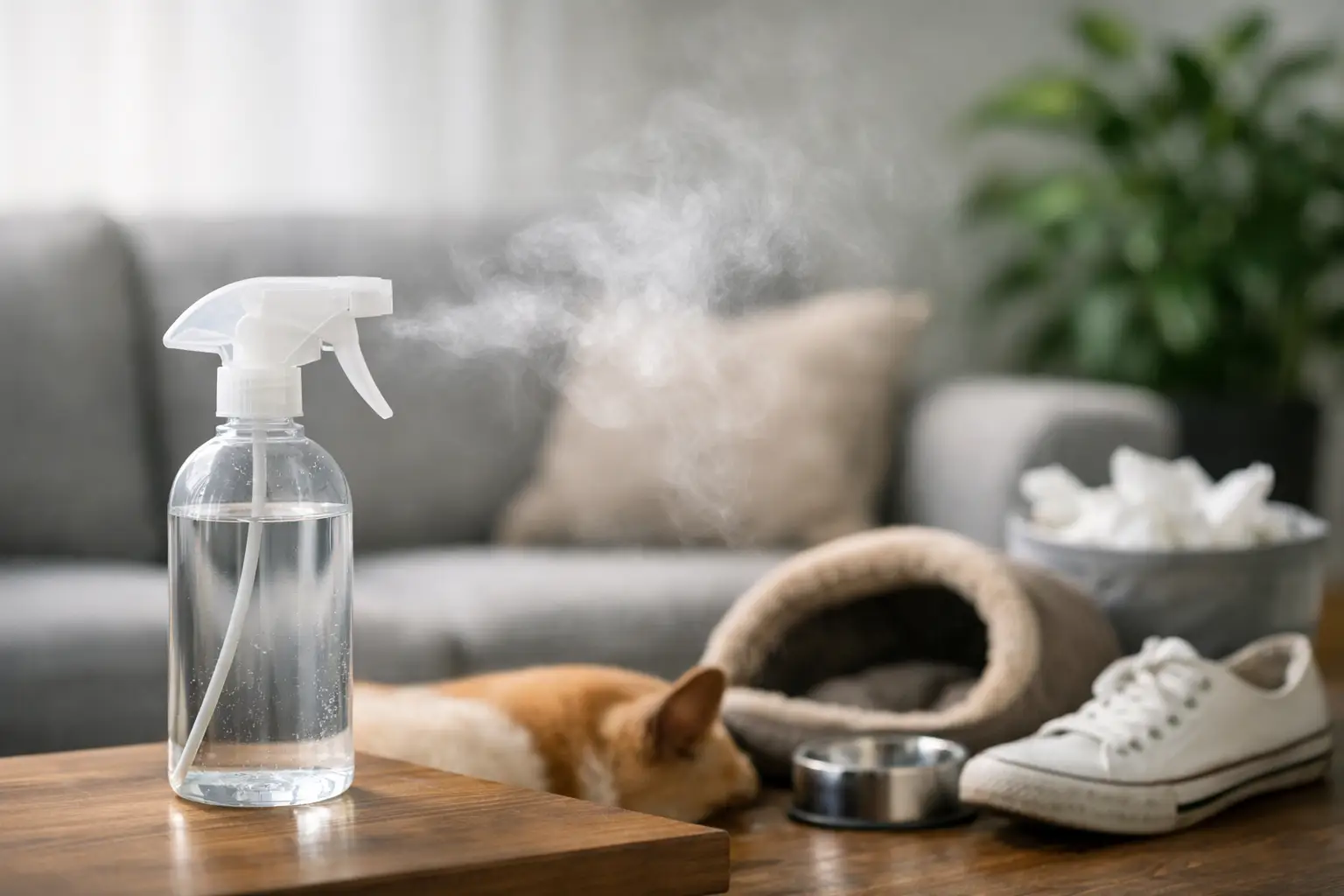
A trash room that smells clean for an hour and sour again by lunch has not been deodorized. It has been covered up. A hypochlorous acid odor eliminator takes a more useful approach: it is designed to address the odor-producing residue and microbes left on surfaces, fabrics, equipment, and hard-to-reach areas instead of layering fragrance over the problem.
That distinction matters everywhere odors affect confidence and operations. Homeowners want kitchens, bathrooms, pet areas, and laundry rooms that feel genuinely fresh. Facility teams need cleaner-smelling restrooms, break rooms, hallways, waste areas, guest rooms, and loading zones without turning each task into a chemical-handling event. The goal is not a stronger perfume. The goal is a cleaner environment with fewer odor sources.
Why odors keep coming back
Most persistent odors begin with organic material. Food residue, body oils, pet accidents, mildew, garbage leakage, drain buildup, and moisture create favorable conditions for odor-producing microbes. Porous surfaces can hold onto that material, while rough grout, floor drains, trash bins, mop heads, and equipment seams give it places to remain after a quick wipe-down.
Fragranced products can make a space smell different, but fragrance is not the same as odor control. If the source remains, the smell often returns as soon as the scent fades. Some heavy chemical products also introduce their own sharp odor, creating a trade-off that is especially unwelcome in schools, medical offices, hospitality settings, restaurants, and occupied homes.
Effective odor control starts with removal. Visible debris and heavy soil need to be cleaned away first. Then a solution needs enough contact with the treated surface to reach what is left behind. This is why a spray-and-walk-away routine can disappoint, even when the product itself is capable. Application method, coverage, contact time, and surface condition all matter.
How a hypochlorous acid odor eliminator works
Hypochlorous acid, commonly called HOCl, is a powerful cleaning and sanitation chemistry that can be made from simple inputs: water, salt, and a small amount of organic vinegar in Microbe Ninja’s on-site generation process. The result is a pH-neutral HOCl solution that supports practical cleaning, deodorizing, and pathogen-control routines without relying on harsh conventional chemicals.
When applied to an odor source, HOCl helps break down the organic material and microbial activity associated with unpleasant smells. Rather than adding a competing scent, it supports the cleaning process at the point where the odor began. That makes it useful for both one-time odor events and recurring maintenance in places that must stay ready for customers, residents, staff, patients, students, or guests.
HOCl is not a magic shortcut around poor cleaning practices. A greasy hood filter, a drain packed with buildup, or carpet padding saturated by a long-term pet issue may require physical removal, extraction, repair, or professional restoration. But as part of a well-run cleaning program, an HOCl solution can replace a cluttered collection of odor sprays and harsh cleaners with one versatile, on-demand option.
Where HOCl makes the biggest difference
The best applications are places where odor and routine cleaning overlap. In a home, that may mean trash cans, diaper pails, pet crates, litter-area floors, bathroom surfaces, athletic gear, kitchen counters, refrigerators, and laundry areas. For small businesses, it can include restrooms, locker rooms, employee break areas, entry mats, garbage containers, carts, reusable bins, and janitorial equipment.
Commercial facilities have additional odor pressure points. Hotels and property managers may need to treat rooms between occupants, shared laundry areas, hallways, and waste rooms. Food service and grocery operators need practical cleaning around back-of-house surfaces, storage areas, carts, and non-food-contact equipment. Farms, greenhouses, and growing operations may focus on tools, walkways, containers, and high-moisture areas where organic matter accumulates.
The right application format depends on the task. A trigger sprayer offers controlled coverage for counters, fixtures, bins, and equipment. A larger dispensing applicator can improve consistency on floors and broader surfaces. For operations with frequent, high-volume use, on-site generation makes it possible to produce fresh solution when needed rather than continually ordering, storing, and disposing of single-use chemical containers.
PPM, freshness, and coverage matter
Not every cleaning task requires the same concentration. Microbe Ninja’s NinjaGen systems produce pH-neutral HOCl solutions at 200, 500, and 1,000 ppm, giving users options for different cleaning and deodorizing needs. A facility should select concentration and application practices based on its surfaces, soil load, internal procedures, and the specific product guidance it follows.
Higher ppm is not automatically the answer to every odor complaint. If a trash bin is visibly soiled, more solution alone will not replace the need to empty it, remove residue, and clean seams and handles. If a room has poor airflow or ongoing moisture intrusion, the underlying condition must be corrected. Good odor control pairs the appropriate HOCl solution with the practical work of removing what feeds the odor.
Freshness also matters. On-site generation gives teams greater control over supply and helps reduce dependence on delivered products that may sit in storage. For busy operations, that can mean lower per-batch cost, fewer stockout concerns, and a simpler path to standardizing cleaning across locations or shifts.
Build odor control into the cleaning routine
The most successful programs do not wait until a guest, customer, or employee notices a smell. They identify recurring odor zones and build them into daily or scheduled cleaning. A restroom may need attention to fixtures, partitions, floors, trash receptacles, and floor drains. A break room may need tables, appliance handles, sink areas, bins, and the mop tools used to clean the room.
Start by locating the source, not just the room. Look beneath liners, around wheels, inside lids, under mats, along baseboards, and in drains or grout lines. Remove debris and visible soil. Apply the HOCl solution evenly enough to reach the treated area, allow suitable contact time according to the use procedure, and clean or wipe as needed. Then evaluate the result after the area has dried, when masking scents are no longer influencing the assessment.
For recurring commercial work, consistency is the advantage. Document the high-odor zones, specify the application tool and solution concentration, and train staff to clean the source before treating the smell. This creates a repeatable service standard instead of a reactive cycle of stronger fragrance and emergency cleanup.
A smarter alternative to odor masking
A hypochlorous acid odor eliminator is especially compelling when safety, cost control, and supply independence matter as much as results. It gives homeowners a practical way to maintain fresher high-use spaces. It gives facility leaders a scalable approach that can fit daily routines. And it gives cleaning entrepreneurs a differentiated service built around on-site, sustainable solution production.
Microbe Ninja systems are built for that range of needs, from compact home and small-business units to NinjaGen 360, 144, and 1440 systems for larger operations. Producing HOCl on site for pennies per batch changes the economics of routine cleaning while reducing the need to store multiple harsh products.
The clearest sign of good deodorizing is not an overpowering scent. It is a space that simply smells clean because the work addressed what was causing the odor in the first place.
Comments are closed