

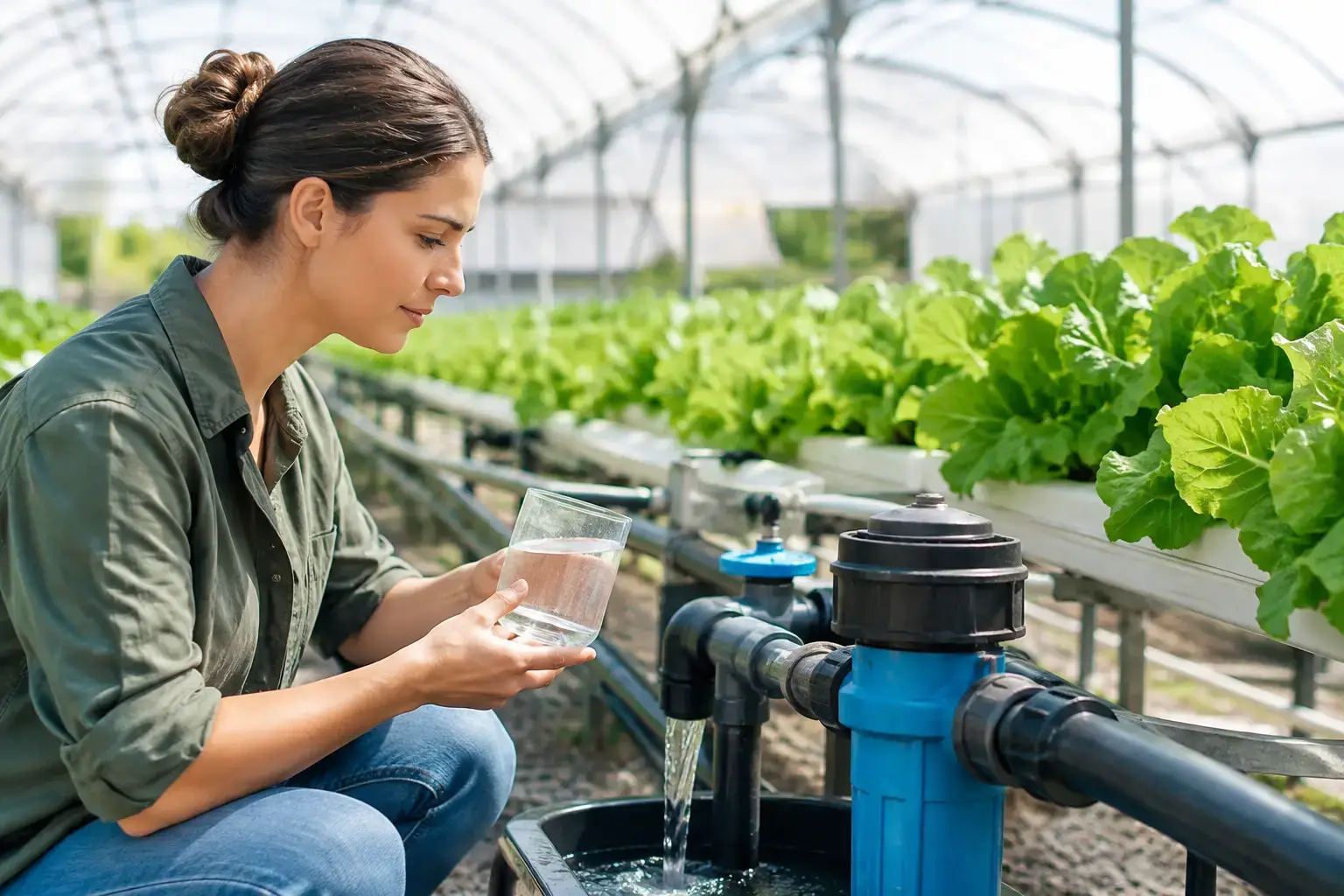
A greenhouse can have excellent climate control, clean benches, and a disciplined staff, then still lose uniformity because the irrigation water is carrying trouble. When you treat greenhouse irrigation water correctly, you protect more than plants. You protect emitters, injectors, reservoirs, labor time, and the consistency that buyers expect from every crop cycle.
Water treatment is not a one-size-fits-all chemical routine. A source with high iron calls for a different approach than a well with bacterial slime, municipal water with a chlorine residual, or recirculated water carrying organic load. The goal is straightforward: deliver water that is physically clean, chemically suitable for the crop, and managed to reduce microbial pressure throughout the irrigation system.
Start With a Water Test, Not a Guess
A clear-looking sample can still create serious operational problems. Before selecting filtration, acidification, or sanitation equipment, test both the source water and water at the far end of the irrigation line. Conditions can change between the well, storage tank, fertigation system, and final emitter.
At minimum, review pH, alkalinity, electrical conductivity, hardness, iron, manganese, sodium, bicarbonates, and microbial indicators. For recirculated water, also examine organic matter, suspended solids, nutrient concentration, and the condition of return-water filters. This baseline helps separate a water-quality issue from a line-maintenance issue.
For example, high bicarbonates may continually push irrigation pH upward, making nutrient management harder. Iron and manganese can precipitate, stain equipment, and create a food source for slime-forming organisms. High suspended solids can clog filters before any sanitation step has a chance to work. Treating the wrong problem is expensive, especially at commercial scale.
Retest on a schedule, not just when plants show symptoms. Seasonal shifts in well water, runoff influence, source blending, and storage time can all change treatment needs.
Remove Sediment and Organic Load First
Filtration is the physical foundation of irrigation-water management. Sand, algae, soil particles, and organic debris do more than plug emitters. They can consume active treatment chemistry and shield microbes within deposits or biofilm.
Choose filtration based on the source and emitter requirements. Screen or disc filters are common for removing larger particles, while media filtration may be appropriate for surface water or water with heavier organic loading. The correct micron rating depends on the irrigation hardware, flow rate, and water quality. A filter that is too coarse leaves debris in the system. One that is too fine can restrict flow and create excessive maintenance.
Storage tanks deserve equal attention. Light exposure encourages algae, sediment gathers at the bottom, and stagnant zones create uneven water quality. Use covered tanks when practical, clean them on a documented schedule, and ensure circulation reaches corners and low-flow areas.
Use HOCl Strategically for System Sanitation
Hypochlorous acid, or HOCl, offers a practical option for managing microbial pressure in irrigation infrastructure. It is the same active chemistry produced by the human immune system and can be generated on site from water, salt, and a small amount of organic vinegar. When produced at a pH near neutral, HOCl is highly effective as an oxidizing sanitation solution while being easier to work with than many harsh conventional chemicals.
For greenhouse operations, the value is not simply adding a solution to water. It is maintaining cleaner tanks, lines, filters, emitters, and application equipment with a repeatable process. Biofilm inside irrigation lines can harbor organisms, restrict flow, and make problems return shortly after a system appears clean. Consistent treatment is generally more effective than waiting for a visible buildup or a crop-health event.
The correct concentration, contact time, and injection point depend on the water source, organic load, system volume, and crop. A concentrated shock treatment for an empty irrigation system is not the same as a maintenance program for water moving toward plants. Work with a qualified crop advisor, irrigation specialist, or equipment provider to establish a protocol appropriate for the crop and growing method.
Microbe Ninja systems make this approach more practical by producing pH-neutral HOCl on site in 200, 500, and 1,000 ppm strengths. That gives growers a dependable supply for routine sanitation tasks without storing a large inventory of harsh chemicals or relying on recurring deliveries.
Measure What Reaches the End of the Line
A treatment program should be verified, not assumed. Test at the injection point and again at the farthest representative emitters. The water may encounter filters, fertilizers, organic residue, or long pipe runs that reduce available treatment strength before it reaches the final zone.
Free chlorine test strips or meters and oxidation-reduction potential monitoring can help operators see whether the system is maintaining the intended residual. These readings are useful operational tools, but they are not substitutes for crop observation and periodic lab testing. Keep records of source-water results, treatment settings, readings, line-flushing dates, and any changes in plant response.
If readings collapse quickly, investigate the cause. Heavy organic load, dirty tanks, biofilm, fertilizer interactions, or incorrect injection placement may be consuming the HOCl before it can support the sanitation objective.
Keep Fertigation and Water Treatment Compatible
Fertilizers change water chemistry. Some products raise or lower pH, and many can react with oxidizing solutions. Combining treatment chemistry and fertilizer in the same stock tank without confirming compatibility can reduce effectiveness, create precipitates, or put plant roots under unnecessary stress.
A safer operating approach is to keep fertilizer stock and HOCl treatment separate, use appropriate injection points, and allow adequate mixing. The exact sequence depends on the system design. In some operations, sanitation treatment may occur upstream to support line cleanliness, while fertilizer is injected later. In others, a dedicated maintenance or flush cycle is the better fit.
Never assume a protocol designed for ornamental crops will transfer directly to vegetables, herbs, propagation houses, or hydroponic systems. Sensitive young plants and recirculating systems require particularly careful validation. Start with a small zone when changing chemistry or dosing, observe roots and foliage, and adjust based on measured results.
Flush Lines Before Problems Become Visible
Irrigation lines accumulate sediment even when source water looks good. Regular flushing removes loosened deposits and helps prevent uneven flow across the greenhouse. The schedule depends on water quality and system design, but it should be established before clogging becomes routine.
During a line-cleaning cycle, open flush points long enough to clear the laterals and observe the discharge. Cloudiness, dark particles, slime, or uneven flow are signals to inspect filtration, tanks, and injection practices. Replace worn emitters and damaged filters rather than trying to compensate with more chemistry.
A simple maintenance log can reveal patterns that daily work hides. Record filter pressure differentials, flush dates, tank cleaning, treatment measurements, and problem zones. Over time, that record helps managers make targeted changes instead of treating the entire facility as though every zone has the same issue.
Build a Program Around Your Crop and Source
The best way to treat greenhouse irrigation water is usually a layered program: test the source, filter solids, manage pH and alkalinity when needed, maintain clean storage and distribution equipment, and use HOCl thoughtfully to support sanitation. Each layer handles a different risk, and skipping one often shifts the burden to another.
Water treatment should make greenhouse production more predictable, not more complicated. Begin with accurate measurements, validate performance at the endpoint, and choose solutions that are safe, sustainable, and realistic for the way your team actually works. Clean water moving through clean lines gives every irrigation event a better chance to do exactly what it was intended to do.
Comments are closed