

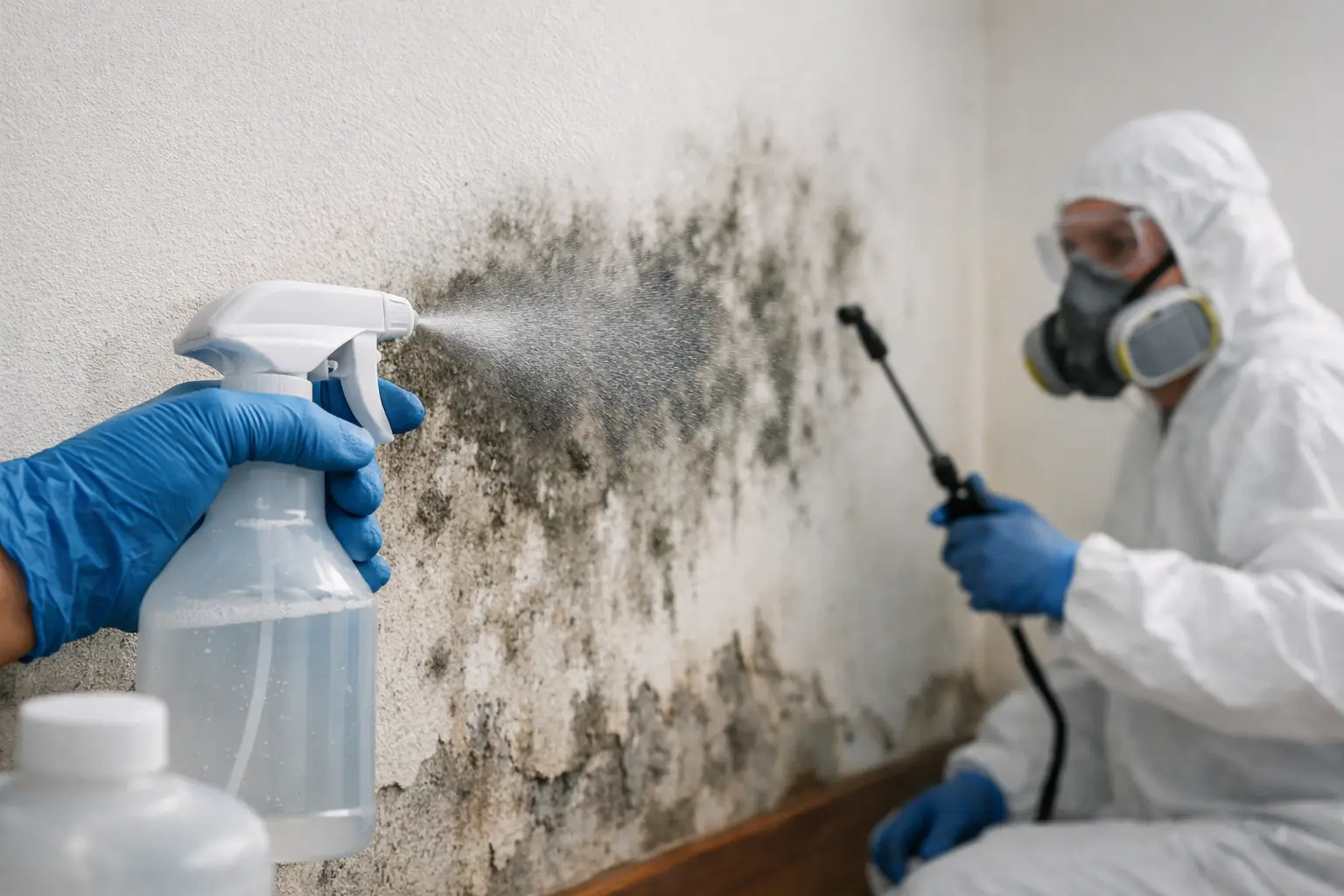
A musty odor may lead you to a visible patch of mold, but the stain is rarely the whole problem. Mold grows because moisture stayed where it didn’t belong, whether behind a baseboard, beneath a sink, inside a storage room, or around a cooling unit. Hypochlorous acid can be a useful part of a safer cleaning and odor-control process, but it does not replace moisture control, material removal, or a careful inspection.
That distinction matters for homeowners, facility teams, and cleaning service operators. A surface can look clean after treatment while hidden moisture continues feeding growth nearby. The practical goal is not to simply spray away a spot. It is to remove contamination appropriately, clean remaining surfaces, control odor, and return the area to a dry, maintainable condition.
Where Hypochlorous Acid Fits in Mold Remediation
Hypochlorous acid, commonly called HOCl, is a powerful antimicrobial compound that is also naturally produced by the body’s immune system as part of its defense against harmful microorganisms. When generated at the proper pH and concentration, HOCl provides an effective cleaning and odor-control option without the harsh fumes and residues associated with many conventional chemical products.
For mold-related work, HOCl is best viewed as a supporting tool in a complete remediation process. You can apply it to hard, nonporous, and certain semi-porous surfaces after physically removing visible buildup. It can also help address the musty odor that often lingers after a moisture event. Its usefulness depends on the surface, the amount of growth, the material’s condition, the solution concentration, and enough wet contact time to do the job.
Not all molds respond the same way to antimicrobial treatment. Mold includes many fungal species, and susceptibility can vary by organism and spore type, as well as by environmental conditions, organic load, concentration, and contact time. For that reason, a specific HOCl concentration — including 1,000 ppm — should not be interpreted as a universal treatment for every type of mold or mold spore.
HOCl is not a shortcut for damaged drywall, insulation, carpet padding, ceiling tile, or other porous materials with extensive mold growth. Those materials may need to be removed and replaced. Nor can any surface treatment fix an active plumbing leak, roof leak, poor drainage, or humidity problem.
Why Proper pH Matters With HOCl
The chemistry matters. A properly generated HOCl solution within the appropriate pH range is designed to be effective while remaining more compatible with daily-use environments than aggressive, high-odor cleaners.
It also supports a better workflow. Instead of stocking multiple heavy containers and waiting on shipments, operators can produce solution on site from water, salt, and a small amount of organic vinegar. Microbe Ninja NinjaGen systems produce HOCl at 200, 500, and 1,000 ppm, giving users options for different cleaning and deodorizing applications.
Don’t guess the right ppm for a mold-related task. Follow the product directions, consider the surface and soil load, and use the process consistently. Higher concentration isn’t automatically better if the area hasn’t been cleaned first or the surface cannot tolerate excess moisture. A higher ppm also should not be interpreted as a guarantee of effectiveness against every mold species or spore type.
Start With the Moisture Source
Before cleaning begins, identify why mold grew. A slow leak can wet a wall cavity for months. Condensation can form around poorly insulated pipes. A bathroom exhaust fan may be undersized, disconnected, or simply not used long enough after showers. In commercial facilities, a clogged condensate drain or a neglected HVAC component can create the same problem at a larger scale.
Correct the water source first, then dry the affected area thoroughly. Depending on the event, that may mean repairing a leak, increasing ventilation, running dehumidification equipment, improving drainage, or replacing wet materials. Cleaning an area that remains damp only sets up the next round of growth.
For small, contained areas on accessible surfaces, a trained maintenance employee or homeowner may be able to handle the work with appropriate protective equipment and care. Larger areas, repeated growth, water-damaged HVAC systems, contaminated water events, or suspected hidden growth call for a qualified remediation professional. The same is true when occupants have respiratory sensitivities or when the affected space is a critical care, food handling, or high-traffic environment.
A Practical Process for Mold-Affected Surfaces
A strong process is more valuable than a strong-smelling product. Isolate the work area as needed so dust and disturbed material don’t spread into clean spaces. Wear suitable personal protective equipment for the scope of work, and avoid dry scraping or brushing that can send debris into the air.
Remove what cannot be saved
Porous materials with significant growth or water damage often require removal. This can include saturated carpet padding, crumbling drywall, wet insulation, paper-faced materials, and warped fiberboard. Bag and contain removed materials before carrying them through occupied areas.
For hard surfaces, remove visible residue with a physical cleaning step. The goal is to lift and remove the soil load rather than cover it with a chemical application. Use cleaning tools that can be cleaned or disposed of appropriately between areas to prevent cross-contamination.
Apply HOCl after physical cleaning
Once the surface is visibly clean, apply the HOCl solution evenly according to its product directions. A trigger sprayer, foaming applicator, or electrostatic-style application method may be appropriate, depending on the surface and job size. The surface needs to remain wet for the specified contact period, so avoid a light mist that dries immediately.
Do not mix HOCl with bleach, acids, ammonia, or other cleaning products. Mixing chemicals creates unnecessary uncertainty and can create unsafe conditions. Use a clean, dedicated applicator and only the solution intended for that task.
After the contact period, allow the area to dry fully unless the product instructions call for a different final step. Good air movement and humidity control are part of the cleaning process, not an afterthought.
Verify the area can stay dry
A successful remediation job should leave behind a manageable space. Check for dampness at baseboards, under flooring edges, near supply lines, behind appliances, and around windows. Confirm that exhaust fans operate, drain lines flow, and humidity is being controlled.
For facility managers, maintenance records add real value. Document the leak repair, materials removed, cleaning date, products used, and follow-up inspection. For a cleaning business, that documentation helps establish clear scope boundaries and shows the customer that the service addressed conditions, not just appearances.
Common Mistakes That Keep Mold Coming Back
The most common error is treating mold as a surface-only issue. If a musty smell returns within days or weeks, investigate the moisture source rather than applying more product. Repeated spraying on a wet wall, damp carpet, or leaking ceiling is not remediation.
Another mistake is using too much liquid on materials that are already vulnerable to moisture. Apply HOCl thoughtfully, especially around unfinished wood, drywall edges, upholstery, and flooring seams. The objective is controlled coverage and appropriate contact time, followed by drying.
Finally, do not confuse odor reduction with proof that a moisture problem is resolved. A fresher-smelling room is welcome, but the better test is whether materials are dry, the source has been corrected, and no new signs of growth appear.
Building a More Sustainable Mold Response
For recurring maintenance needs, on-site HOCl generation can reduce dependence on ready-to-ship chemical inventory and single-use packaging. A compact system can help a homeowner maintain bathrooms, laundry spaces, kitchens, and utility rooms. Larger systems can support housekeeping teams, restoration-oriented service providers, schools, lodging operations, farms, and commercial facilities that need consistent cleaning and deodorizing capacity.
That operational control also offers cost benefits. Producing solution on demand for pennies per batch can reduce the expense and storage burden of conventional cleaners. Just as important, it keeps teams prepared when a spill, leak, odor issue, or small mold concern needs prompt attention.
A dry building is the first line of defense against mold. Pair that discipline with careful removal, thoughtful HOCl application, and regular follow-up, and you create a cleaner space that is easier to maintain long after the visible spot is gone.
Comments are closed