

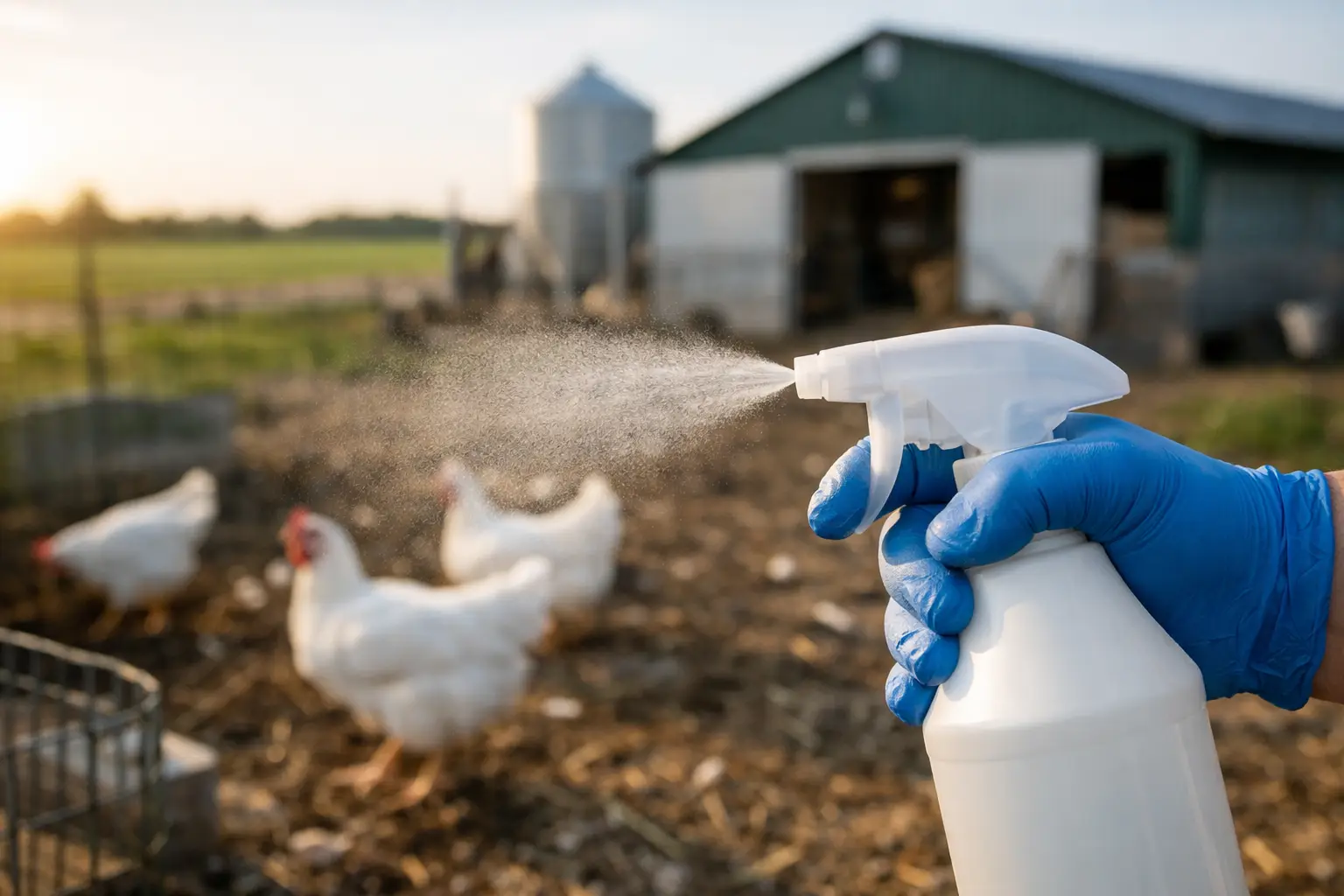
A boot room can become a biosecurity weak point long before anyone notices it. Mud on treads, shared tools, vehicle touchpoints, livestock-area gates, and persistent odors create a daily sanitation workload that cannot depend on a single deep-cleaning day. Hypochlorous acid for farm biosecurity gives farm teams a practical way to produce a powerful, safer sanitation solution on site and use it where routine cleaning matters most.
For farms, greenhouses, hatcheries, and growing facilities, biosecurity is not one product or one procedure. It is a consistent operating discipline: controlling traffic, removing soils, cleaning contact surfaces, managing odors, and helping prevent contamination from moving between zones. The right sanitation chemistry should support that discipline without adding harsh fumes, complicated dilution steps, or recurring supply-chain headaches.
Why farm biosecurity needs a daily system
Farm environments are demanding by nature. Organic matter, dust, moisture, manure, feed residue, standing water, and high traffic all work against clean conditions. A product that performs well on a polished indoor surface may be less practical when employees need to treat boots, equipment handles, carts, gates, wash areas, and hard surfaces across a working operation.
That is why effective farm biosecurity starts before a sanitation solution is applied. Visible soil and organic residue need to be removed first. Cleaning gives hypochlorous acid a better opportunity to contact the intended surface, rather than being consumed by the mess sitting on top of it. Skipping this step is one of the most common reasons sanitation programs underperform.
The second requirement is consistency. If a product has an unpleasant odor, requires extensive personal protective equipment, or is difficult to mix correctly, teams may use less of it or use it inconsistently. A practical program is one employees can follow during a busy shift, not just when an inspection is scheduled.
What hypochlorous acid brings to the farm
Hypochlorous acid, often called HOCl, is a water-based sanitation chemistry valued for its effectiveness, low odor, and more worker-friendly profile compared with many conventional chemical cleaners. It can support cleaning, deodorizing, and sanitation routines in operational areas where people, animals, plants, equipment, and surfaces all share the same working environment.
For farm operators, the most significant advantage is not simply the chemistry itself. It is the ability to make a fresh solution as needed. On-site generation reduces dependence on deliveries, storage space, and a shelf full of separate chemical products. With the right equipment, water, salt, and a small amount of organic vinegar can be converted into pH-neutral HOCl solutions for daily use.
This approach also creates more control over cost. Instead of repeatedly purchasing ready-to-use chemical products and paying to ship water, a farm can produce the solution it needs on location for pennies per batch. That matters when sanitation must extend beyond a few spray bottles and become part of an entire facility routine.
Where hypochlorous acid for farm biosecurity fits
HOCl is most useful when it is integrated into clear zones and repeatable workflows. It should not be treated as a replacement for veterinary direction, animal-health plans, pest management, or basic cleanliness. It is one part of a larger biosecurity strategy designed around the farm’s species, production system, regulations, risk level, and traffic patterns.
In livestock operations, teams may use a sanitation solution for boot-room surfaces, entryways, gates, panels, nonporous equipment, carts, utility vehicles, wash-down areas, and odor-prone hard surfaces. In greenhouses and indoor growing facilities, the focus may include benches, propagation areas, tools, worktables, harvest equipment, packing areas, and common touchpoints.
The best use cases tend to be the ones with frequent contact and a clear owner. A tool station that everyone uses but nobody is assigned to clean will eventually become a problem, regardless of which chemistry sits beside it. Assigning responsibilities by zone gives the program a better chance of working every day.
Start with traffic, not spray bottles
Map how people, equipment, animals, and materials move through the property. Identify clean zones, transition zones, and higher-risk areas. Then place applicators and refill stations where teams need them at the point of use.
For example, a sanitation station placed outside a distant supply closet is less likely to be used than one located at the entrance to a controlled work area. Farms should also separate tools by zone where possible. Color coding, labeled storage, and designated carts can reduce unnecessary movement between areas and make proper routines easier to verify.
Match concentration to the task
Not every sanitation job requires the same HOCl concentration. A farm may need different solution strengths for routine cleaning, odor control, and more demanding operational applications. Microbe Ninja NinjaGen systems can produce pH-neutral HOCl at 200, 500, and 1,000 ppm, allowing operators to establish a more purposeful approach instead of relying on one product for every task.
The right concentration, application method, and contact time depend on the surface, the amount of soil present, the intended use, and the farm’s written procedures. Follow equipment instructions and any applicable local, state, industry, or veterinary requirements. Higher concentration is not automatically better if the process around it is inconsistent or the surface has not been cleaned first.
Build a routine people will actually follow
A farm biosecurity plan should be simple enough to execute at shift change, during visitor arrivals, after handling equipment, and at the end of the day. Complicated protocols often look good on paper but fail under real production pressure.
A useful routine has four parts:
- Remove visible dirt, manure, feed residue, and other organic material from the surface.
- Apply the appropriate HOCl solution thoroughly, following the farm’s procedure for coverage and dwell time.
- Allow the area to air dry when appropriate, rather than immediately wiping away the solution.
- Refill, label, and maintain applicators so the next employee has a ready-to-use station.
Training should focus on the reason behind each step. Employees are more likely to follow entry and equipment-cleaning procedures when they understand how cross-contamination moves through a facility. Clear signage helps, but visible leadership matters more. When supervisors use the stations correctly and correct gaps quickly, the standard becomes part of the operation’s culture.
On-site generation changes the economics
Conventional chemical purchasing can force farms into an inefficient cycle: buy multiple products, maintain inventory, monitor expiration dates, store hazardous materials, and reorder before a busy season. Those costs are often spread across departments, which makes the real cost of sanitation difficult to see.
On-site HOCl generation offers a more direct model. Produce what is needed, where it is needed, with fewer dependencies on outside deliveries. Compact systems can support smaller operations, while commercial-scale equipment can serve larger facilities with multiple sanitation points and heavier daily demand.
The operational benefit is availability. A sanitation program breaks down quickly when the right product is unavailable, diluted incorrectly, or stored in the wrong place. Fresh, on-demand production helps teams keep their process moving while reducing reliance on harsh, conventional chemicals.
Manage the trade-offs honestly
HOCl is a strong fit for many farm applications, but it is not a shortcut around poor housekeeping. It performs best within a process that includes physical cleaning, correct application, equipment maintenance, and staff accountability. Heavy organic load, neglected drainage, cracked surfaces, and uncontrolled traffic cannot be solved by spraying more solution.
Storage and handling also matter. Farms should use compatible, labeled containers and follow the generator manufacturer’s guidance for solution management. Do not mix HOCl with other chemical products. A clear standard operating procedure protects employees, preserves solution quality, and makes training much easier.
Farm biosecurity works when the daily choices are easy to repeat: clean the surface, control movement, use the right solution, and keep supplies ready where work happens. HOCl can make that standard more practical, more sustainable, and far less dependent on harsh chemicals and unpredictable deliveries.
Comments are closed