

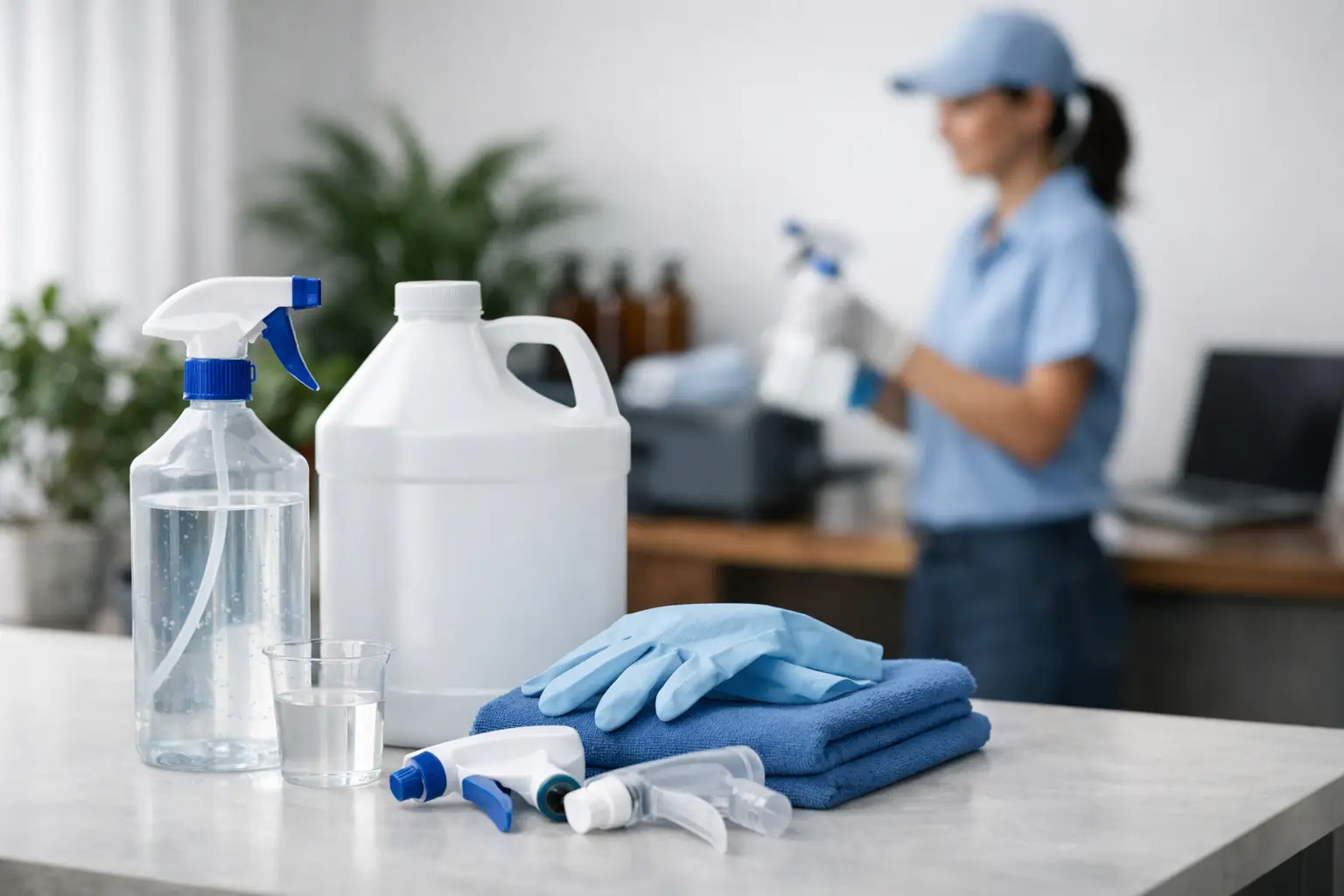
A cleaning company can spend a surprising amount of money hauling, storing, replacing, and explaining chemical products. That is the opening for entrepreneurs who want to start a hypochlorous acid cleaning business built around a simpler operating model: make a powerful cleaning and deodorizing solution on site, apply it correctly, and help customers reduce their dependence on harsh, single-purpose chemicals.
Hypochlorous acid, or HOCl, is not a shortcut to a successful service company. It is a tool with real advantages when it is paired with clear processes, sensible claims, reliable equipment, and a customer base that values safer sanitation. The strongest opportunity is not selling a mysterious new liquid. It is solving everyday problems such as persistent odors, high cleaning-product costs, complicated supply ordering, and the need for dependable cleaning routines.
Why Start a Hypochlorous Acid Cleaning Business?
Conventional cleaning operations often rely on a crowded chemical closet. Different surfaces, rooms, odors, and tasks can require separate products, each with its own storage, handling, training, and reorder cycle. A hypochlorous acid service model can simplify that approach by producing fresh solution where it will be used.
With the right on-site generator, water, salt, and a small amount of organic vinegar can be converted into pH-neutral HOCl solution. Systems that produce 200, 500, or 1,000 ppm give an operator the flexibility to match a solution to a defined cleaning or deodorizing workflow. The practical business benefit is straightforward: less dependence on shipped chemical inventory and a lower per-batch cost.
That model is especially compelling for clients with repeat sanitation needs. Medical offices, schools, fitness centers, hospitality properties, restaurants, retail spaces, offices, farms, greenhouses, and pet-focused businesses all manage recurring cleaning demands. Homeowners can also be a valuable market, particularly families seeking a gentler everyday approach to cleaning high-touch areas and managing odors.
Still, the right niche depends on your experience. A solo operator may gain traction faster with residential cleanings, small offices, and odor-control calls. An established janitorial company may get more value by adding HOCl generation to an existing contract base. There is no prize for serving everyone on day one.
Choose a Service Model Before You Buy Equipment
Your business model should determine your equipment, not the other way around. Start by deciding whether you will provide cleaning services, supply on-site generation systems, offer refill and maintenance support, or combine these revenue streams.
A service-first model is often the most direct route for a new entrepreneur. You bring the equipment, create solution on location or before the appointment according to established procedures, and perform cleaning and deodorizing work. Your customer pays for the result, not the chemistry lesson.
A business-to-business application model can create deeper recurring relationships. Rather than simply cleaning a facility once, you may train its team, provide applicators, establish production routines, and support the equipment. This approach takes more operational discipline, but it can produce monthly service, supply, and maintenance revenue.
A third option is a hybrid model. For example, a cleaning company can use on-site HOCl as part of its own service while also helping select clients adopt generators for daily use. Microbe Ninja’s On-Site Application Business model is designed around this kind of practical, differentiated service opportunity.
Before choosing, ask three direct questions: Who already trusts me? What problem costs them money every week? Can I show a clear operational benefit within the first month? Those answers will shape your offer more effectively than a broad promise to clean everything.
Build Services Around Real Facility Problems
A strong offer is specific. “We use hypochlorous acid” is not a service category. “We help a daycare reduce harsh cleaning-product handling and keep a consistent end-of-day cleaning routine” is a business conversation.
Start with two or three focused service packages. A small-office package might include scheduled cleaning of common areas, restrooms, break rooms, touchpoints, and odor-prone spaces. A hospitality package may focus on room turnover support, lobby touchpoints, waste-area odor control, and staff process consistency. Agricultural operations may need sanitation support for equipment, workspaces, and growing environments, with methods tailored to their site and procedures.
Do not promise outcomes you cannot document or control. Cleaning results depend on soil load, contact time, application method, surface condition, worker technique, and the client’s daily habits. Use clear scopes of work, and explain what is included at every visit. The best operators make the service easy to understand and easy to repeat.
Select Equipment That Matches Your Volume
Equipment capacity affects margins, labor, and credibility. A compact generator may be appropriate for home service, small offices, or a mobile operator with limited daily volume. Larger commercial systems make more sense when you are supporting multiple facilities, high-frequency service routes, or a client that wants to produce solution for its own team.
Consider how much solution you need per shift, where it will be produced, how it will be transported, and which applicators fit the job. Spray bottles can work for targeted surface cleaning, while larger dispensing options may suit high-volume workflows. The goal is not to buy the biggest system. It is to avoid creating a bottleneck that forces your team back to costly conventional products when demand rises.
Create a simple production and quality-control routine from the beginning. Document batch preparation, labeling, storage, date tracking, applicator cleaning, and staff training. If you are operating across several client locations, consistency becomes part of your brand promise.
Price for Outcomes, Not Just Labor Hours
A common mistake is pricing an HOCl-based service as if it were ordinary labor with a different bottle in hand. Your price should account for travel, labor, equipment depreciation, insurance, administration, training, generator maintenance, and the value of the solution itself.
For recurring clients, monthly pricing is usually easier to manage than quoting every visit from scratch. Build packages around visit frequency, square footage, labor requirements, production volume, and special conditions such as odor-heavy areas or after-hours access. Keep optional add-ons separate so customers can see what they are buying.
On-site generation can improve your cost structure because the input materials are simple and production can cost pennies per batch. But lower solution cost does not mean lower service value. A client is paying for an organized sanitation system, trained execution, dependable scheduling, and a safer alternative to harsh chemical routines.
When presenting a proposal, lead with the client’s operational problem. For one business, the value may be reducing supply interruptions. For another, it may be fewer products to train staff on. For a health-conscious facility, it may be creating a more comfortable environment for employees, guests, and customers.
Market With Proof, Process, and Plain Language
The most persuasive marketing is local and practical. Photograph organized equipment setups, show how a site’s cleaning process becomes easier, and collect testimonials that describe service reliability, odor reduction, or improved product management. Always get permission before using customer names, photos, or facility details.
Avoid jargon-heavy sales pitches. Explain HOCl in terms a facility manager can use: it is generated on site, it can support cleaning and deodorizing routines, it reduces the need to store many harsh chemicals, and it helps create a more sustainable operating process.
Be disciplined with claims. Product labels, instructions, and applicable federal, state, and local rules matter. Do not make medical, public-health, or pathogen-control claims that are not supported for your product, concentration, application method, and market. A confident business protects its customers by being precise.
Local outreach works well because sanitation decisions are often made close to the facility. Visit businesses with a clear offer, speak with property managers, build relationships with janitorial firms, and ask existing clients for introductions. A short demonstration can be more effective than a long presentation when it shows how your process fits the customer’s actual workspace.
Create Systems Before You Scale
Once the first contracts arrive, the temptation is to say yes to every request. Resist that impulse until your process is repeatable. Write operating checklists for site setup, solution production, application, equipment care, customer communication, and issue reporting. Train every team member to follow the same sequence.
Track more than revenue. Measure labor time per site, solution volume, repeat-service rate, travel cost, equipment downtime, customer retention, and the reasons prospects say no. Those numbers will show whether you need a better niche, a different route design, more capacity, or clearer pricing.
Scaling may mean adding technicians, installing larger generation systems, or moving from one-time cleanings to recurring facility programs. It may also mean staying intentionally small and profitable with a tight group of local clients. Either path can work when the business is built on dependable results rather than oversized promises.
A hypochlorous acid cleaning business earns trust one routine at a time. Start with a client problem you can solve well, use equipment that fits the work, and make every visit a practical demonstration that safer, sustainable cleaning can also be a smart business decision.
Comments are closed