

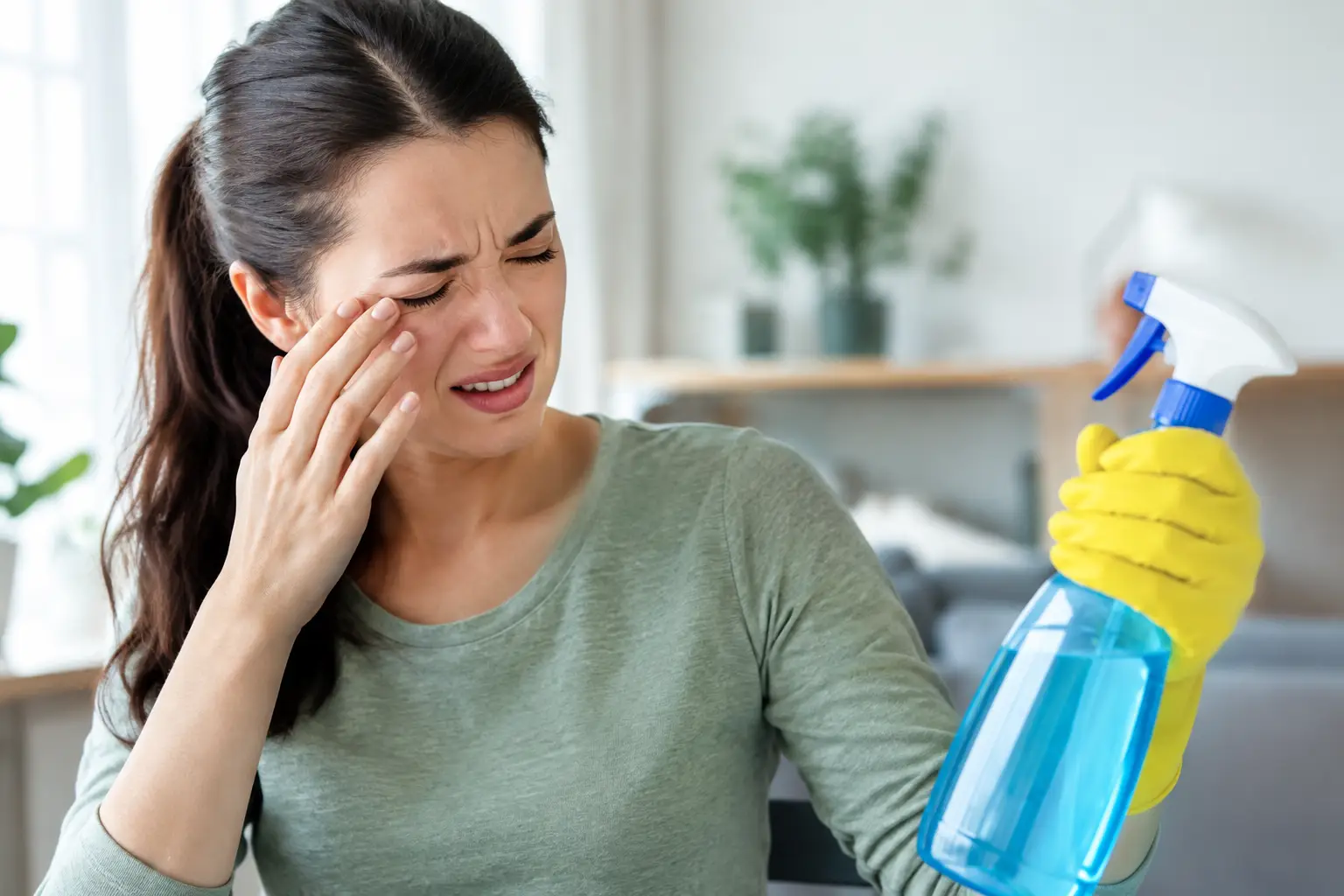
A bathroom can look spotless and still leave someone with burning hands, a tight chest, or eyes that will not stop watering. The signs your cleaner causes irritation are often easy to dismiss as dry air, seasonal allergies, or a long day. But when symptoms reliably show up during or shortly after cleaning, the product, its concentration, or the way it is being used deserves a closer look.
For homes, that can mean protecting children, pets, and family members with sensitive skin. For facilities, it can mean fewer employee complaints, a more comfortable environment for visitors, and a cleaning program that supports daily operations instead of creating new problems.
Irritation is not always an allergy
Irritation happens when a substance directly bothers the skin, eyes, airways, or other tissues. Fragrance, bleach-based products, strong acids or alkalis, solvents, aerosols, and concentrated degreasers can all be triggers. Symptoms may start right away, or they may build after repeated exposure.
An allergy is different. It involves an immune response and can occur even with a small amount of a particular ingredient. The distinction matters medically, but you do not need to diagnose it before making a practical change. If a product repeatedly makes people uncomfortable, stop using it, improve ventilation, and evaluate a safer option.
Symptoms also do not prove that one cleaner is the only cause. Dust, mold, poor ventilation, or mixing products can complicate the picture. The useful question is whether the symptoms follow a pattern: Do they occur in a certain room, after a specific task, or when one product is sprayed?
7 signs your cleaner causes irritation
1. Your hands sting, itch, or feel unusually dry
Frequent handwashing and cleaning can dry skin on their own. But burning, redness, itching, cracking, or a tight feeling shortly after using a product suggests more than ordinary dryness. Pay attention to the backs of the hands, around the knuckles, and near the wrists, where splashes can linger.
Gloves may reduce contact, but they are not a complete answer. A cleaner can still irritate exposed skin, and sweat trapped under gloves can worsen an existing rash. If workers or household members need increasingly heavy protection just to tolerate a routine task, reassessing the product is sensible.
2. Your eyes water or burn while you clean
Watery eyes can be a response to airborne vapors, spray mist, or residue on a surface. Eye irritation is especially common when cleaning glass, bathrooms, ovens, or high-touch areas at close range. A sharp smell is not a measure of cleanliness, but it can signal that volatile ingredients are reaching the eyes and airways.
Avoid treating this as a normal part of the job. Use the product only as directed, increase fresh-air circulation, and switch from broad spraying to applying solution to a cloth when appropriate for the task. If eye pain, vision changes, or persistent redness occur, rinse with clean water and seek prompt medical guidance.
3. Cleaning leaves you coughing or short of breath
A cough, scratchy throat, chest tightness, wheezing, or shortness of breath after cleaning requires attention. Aerosol sprays, fragranced products, and harsh fumes can be particularly troublesome in small bathrooms, supply closets, classrooms, exam rooms, and other poorly ventilated spaces.
People with asthma or other respiratory conditions may react at lower exposure levels, but repeated coughing is not something a facility should normalize for anyone. Stop exposure and move to fresh air. Severe breathing trouble, swelling of the face or throat, or faintness calls for emergency care.
4. The smell lingers long after the task ends
A strong scent may feel like proof that a space has been cleaned, yet lingering fragrance can be an irritant for some people. Headaches, nausea, dizziness, or a “chemical taste” in the throat are common complaints when scented cleaners are used in enclosed areas.
This is not an argument that every scented product is harmful to every person. It is a reminder that fragrance is not required for effective cleaning. In customer-facing spaces, a low-odor approach can make a real difference for employees, guests, students, and patients who spend hours in the building.
5. Red patches appear after contact with cleaned surfaces
Some reactions happen after touching countertops, tables, door hardware, gym equipment, or freshly mopped floors rather than while applying the cleaner. Redness or itching on hands, forearms, or legs may point to residue left behind, an overly concentrated mix, or insufficient rinse steps on surfaces that require rinsing.
Check dilution instructions carefully. More product is not automatically better. Overconcentration can increase residue, cost, odor, and the likelihood of irritation without improving the result you need.
6. Symptoms improve away from the product
One of the clearest clues is timing. Maybe an employee’s headache fades after a shift, or a child’s skin improves during a weekend away from home. If symptoms return when a particular cleaner, room spray, or mop solution returns, document the connection instead of writing it off.
A simple log can help. Record the product used, where it was used, the task, dilution, ventilation conditions, and symptoms. For a business, this creates useful information for managers and safety teams. For a household, it takes the guesswork out of replacing products one by one.
7. You are mixing products to get a stronger result
Mixing cleaning chemicals is never a shortcut. Some combinations can create dangerous fumes or reactions, while others simply create a harsher, less predictable solution. Even using multiple products back-to-back on the same surface can increase airborne exposure.
Use one product at a time, follow its label, and store products in their original containers. If the current routine seems to demand multiple strong chemicals to handle everyday cleaning and odor control, the system may be the problem, not the person doing the cleaning.
Find the trigger before replacing everything
Start by simplifying the routine. Pause one suspected product for several days, while keeping other variables as steady as possible. If symptoms lessen, that is useful evidence. Reintroducing a product solely to test a reaction is not a good idea when symptoms have been significant.
Also examine how the cleaner is delivered. A ready-to-use liquid applied to a cloth may be easier on the airways than a fine mist. A product used at the correct dilution may perform well where an overmixed solution caused discomfort. Ventilation, dwell time, surface type, and the amount used all affect the experience.
Read labels and safety information, especially in commercial environments. Look for warnings about skin, eye, or respiratory contact, required protective equipment, and rinsing instructions. Do not transfer products into unlabeled bottles. Clear procedures protect staff, help maintain consistent results, and make it easier to identify what changed if complaints begin.
Build a lower-irritation cleaning routine
The goal is not to make cleaning weaker. It is to choose a program that delivers dependable sanitation outcomes with less unnecessary chemical burden. Start with the simplest effective product for the job, use it at the intended concentration, and avoid adding fragrance or extra chemistry just for the impression of clean.
For many routine applications, pH-neutral hypochlorous acid, or HOCl, offers a practical alternative to conventional harsh cleaners. HOCl is associated with the chemistry used by the body’s own immune system and can be produced on-site from water, salt, and a small amount of organic vinegar. That means less dependence on shipping and storing multiple harsh chemical products.
Microbe Ninja’s NinjaGen systems produce pH-neutral HOCl solutions at 200, 500, and 1,000 ppm, allowing homes, small businesses, and larger facilities to match output to their cleaning, deodorizing, and sanitation workflow. The right ppm, application method, and contact time still depend on the task and the system’s directions. Safety comes from using any solution correctly, not from assuming that natural-sounding ingredients make procedures optional.
A better routine also includes practical controls: fresh air where possible, closed containers, clearly labeled spray bottles, staff training, and a way to report discomfort early. In a home, involve everyone who cleans. In a facility, invite feedback from the people doing the work, because they are usually the first to notice when a product is causing problems.
When to get medical help
Seek immediate emergency care for severe trouble breathing, wheezing that does not improve, swelling of the lips, tongue, or throat, fainting, or chemical exposure to the eyes that continues to hurt after flushing. For recurring rashes, asthma symptoms, headaches, or eye irritation, speak with a healthcare professional and bring the product label or ingredient information if possible.
Clean should feel like clean, not like a trade-off between sanitation and comfort. When people can finish the job without stinging skin, lingering fumes, or avoidable exposure, a safer, more sustainable cleaning routine becomes easier to maintain every day.
Comments are closed