

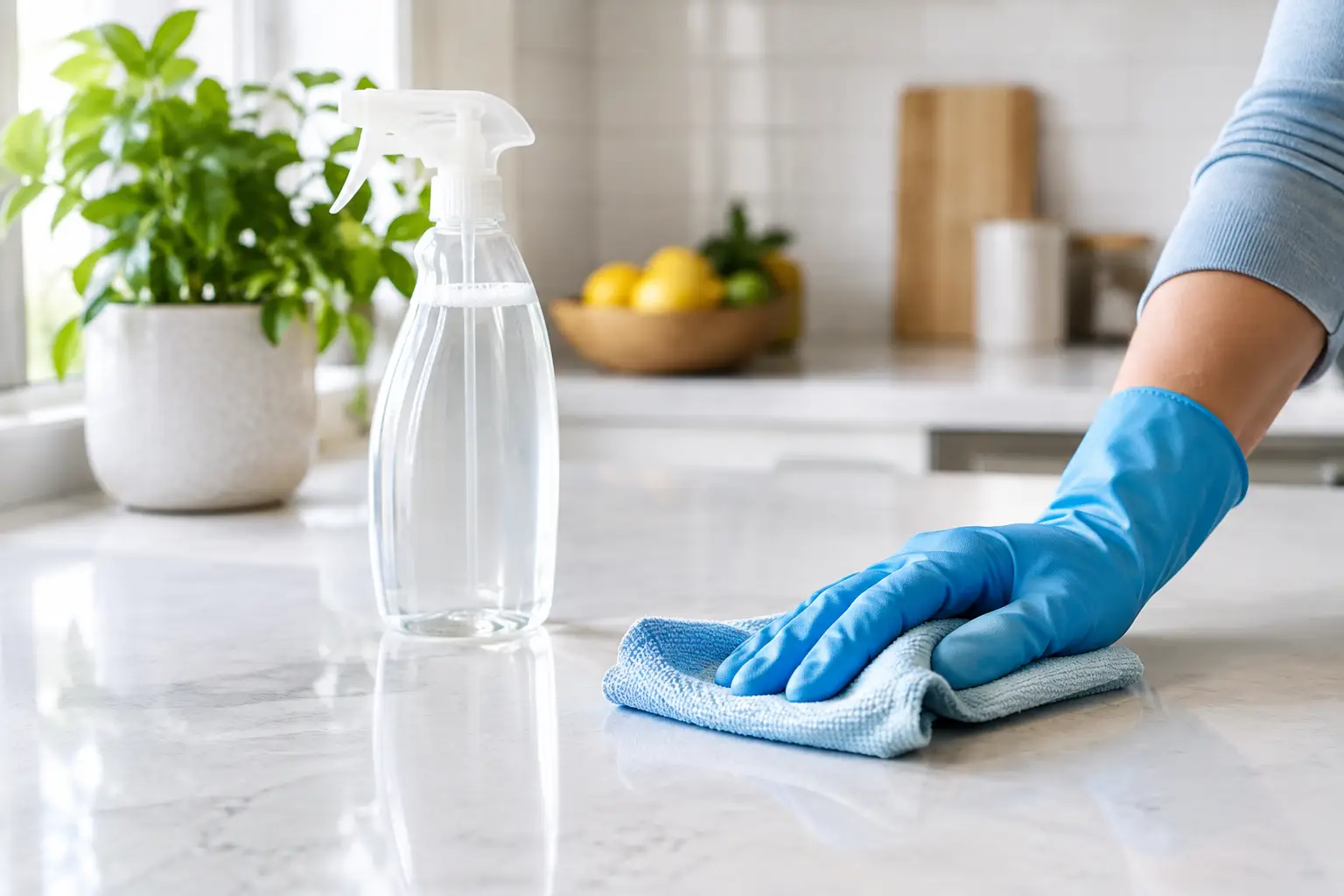
A countertop can look clean while still carrying the residue of lunch prep, a leaking grocery bag, raw ingredients, coffee splatter, or the day-to-day traffic of a busy facility. That is why people ask, can HOCl clean countertops without adding another harsh chemical to the routine? For many hard, nonporous countertop surfaces, the answer is yes – with the right process.
Hypochlorous acid, commonly called HOCl, is a powerful, low-odor solution that can support everyday cleaning, sanitation, and odor control. It is especially practical for homes, food-service areas, schools, offices, medical settings, retail counters, and other places where surfaces need frequent attention. But like any cleaning solution, it performs best when it is used for the job it is designed to do.
Can HOCl Clean Countertops Effectively?
HOCl can be an effective choice for cleaning countertops when the surface is compatible and loose debris, grease, and food residue are addressed first. Its appeal is straightforward: HOCl is gentle enough for routine use on many surfaces while providing serious cleaning support without the strong fumes associated with many conventional products.
For daily countertop maintenance, spray the prepared HOCl solution evenly across the surface, allow it to remain visibly wet for the time directed by the product instructions or your facility protocol, then wipe with a clean cloth or disposable towel. This approach works well for routine wipe-downs after food preparation, customer interactions, classroom activities, or shared workspace use.
There is one critical distinction: HOCl is not a replacement for physical cleaning when a countertop is covered in grease, dried food, syrup, flour, or other visible soil. A solution cannot lift a heavy layer of grime by itself. Remove the mess first with a cloth, scraper, or appropriate cleaner, then use HOCl as part of the surface-care process.
That two-step approach is not extra work for the sake of it. It helps the solution contact the countertop instead of being blocked by residue.
Why HOCl Fits Everyday Countertop Care
Countertops are high-touch work surfaces, not just decorative slabs. A kitchen island may serve as a breakfast table, homework station, package drop zone, and food-prep area before noon. In a commercial setting, a front counter can see hundreds of hands in a single shift.
HOCl gives teams and households a practical option for frequent use because it is made from simple inputs and can be produced without relying on a constant stream of single-use chemical bottles. Properly generated pH-neutral HOCl is designed to be powerful, safe, sustainable, and cost-effective for routine applications.
For operations that use solution every day, on-site generation changes the math. Microbe Ninja NinjaGen systems convert water, salt, and a small amount of organic vinegar into pH-neutral HOCl solutions in 200, 500, and 1,000 ppm options. Instead of ordering, storing, and replacing multiple conventional cleaners, an operation can produce the solution it needs on demand for appropriate cleaning and deodorizing tasks.
The benefit is not only lower supply dependence. It is consistency. When staff have an easy-to-use solution at the point of need, countertop cleaning is more likely to happen between tasks instead of being postponed until the end of a shift.
Which Countertop Surfaces Can Use HOCl?
Many common hard, nonporous countertops are good candidates for HOCl-based routine cleaning. These may include sealed laminate, stainless steel, solid-surface materials, glazed tile, sealed quartz, and many finished composite surfaces.
Still, the countertop material matters. Natural stone, unsealed grout, unfinished wood, damaged laminate, and specialty finishes require more care. Even a pH-neutral solution may not be right for every coating, sealant, or manufacturer warranty. When working with a new surface, test a small inconspicuous area first and follow the countertop maker’s care instructions.
Food-contact countertops deserve an additional check. Follow the directions for your specific HOCl solution and the sanitation rules that apply to your kitchen, restaurant, school, or facility. Some operating procedures may require a final potable-water rinse depending on the application. The right practice is always the one that matches the solution instructions and your local requirements.
How to Use HOCl on Countertops the Right Way
Start by clearing the area. Remove dishes, food, appliances, paperwork, and other items that prevent complete access to the surface. Brush away crumbs and wipe up spills, especially oils and sticky deposits.
Next, apply HOCl across the countertop so the surface is evenly wet. Do not spray just one corner and spread a nearly dry cloth across the entire counter. Coverage matters. Allow the solution to remain wet for the intended contact time, then wipe with a clean microfiber cloth or disposable towel.
For a countertop used for food preparation, use dedicated cloths and avoid carrying residue from one area to another. In commercial kitchens, color-coded cloth programs can help separate prep surfaces from dining, restroom, and general cleaning areas. At home, changing or laundering cloths often is a simple way to avoid reintroducing soil to the counter you just cleaned.
Do not mix HOCl with other cleaning products. Combining products can create unnecessary chemical reactions and makes it harder to know what is actually contacting the surface. Use one solution as directed, then store it properly.
What HOCl Will Not Solve on Its Own
HOCl is a strong everyday tool, but it is not a magic shortcut around basic cleaning practices. It will not repair damaged caulk, remove a deep grease buildup from neglected seams, eliminate stains etched into stone, or make a worn countertop finish new again.
Heavy-duty buildup may need a compatible degreasing or restoration process before routine HOCl care can keep the surface in good condition. Likewise, a foul smell coming from beneath a countertop, inside a drain, or from a trash enclosure may need source removal in addition to deodorizing treatment.
This is where a practical cleaning program beats a cabinet full of random products. Use physical removal for visible soil, use the right solution for routine surface care, and address the source when odor or contamination keeps returning.
Countertop Cleaning for Busy Facilities
Facility managers need a process that works at scale, not one that only sounds good in a supply closet. Countertops in clinics, break rooms, reception areas, cafeterias, classrooms, hotels, and retail spaces need fast turnover with clear staff instructions.
A simple HOCl countertop procedure can be easier to train: remove soil, apply solution, maintain the required wet time, and wipe with a clean cloth. Keep labeled bottles at the point of use and make sure staff understand which surfaces are compatible. For larger sites, on-site generation can reduce storage demands and help avoid interruptions caused by conventional supply shortages.
Concentration should match the task and the solution directions. Higher ppm is not automatically better for every countertop application. The right concentration depends on the intended use, surface, contact time, and operating protocol. That is a more reliable standard than treating every cleaning job the same.
Keep the Solution Fresh and Ready
HOCl is most useful when it is available when the mess happens. Store ready-to-use solution in the recommended container, keep it closed when not in use, and protect it from conditions that may reduce performance over time. Follow the product’s handling and shelf-life guidance rather than saving an old bottle indefinitely.
For homes and small businesses, a compact generator can make regular batches practical. For commercial operations, larger systems can support multiple departments and recurring cleaning schedules without relying on frequent deliveries.
A clean countertop should not require harsh fumes, complicated product rotations, or a last-minute supply run. When visible soil is removed and HOCl is used correctly on compatible surfaces, it becomes a dependable part of a cleaner, safer daily routine.
Comments are closed