

A gym can look spotless and still smell like yesterday’s workout. That is because the best odor control for gyms is not a fragrance strategy. It is a daily sanitation and moisture-management strategy that addresses sweat, bacteria, damp fabrics, stagnant air, and high-touch surfaces before odor settles into the building.
For facility managers, studio owners, and cleaning teams, that distinction matters. Covering a locker room with perfume may create a brief impression of cleanliness, but it can also mix with body odor and leave members with an even stronger sensory reminder that the space is not being properly maintained. Real odor control starts where the odor starts.
Why gym odors are so persistent
Gym odor is not caused by one surface or one bad cleaning shift. It develops when organic residue and moisture repeatedly collect in warm, heavily used areas. Sweat lands on benches, mats, cardio equipment, turf, bathroom fixtures, locker handles, and floors. Wet towels and workout clothes hold moisture in hampers. Shoes carry in dirt and microbes, while rubber flooring and foam equipment can trap odors in textured surfaces.
The toughest areas are often the ones members do not notice until there is a problem: the underside of exercise mats, the seam between flooring tiles, shower drains, laundry bins, ventilation grilles, and equipment upholstery. If these areas stay damp or receive only occasional attention, odor-producing residue can build up faster than a routine wipe-down can control it.
That is why a gym needs a system, not a once-a-week deep clean. The most effective program combines source removal, consistent cleaning, targeted deodorizing, drying, and adequate air movement.
Best odor control for gyms: remove, clean, dry, repeat
A dependable odor-control program follows a simple sequence. First, remove visible soil and trash. Second, clean the surfaces that collect sweat and body oils. Third, apply an effective deodorizing and sanitation solution according to its label or operating guidance. Finally, give surfaces and fabrics a chance to dry.
Skipping the first step is a common failure point. A deodorizing product cannot work at its best when it is sprayed over hair, dust, spilled sports drinks, or a film of sweat. Cleaning teams should use mechanical action where needed, especially on rubber flooring, shower walls, locker room floors, and textured equipment surfaces. A microfiber cloth, mop, scrub pad, or floor machine helps lift the residue that odor feeds on.
Drying is equally important. Moisture is the fuel source that turns a clean-looking area into a stale-smelling one. Improve drainage around showers, empty towel bins before they become packed, avoid leaving mops wet in closets, and make sure ventilation reaches changing areas and restrooms. If a space stays humid, odor control will always be an uphill battle.
Focus on the surfaces members touch most
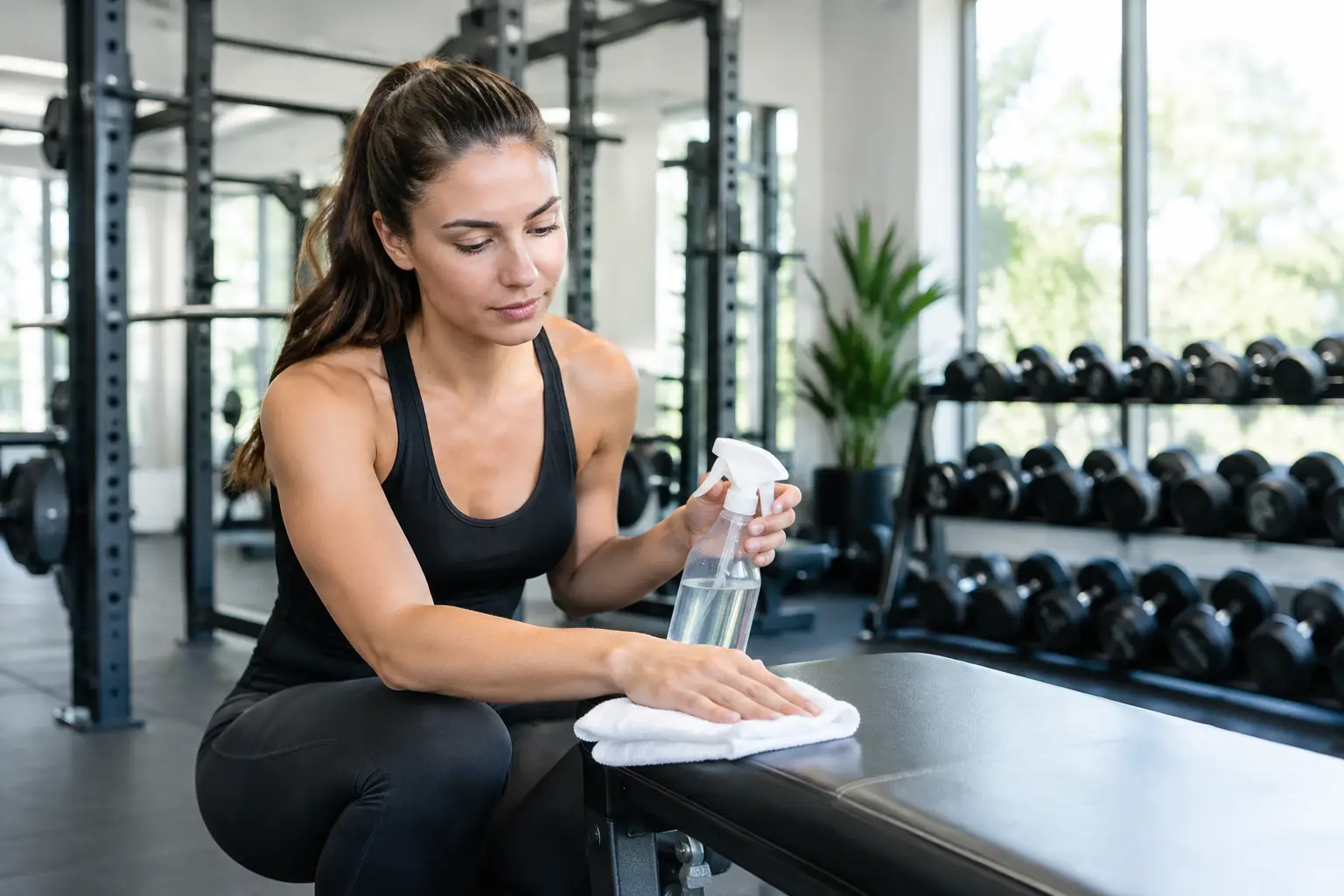
High-touch equipment needs frequent attention because it receives fresh sweat throughout the day. Benches, dumbbells, handles, touchscreens, yoga mats, spin bikes, rowing machines, resistance machines, and stretching areas should be part of an active cleaning rotation, not just an end-of-day task.
Provide clearly placed applicators and simple instructions so members can wipe equipment after use. But do not rely on members alone. Staff should make scheduled rounds to clean missed surfaces, empty overflowing wipe stations, and reset the appearance of the floor. A well-maintained gym makes the next person more likely to participate in keeping it clean.
For upholstery, rubber, foam, and specialty materials, test any new product in an inconspicuous area and follow equipment manufacturer guidance. Aggressive chemicals can damage finishes, dry out vinyl, or leave residues that attract more soil. The right solution must work with the materials in the facility as well as the cleaning schedule.
Treat locker rooms as a separate odor zone
Locker rooms require their own plan because they combine heat, humidity, sweat, showers, toilets, damp towels, and enclosed storage. A cleaning schedule that works for the weight room is usually not enough here.
Pay close attention to benches, locker interiors, handles, shower walls, drains, floors around toilets, and the base of walls where water can collect. Towel collection bins should be emptied often enough that damp textiles never sit for an entire day. If lockers are assigned or rented, build periodic interior cleaning into the membership or maintenance process.
Air movement matters, but it does not replace cleaning. Exhaust fans should run reliably during busy periods, and vents should be inspected when a persistent smell seems concentrated in one area. If odor returns immediately after cleaning, look for a hidden moisture issue, a drain problem, mildew in an inaccessible area, or wet materials stored behind the scenes.
Why hypochlorous acid fits a modern gym routine
Hypochlorous acid, commonly called HOCl, offers a practical option for gyms that want strong everyday cleaning and deodorizing performance without building their program around harsh chemical odors. When produced and used correctly, pH-neutral HOCl solutions can be applied across many routine cleaning environments, helping teams manage the residue and odors associated with busy fitness spaces.
This approach is especially useful when staff need to clean repeatedly throughout the day. A product that is easier to use around members, trainers, and employees is more likely to be used consistently. Consistency is what prevents the familiar cycle of fresh-smelling mornings followed by unpleasant locker rooms and stale equipment by late afternoon.
On-site generation also changes the economics of odor control. Instead of depending entirely on recurring shipments of conventional cleaners, a facility can produce HOCl using water, salt, and a small amount of organic vinegar. Microbe Ninja NinjaGen systems produce pH-neutral HOCl solutions at 200, 500, and 1,000 ppm concentrations, allowing facilities to match production capacity to their operational needs.
For a small training studio, a compact system may support routine equipment and restroom care. Larger fitness centers, multi-location operators, and cleaning service providers may need commercial-scale production to keep applicators, mop buckets, refill stations, and cleaning carts supplied. The right choice depends on square footage, member volume, operating hours, and how often the team cleans during the day.
Build a schedule that matches traffic, not the clock
A gym that sees a heavy 5:00 p.m. to 8:00 p.m. rush should not use the same cleaning frequency as a gym with steady but light traffic. Odor control works best when the schedule follows usage patterns.
At opening, inspect restrooms, locker rooms, drains, towel areas, and floors for overnight moisture or lingering odors. During peak hours, prioritize equipment touchpoints, trash removal, towel bins, restroom checks, and spills. After the rush, give flooring, showers, lockers, and high-sweat training zones a more thorough clean. At closing, remove laundry, clean mop tools, empty waste, and leave areas as dry as possible.
Track recurring odor complaints by location and time. If members consistently notice a smell near the turf, the issue may be shared mats, wet cleaning equipment, inadequate drying, or residue below the surface. If it is near the front desk, it may be a trash enclosure, entry mat, or HVAC issue. Treat complaints as useful location data, not as vague feedback.
Avoid the shortcuts that make odors worse
Fragrance-heavy products can mask a problem long enough for a tour or class, but they do not remove the source. Overusing them can make the environment feel artificial or irritating to members who are sensitive to scent. Similarly, applying too much solution to foam flooring, upholstery, or mats can create excess moisture if the surface is not allowed to dry.
Another common mistake is using one tool everywhere. A mop used in a restroom should not be used on training floors without proper laundering or replacement. Dirty microfiber cloths, saturated mop heads, and poorly maintained spray bottles can spread odor-causing residue instead of removing it. Set clear tool separation rules and refresh reusable cleaning materials on a predictable schedule.
Finally, do not wait for odor to become obvious. By the time a member notices it, the underlying moisture and residue problem has often been developing for days. Proactive care costs less than emergency deep cleaning, negative reviews, or a member deciding the facility does not meet their standards.
A gym should smell neutral, clean, and ready for the next workout – not perfumed, not chemical-heavy, and never stale. When cleaning teams remove the source, manage moisture, and use safer daily solutions consistently, odor control becomes part of the member experience rather than a recurring facility problem.
Comments are closed