

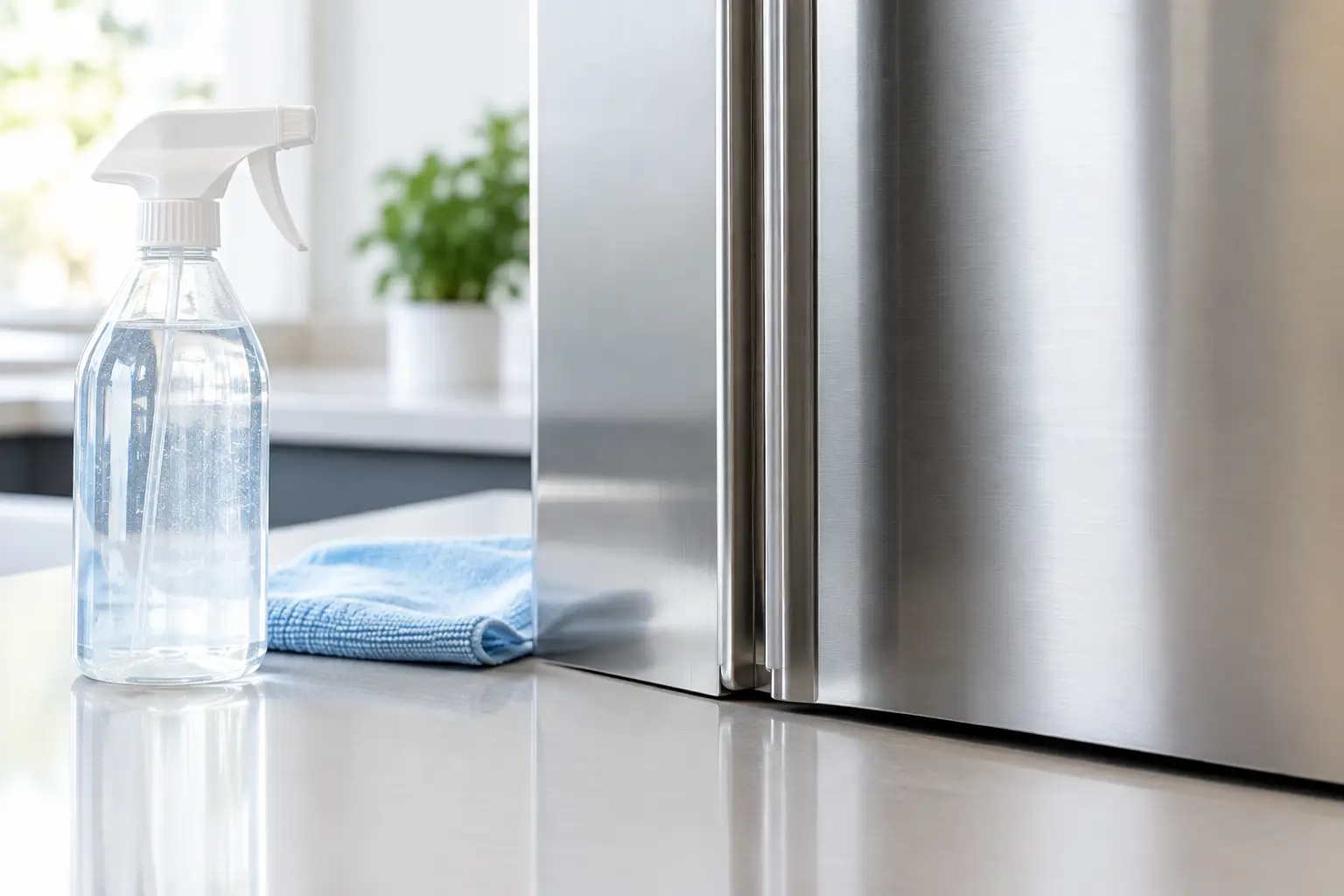
Stainless steel earns its name because it resists corrosion, not because it is immune to every cleaner or every cleaning condition. So, does HOCl damage stainless steel? When it is properly made, pH-neutral, used at an appropriate concentration, and not allowed to sit on the surface for extended periods, HOCl is generally a practical choice for routine cleaning and sanitation. Problems usually come from chemistry that is out of balance, heavy soil left behind, prolonged wet contact, or the wrong stainless alloy for the environment.
For homes, kitchens, medical offices, schools, hospitality spaces, and food-handling operations, that distinction matters. A powerful cleaning program should protect people and surfaces at the same time. HOCl can help accomplish both, but good surface care still depends on how it is applied.
Does HOCl Damage Stainless Steel Under Normal Use?
Stainless steel contains chromium, which forms a thin, invisible protective layer on the metal. This passive layer is what gives stainless its resistance to rust and staining. A well-made, near-neutral HOCl solution used for normal spray-and-wipe cleaning does not typically strip that protective layer in the way highly acidic, highly alkaline, or abrasive products can.
That does not mean every chlorine-containing liquid is automatically safe for stainless steel. HOCl solutions can contain chloride ions because salt is part of the generation process. Chlorides are a known concern for stainless steel when they are concentrated, allowed to dry repeatedly, trapped in seams, or left in contact with metal for long periods. Heat and poor ventilation can make that risk worse.
The practical answer is simple: pH-neutral HOCl can be surface-friendly for stainless steel, but it should be used as a cleaning solution, not as a liquid to leave pooled in a sink, appliance seam, drain area, or storage tank.
Why Stainless Steel Can Still Corrode
Corrosion on stainless steel is often blamed on the last product used, even when the real cause has been building for weeks or months. Fingerprints, food residue, hard-water minerals, salt deposits, and cleaner residue can all interfere with the metal’s protective surface.
Pitting is the issue most operators want to avoid. It appears as tiny pinholes, dark spots, or roughened areas and can occur when chlorides remain on a wet stainless surface. Crevice corrosion is similar but develops in hard-to-reach places, such as under gaskets, around fasteners, beneath labels, or inside damaged seams.
A commercial kitchen is a good example. Stainless equipment may be exposed to food acids, salt, high humidity, heat, standing water, and frequent cleaning. In that setting, an HOCl solution may be only one part of the equation. If a prep table is sprayed, wiped clean, and allowed to dry, the risk is very different from repeatedly soaking a warm, salt-contaminated joint and never removing the residue.
Grade and finish make a difference
Not all stainless steel performs the same way. Type 304 stainless is common in appliances, fixtures, and food-service equipment. Type 316 offers greater resistance to chloride exposure and is often chosen for demanding environments, including coastal facilities and certain medical or industrial applications.
Surface finish matters, too. Smooth, polished stainless is easier to clean and less likely to trap moisture and contaminants than scratched, worn, or heavily brushed metal. Once a surface is damaged, it needs more careful maintenance regardless of which cleaner is used.
The Conditions That Increase Risk
HOCl performance and surface compatibility depend on more than ppm. Concentration, pH, storage age, application method, temperature, soil load, and contact time all matter.
Risk rises when one or more of these conditions are present:
- The solution is too acidic, too alkaline, unstable, or made with inconsistent inputs.
- Stainless steel stays wet for long periods, especially in seams, joints, and low spots.
- Salt, food residue, hard-water deposits, or other chemicals are already on the surface.
- The equipment operates in a hot, humid, coastal, or high-chloride environment.
- The metal has scratches, pitting, damaged welds, or an unknown alloy grade.
This is why on-site generation can be a smart operational advantage. Fresh HOCl made from controlled inputs can help teams reduce guesswork around solution quality and avoid depending on harsh, heavily fragranced, or supply-chain-dependent cleaners. Microbe Ninja NinjaGen systems produce pH-neutral HOCl at 200, 500, and 1,000 ppm options, allowing users to match a solution to the task rather than treating every surface with the same chemistry.
Still, more concentration is not automatically better for every use case. Use the concentration and process appropriate to your sanitation plan, surface type, and equipment manufacturer’s instructions.
Best Practices for Cleaning Stainless Steel With HOCl
The goal is not to overcomplicate cleaning. It is to prevent preventable residue and prolonged exposure.
Start by removing visible soil. Grease, protein residue, mineral scale, and food debris can shield surfaces and create places for moisture to collect. On a heavily soiled stainless surface, clean first with a compatible method, then apply HOCl as part of the next sanitation step.
Apply the HOCl solution evenly rather than flooding the surface. A spray-and-wipe approach is often more practical than soaking for counters, appliance exteriors, door handles, carts, and similar touchpoints. Follow the intended contact time for your process, then wipe the surface dry with a clean cloth when appropriate.
Do not allow solution to pool. Pay special attention to horizontal seams, sink rims, recessed screws, drain edges, refrigerator door gaskets, and the lower areas of equipment where water collects. These spots are where chloride residue and moisture can linger.
For high-value equipment or a new facility-wide program, test a small, inconspicuous area first. This is especially sensible for older equipment, decorative finishes, coated steel, unknown alloys, or surfaces with existing corrosion. A small compatibility check costs little and gives your team a repeatable process before broad deployment.
Rinse when the environment calls for it
A rinse is not necessary after every light-duty application on every stainless surface. However, rinsing with clean water and drying can be a wise added step when a surface is exposed to frequent salt, high heat, heavy use, or repeated applications throughout a shift.
This is particularly relevant for marine-adjacent operations, commercial kitchens, food production areas, and facilities with hard water. The point is not that HOCl is inherently damaging. It is that stainless steel lasts longer when residue of any kind is not allowed to accumulate.
What Not to Mix or Use Alongside HOCl
Never treat HOCl as an ingredient to combine with other cleaning products. Do not mix it with acids, ammonia-based products, bleach, degreasers, or other chemicals unless a qualified chemical professional and the product instructions specifically direct that process. Mixing cleaners can create unsafe conditions, reduce performance, or make surface compatibility harder to predict.
Avoid abrasive pads, steel wool, and harsh scouring powders on stainless steel whenever possible. They can scratch the finish, embed foreign metal particles, and make future staining more likely. Use soft microfiber cloths or nonabrasive tools, and wipe with the grain when the finish has a visible grain.
If you see rust-colored spots, do not assume the stainless itself has failed. Surface contamination from steel tools, water minerals, or nearby metal particles can create staining. Address it early, clean with a stainless-compatible method, and inspect the area for trapped moisture or damaged components.
A Practical Standard for Long-Lasting Stainless
HOCl gives homeowners and facility teams a powerful, safe, sustainable, and cost-effective alternative to many harsh cleaning routines. But the best results come from using it with a surface-care mindset: make fresh, properly balanced solution; remove soil first; avoid pooling; and keep stainless equipment clean and dry between uses.
That approach protects more than the shine. It helps preserve expensive work surfaces, appliances, carts, fixtures, and processing equipment while supporting a cleaner, more confident daily operation. When stainless steel is treated as the durable working surface it is, rather than an indestructible one, HOCl can remain a smart part of the routine for years to come.
Comments are closed