

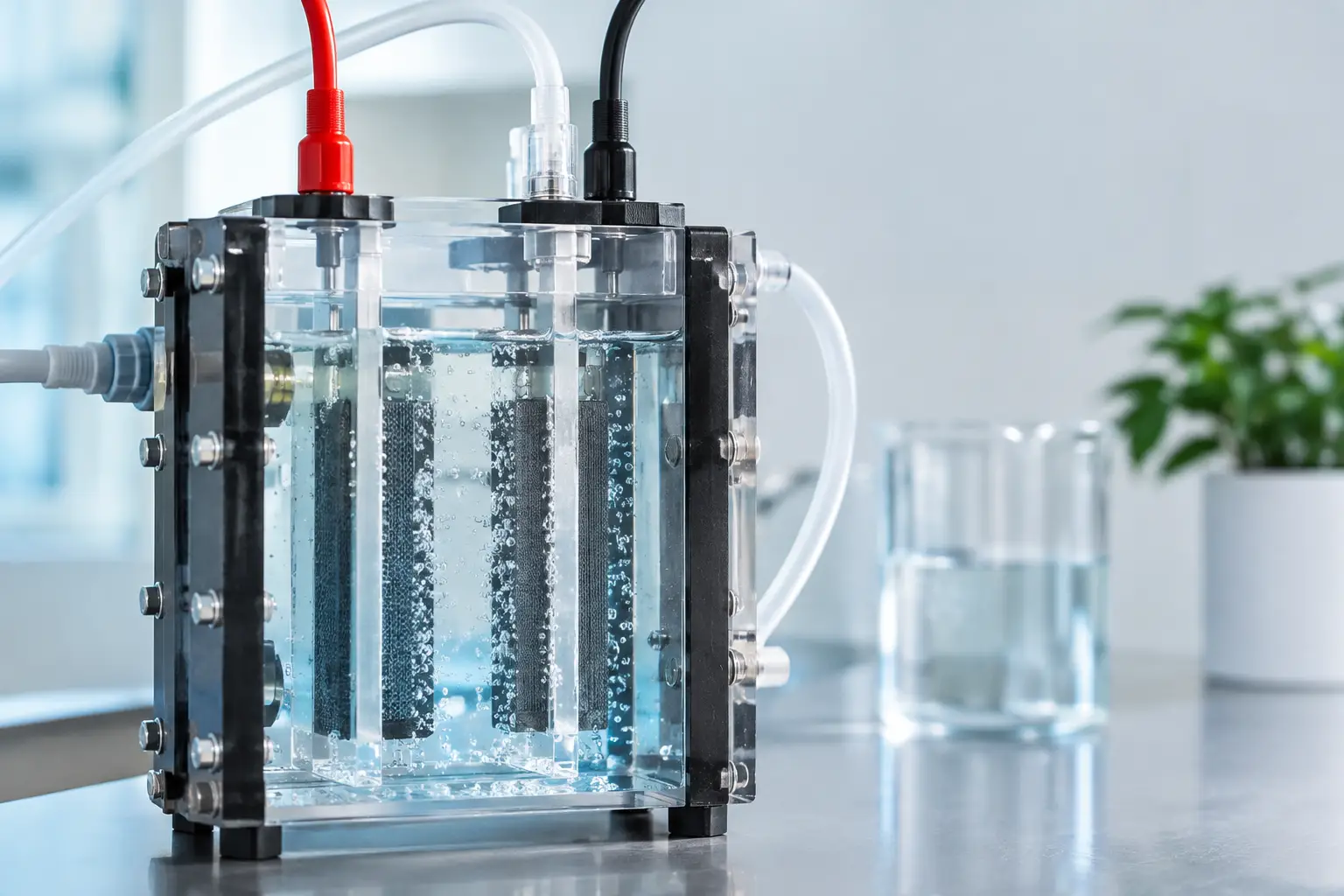
A facility should not have to wait on a chemical shipment to handle odors, daily cleaning, or sanitation demands. Electrolysis technology changes that equation by turning a few simple inputs – water, salt, and, in some systems, a small amount of organic vinegar – into a powerful hypochlorous acid, or HOCl, solution right where it is needed.
For homeowners, that can mean a dependable everyday cleaner without a cabinet full of harsh products. For schools, hotels, restaurants, health care offices, farms, and service businesses, it can mean a more controlled way to produce sanitation solutions while reducing recurring purchasing, packaging waste, and supply-chain exposure.
What Electrolysis Technology Actually Does
Electrolysis uses electrical current to trigger a chemical reaction in a liquid. In an HOCl generation system, the generator applies that current to a carefully prepared saltwater solution. The reaction creates active chlorine species, including hypochlorous acid, the same compound produced by white blood cells as part of the body’s natural defense process.
That does not mean every electrolyzed solution is the same. The final chemistry depends on several variables: water quality, salt purity, electrical settings, contact time, concentration, and especially pH. A system designed for pH-neutral HOCl is built to control these inputs so the output is practical for routine cleaning, odor control, and sanitation across many environments.
This is the key distinction between simply mixing chemicals and producing a repeatable solution. A well-designed generator gives users a process. Instead of estimating dilution from a concentrate or keeping track of multiple ready-to-use bottles, the operator follows a defined recipe and cycle to make the concentration required for the task.
Why pH Matters in HOCl Production
Hypochlorous acid is closely related to hypochlorite, but the two do not behave the same way. pH influences which form of chlorine is present in the finished solution. When pH moves too high, more of the chemistry shifts toward hypochlorite ion. When it is properly managed near neutral, the solution can contain a higher proportion of HOCl.
That chemistry matters in real operating conditions. A pH-neutral HOCl solution is generally more compatible with frequent-use cleaning programs than many harsh, high-pH alternatives. It can support sanitation routines without the heavy fumes, sharp chemical odor, or aggressive residue associated with conventional products.
The practical lesson is simple: concentration alone does not tell the whole story. Two solutions with the same parts per million, or ppm, can perform differently if their pH, freshness, and production quality differ. Buyers evaluating electrolysis equipment should look beyond a single ppm claim and ask how the system manages the complete solution profile.
From Utility Room to Point of Use
The strongest case for on-site generation is not that every organization needs more equipment. It is that many organizations need fewer supply headaches.
A conventional chemical program often involves ordering, receiving, storing, diluting, labeling, and replacing products. Each step adds cost and creates room for inconsistency. A delivery delay can leave a facility short on a product it uses every day. An incorrectly mixed concentrate can create unnecessary waste or an unsuitable solution.
Electrolysis technology shifts much of that burden. With water, salt, electricity, and a validated process, an operator can produce HOCl on demand. Compact systems can serve homes, small offices, and individual work areas. Higher-capacity systems can support spray bottles, refill stations, mop buckets, fogging or application equipment where appropriate, and larger sanitation workflows.
Microbe Ninja’s NinjaGen systems, for example, are designed to make pH-neutral HOCl at 200, 500, and 1,000 ppm concentrations. That range gives an operation flexibility to align production with its cleaning, deodorizing, and sanitation needs rather than buying separate products for every room and task.
The Operational Benefits Are More Than Chemical Cost
Making solution on site for pennies per batch can lower the direct cost of a cleaning program, but cost is only part of the calculation. The broader benefit is control.
A facility manager can standardize a routine across shifts. A restaurant can keep fresh solution available for recurring back-of-house cleaning. A greenhouse can support odor and sanitation practices without bringing in pallets of single-use containers. A service operator can produce solution close to the job instead of transporting a truck full of bulky, pre-mixed inventory.
There is also a waste advantage. On-site generation can reduce plastic bottles, shipping weight, and the warehouse space required for a large chemical inventory. That does not eliminate responsible handling requirements. It does, however, replace a linear buy-use-dispose model with a more practical production model.
For organizations with sustainability targets, this distinction is meaningful. Fewer shipments and less packaging are measurable operational changes, not just a marketing message.
Where Electrolysis Technology Fits Best
Electrolysis-based HOCl production works especially well where frequent cleaning and odor management are part of normal operations. The fit is often strongest in environments that use large volumes of ready-to-use solution or face recurring supply constraints.
In a home, a compact generator can support routine surface cleaning, bathroom care, laundry-area odors, pet areas, and general deodorizing. The value is convenience: make what you need, when you need it.
In commercial settings, the advantages scale. Hotels can support housekeeping workflows. Schools and offices can centralize refill practices. Grocery, retail, and food-service operators can simplify back-of-house sanitation. Medical and dental offices can add a low-odor option to routine cleaning protocols. Farms, kennels, greenhouses, and growing operations can address the constant challenge of organic odors and high-touch work areas.
Still, on-site generation is not a universal substitute for every product in every program. Certain jobs may require specialized chemistry, a particular approved product, or a procedure set by local rules, a manufacturer, or an industry standard. Electrolysis equipment works best when it is selected as part of a thoughtful process, not treated as a one-size-fits-all answer.
What to Evaluate Before Choosing a Generator
Capacity should come first. A household does not need the output of a system built for a large facility, and a busy hotel should not rely on a small unit that cannot keep up with daily demand. Estimate how many gallons or liters your operation uses during a normal week, then allow room for peak periods.
Next, consider concentration options. A system that produces multiple ppm levels can help teams use the right solution for the right application. Clear operating instructions are equally important. The best equipment is not useful if staff cannot repeat the process confidently across shifts.
Water quality deserves attention as well. Mineral content and other water characteristics can affect the production process. Ask whether the manufacturer provides guidance on acceptable water conditions, ingredients, batch procedures, storage, and expected solution life.
Finally, think about deployment. Does the solution need to be dispensed into labeled spray bottles, larger tanks, or mobile application equipment? Will staff need a dedicated refill station? Is training available? These details determine whether the system becomes part of the daily routine or becomes equipment that sits unused.
Fresh Production Requires Good Practices
On-site generation gives a facility more independence, but it also requires discipline. Use the specified ingredients, follow the prescribed batch instructions, and keep containers clean. Store finished solution in appropriate, labeled containers away from excessive heat and direct sunlight. Produce in quantities that match expected use rather than letting large volumes sit longer than necessary.
Training should be practical, not complicated. Staff need to understand which concentration is intended for each task, how to fill applicators, how to avoid cross-contamination, and when to make a fresh batch. A simple written procedure near the generator can prevent most errors.
This is where electrolysis becomes a business advantage rather than a novelty. Reliable results come from repeatable operations: consistent inputs, consistent settings, and consistent use.
A More Independent Way to Clean
The most useful sanitation technology is the kind that fits the real pace of a home or business. Electrolysis makes that possible by moving solution production closer to the moment of use. It replaces some of the uncertainty of ordering, storing, and rationing conventional chemicals with a controlled, on-demand process.
For organizations trying to lower costs, reduce harsh chemical exposure, and build a more sustainable cleaning operation, the next practical step is to map where solution is used most often. Start there, choose capacity around real demand, and make fresh HOCl part of the routine rather than another item on the supply order.
Comments are closed