

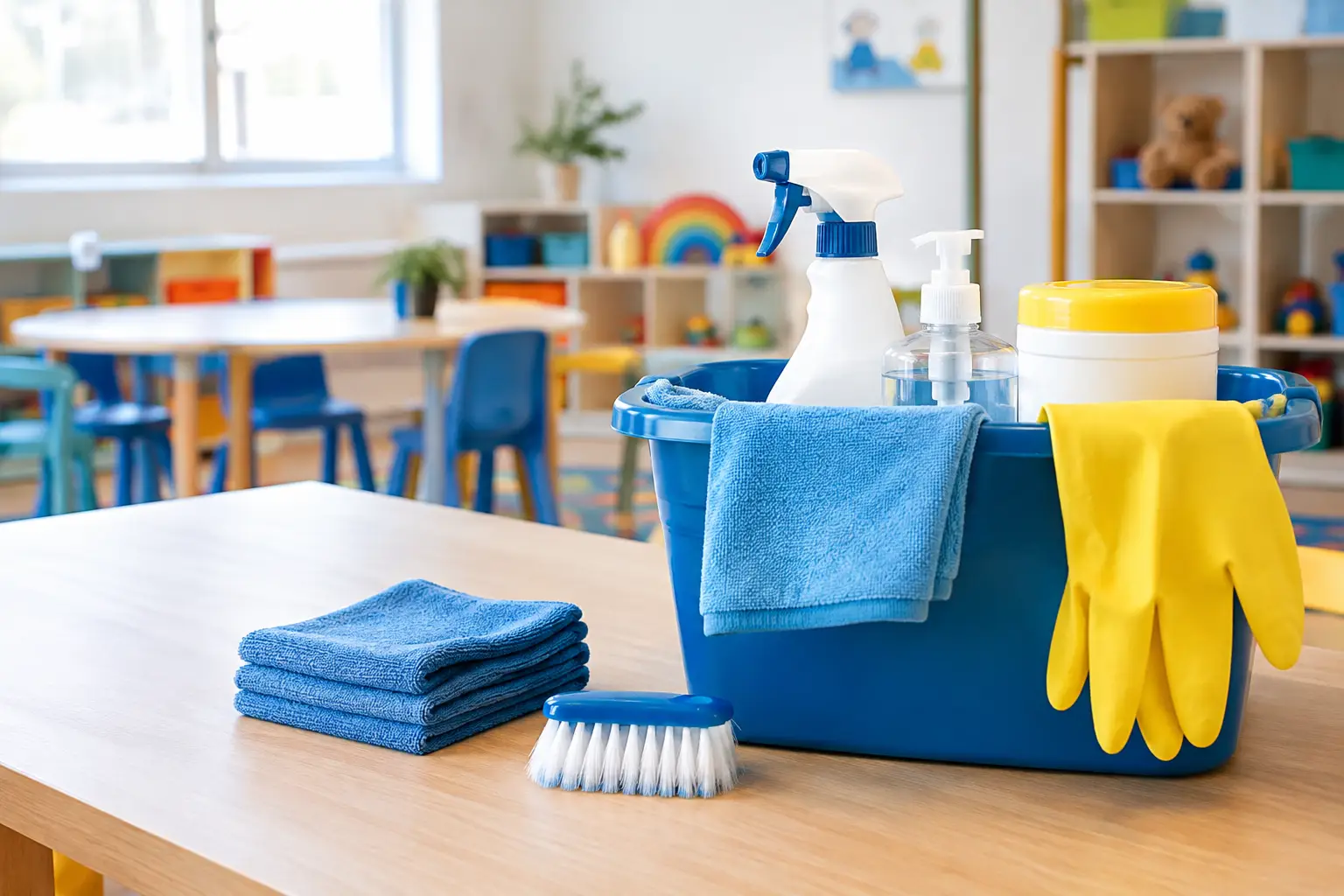
A daycare room can look clean at 8:00 a.m. and need attention again before the first snack ends. Shared toys, high chairs, bathroom fixtures, nap cots, and busy hands create constant turnover. The top sanitation tools for daycare are not the ones that make the biggest promises. They are the tools staff can use safely, correctly, and consistently between all the moments that make a classroom run.
That calls for a system, not a crowded closet of harsh bottles. The right setup reduces cross-contact, supports healthier routines, controls odors, and keeps staff focused on children instead of hunting for supplies.
Start With a Daycare Sanitation System, Not a Single Product
Every surface does not need the same treatment. A food-prep table, a changing station, a shared toy bin, and a lobby door handle have different soils, different traffic levels, and different cleaning schedules. A practical program separates the work into three stages: remove visible mess, apply the appropriate sanitation solution according to its directions, and allow the required contact time before wiping or air drying.
This distinction matters. Sanitation solutions work best on surfaces that have first been cleared of food, dirt, bodily fluids, and residue. Asking one spray to cut through a sticky mess and handle the next step often creates inconsistent results.
It also helps to establish clear zones. Keep restroom tools out of classrooms, food-area tools out of changing stations, and floor tools separate from table tools. A color-coded system makes those decisions fast for full-time staff, substitutes, and closing crews alike.
Top Sanitation Tools for Daycare Classrooms
A dependable daycare supply plan usually includes several tools that work together. These are the pieces that earn their space because they address daily realities, not because they add another product to manage.
1. Color-Coded Microfiber Cloths
Microfiber cloths are one of the most useful tools in any center because they physically lift soil from hard surfaces with less waste than disposable wipes. Assign one color to classrooms, another to restrooms, another to food areas, and another to entry points. The exact colors matter less than using the same system every day.
Use enough cloths that employees never need to carry a used cloth from one room to another. Launder them after use according to your facility process, and replace cloths once they lose absorbency or begin holding odors. Microfiber is affordable, but it only stays effective when it is managed like a reusable tool rather than a rag pile.
2. Clearly Labeled Spray Bottles and Applicators
A well-designed applicator puts the right amount of solution exactly where it belongs. Fine-mist sprayers work well for many hard surfaces, while foaming or stream settings may be better for targeted cleanup. Labels should identify the solution, intended use area, preparation date when applicable, and any directions staff must follow.
Avoid using unlabeled secondary bottles. In a daycare, unclear containers create unnecessary risk and confusion. Standardized bottles also make training easier: staff can recognize the correct tool at a glance instead of relying on memory during a busy transition.
3. On-Site HOCl Generation Equipment
Hypochlorous acid, commonly called HOCl, gives daycare operators a compelling alternative to maintaining shelves of conventional harsh cleaners. When produced correctly at the right concentration, pH-neutral HOCl can support routine cleaning, sanitation, and odor-control workflows across a facility.
An on-site generation system uses water, salt, and a small amount of organic vinegar to produce fresh HOCl solution as needed. That means a center can reduce dependence on recurring shipments, plastic-heavy purchasing, and last-minute shortages. For high-use facilities, the operating cost per batch can be a meaningful advantage.
The best system size depends on the center. A small operation may need a compact unit for classroom and restroom use, while a multi-room facility may benefit from a larger generator that can fill labeled spray bottles, mop buckets, and dispensing stations. Microbe Ninja NinjaGen systems produce pH-neutral HOCl at 200, 500, and 1,000 ppm concentrations, giving operators options for different approved cleaning and sanitation tasks.
Use any HOCl solution according to its product directions, applicable label requirements, and state or local childcare licensing rules. Fresh production, correct storage, and consistent application matter just as much as the equipment itself.
4. Dedicated Mops, Buckets, and Floor Tools
Floors collect everything: tracked-in debris, dropped food, spills, and the residue of a full day of play. A flat microfiber mop system with washable pads is usually easier to control than a single string mop used throughout the building. It also lets teams change pads between rooms or after spills instead of redistributing soil.
Choose buckets and mop frames that are easy to clean and store. If the building has infant rooms, toddler rooms, kitchens, restrooms, and common spaces, dedicate pads or tools by zone. This simple operational choice prevents the floor tool from becoming the least visible source of cross-contact.
5. Hands-Free Waste Stations
Waste containers are sanitation tools, especially around diapering areas, snack stations, and restrooms. Hands-free lids reduce unnecessary contact and help contain odors. Line bins appropriately, empty them on a reliable schedule, and clean the exterior and lid as part of the routine.
For diapering rooms, place waste stations close enough to use without leaving a child unattended, while keeping supplies and clean surfaces protected. The goal is to make the safe choice the easiest choice during real classroom conditions.
6. Drying Racks and Toy-Washing Bins
Toys are not all cleaned the same way. Hard, nonporous toys can generally follow a defined wash, sanitation, and air-dry process, while plush toys and sensory materials require their own care instructions. A designated bin keeps items waiting for cleaning out of circulation, and drying racks keep freshly cleaned toys from being placed back into use while still wet.
This is particularly useful after mouthing incidents, when a teacher needs a fast, visible way to remove an item without interrupting the group. Keep a small number of duplicate high-demand toys so the room can continue functioning while others are being cleaned and dried.
Build Routines Around the Moments That Matter
Tools fail when the routine is vague. Instead of telling staff to clean “as needed,” tie sanitation actions to predictable events. Clean and reset tables after meals and activities. Address changing surfaces after every use. Remove mouthed toys immediately. Complete scheduled restroom checks throughout the day. Finish with a closing reset that prepares classrooms for the next morning.
A short checklist at the point of use can outperform a long policy stored in an office binder. It should identify the surface, the tool, the required steps, and who completes the task. Supervisors can then spot gaps without turning every sanitation check into a complicated audit.
Training should include the reason behind each step. Staff are more likely to follow contact-time directions when they understand that spraying and immediately wiping may not match the intended use of a solution. They also need a clear procedure for bodily-fluid events, including isolation of the area, protective equipment, cleanup, disposal, and documentation as required by the center’s policy.
How to Choose the Right Setup for Your Center
The best purchase decision comes down to volume, staffing, storage, and surfaces. A home-based provider may prioritize compact equipment, simple refillable bottles, and washable cloths. A larger childcare organization may need centralized solution production, room-by-room stations, and enough inventory to support multiple shifts.
Consider chemical exposure and indoor air quality, too. Strong fragrances and harsh products can create an unpleasant environment for children, staff, and families. A low-odor, practical sanitation approach supports daily use without turning classrooms into chemical storage rooms.
Cost should be measured beyond the bottle price. Include shipping, emergency purchases, storage space, disposable wipe use, staff time, and how often a product runs out when you need it most. On-site HOCl production can give centers greater supply independence while helping reduce recurring packaging waste.
The strongest daycare sanitation program is the one that fits naturally into teaching, feeding, changing, play, and closing routines. Choose tools that make safe habits easier, keep them stocked where work happens, and give every staff member a clear next step when the room gets busy.
Comments are closed