

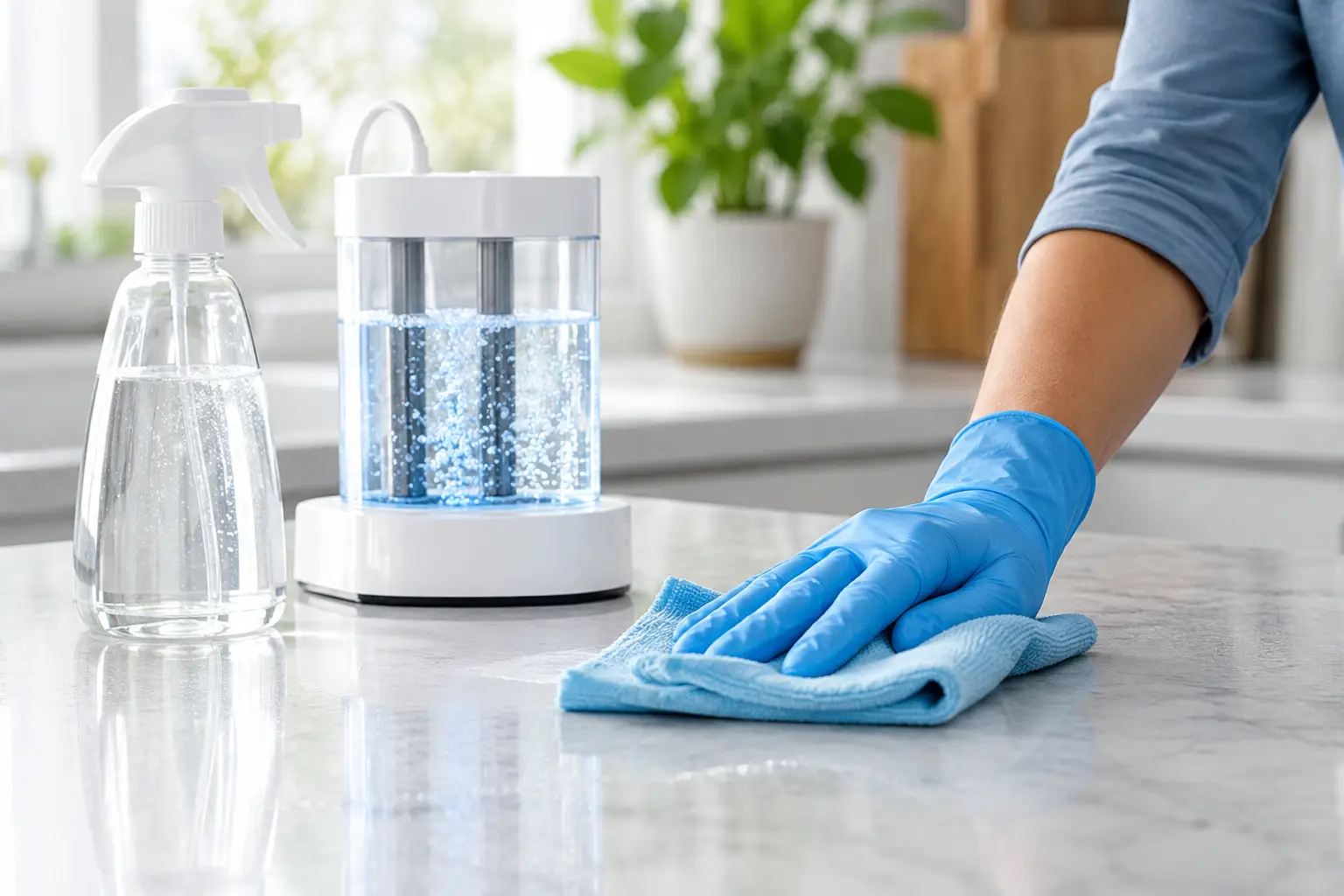
A mop bucket that smells like harsh chemicals is not proof that a space is clean. For homes and facilities that need reliable sanitation without the fumes, plastic waste, and recurring chemical orders, electrolyzed cleaning offers a practical alternative. It creates an effective cleaning and odor-control solution on site using simple inputs: water, salt, a small amount of organic vinegar, and electricity.
That shift matters. Instead of storing multiple conventional products for different rooms, surfaces, and tasks, homeowners and operators can produce a fresh solution when they need it. The result is a cleaning approach built around safety, cost control, and a more dependable supply of everyday sanitation products.
What Is Electrolyzed Cleaning?
Electrolyzed cleaning uses an electrochemical process to transform a saltwater-based solution into hypochlorous acid, commonly called HOCl. HOCl is a compound that the human immune system naturally produces as part of its defense process. When generated at a pH-neutral range and used properly, it can be applied for cleaning, deodorizing, and pathogen control across many daily environments.
The chemistry may sound technical, but the operating concept is straightforward. A generator combines measured water, salt, and organic vinegar, then applies an electrical charge. This creates a ready-to-use HOCl solution that can be dispensed into spray bottles, mop buckets, fogging equipment, or other applicators suited to the job.
Unlike many conventional cleaners, on-site generation does not require a dedicated truck delivery, a crowded chemical storage room, or a new plastic bottle every time supplies run low. For a family, that can mean fewer products under the sink. For a facility, it can mean a simpler and more controlled sanitation program.
Why the Change Matters in Real Cleaning Environments
Cleaning decisions are rarely just about what works on a countertop. A school needs a repeatable routine across classrooms and restrooms. A restaurant needs odor control and cleaning support around high-use areas. A hotel needs efficient room turnover without leaving a harsh chemical smell behind. A greenhouse or growing facility needs a sanitation approach that fits its operational practices and surfaces.
Electrolyzed solutions address a persistent problem in each of these settings: the hidden cost of conventional chemicals. The invoice price is only one part of the equation. There is also shipping, storage, employee handling, disposal, product substitution when supplies are unavailable, and the time spent managing a cabinet full of specialized cleaners.
On-site HOCl production changes that equation by making the active solution where it will be used. A generator can turn basic ingredients into batches for pennies, helping operations reduce dependence on outside supply chains. The right system size depends on volume. A compact unit may suit a home, office, or small business, while larger systems can support high-output needs in healthcare-adjacent settings, hospitality, food service, retail, education, and agriculture.
The Practical Benefits of Electrolyzed Cleaning
The strongest case for this approach is not that it eliminates every cleaning decision. It is that it can simplify a large share of routine sanitation work while reducing exposure to harsh chemical products.
A safer everyday cleaning option
HOCl solutions are designed to be effective without relying on the heavy fragrance and aggressive chemical feel many people associate with cleaning. This is especially valuable in spaces occupied by children, guests, patients, employees, pets, or customers. A lower-odor cleaning process can also make it easier to keep sanitation routines consistent, because people are less likely to avoid products that irritate their eyes, skin, or breathing comfort.
Proper use still matters. Follow generator instructions, use the appropriate concentration for the task, and train staff on application procedures. “Safer” does not mean careless handling or skipping basic cleaning protocols.
Fresh solution on demand
Ready-to-use products have a place, particularly for convenience, travel, or a quick response to an odor issue. But a generator provides a different advantage: production when you need it. That can reduce the risk of running short during a busy shift or waiting on a shipment after a disruption.
For larger operations, on-site production also supports standardization. Instead of purchasing whatever substitute happens to be available, teams can use a defined solution and a consistent dilution-free application process. Microbe Ninja NinjaGen systems produce pH-neutral HOCl at 200, 500, and 1,000 ppm concentrations, allowing operators to select output that aligns with their cleaning and sanitation needs.
Lower waste and lower operating costs
Most conventional cleaning programs create a steady stream of empty bottles, caps, cartons, and chemical containers. Electrolyzed cleaning reduces the need to transport water-heavy products and repeatedly purchase single-use packaging. Reusable dispensing bottles and refillable applicators can further reduce waste.
Cost savings vary by facility size, current chemical spend, labor practices, and the volume of solution used. A home using small amounts each week will see a different return than a hotel or school producing gallons daily. Still, replacing frequent purchases of multiple conventional products with water, salt, and a small amount of vinegar can create a meaningful long-term cost advantage.
Where HOCl Fits Best
Electrolyzed cleaning is particularly useful for routine cleaning, odor control, and sanitation in high-touch and high-traffic areas. Homes may use it in kitchens, bathrooms, pet areas, laundry rooms, entryways, and frequently handled surfaces. Small businesses can use it in restrooms, reception areas, break rooms, treatment rooms, workspaces, and shared equipment where appropriate.
Commercial teams can build it into broader facility routines for guest rooms, classrooms, dining areas, retail spaces, offices, and agricultural environments. The versatility is a strength, but it should not be mistaken for a one-product answer to every maintenance problem. Heavy grease, mineral buildup, rust, adhesive residue, and deeply embedded soil may call for targeted products or mechanical action first.
That distinction is important. Cleaning removes visible soils and residues. Sanitation programs also depend on proper surface preparation, contact time, application coverage, and staff consistency. Spraying a solution over dirt and walking away is not a reliable process. For best results, remove heavy debris, apply the solution as directed, and allow the appropriate time before wiping or returning the area to use.
Choosing a System That Matches Your Volume
The best generator is the one that produces enough solution for your actual routine without adding unnecessary complexity. A homeowner or small office may value a compact unit that makes fresh batches for everyday use. A restaurant, clinic, school, hotel, or cleaning service may need larger production capacity and multiple dispensing options.
Before selecting equipment, consider how much solution is used per day, which areas require regular service, where the unit will be located, and who will prepare and dispense batches. It also helps to map the current cleaning supply spend. That baseline makes it easier to see where on-site generation can reduce purchases and simplify inventory.
For entrepreneurs, this same capability can become a service advantage. A cleaning or deodorization business that produces its own HOCl solution can offer customers a modern, lower-chemical approach while controlling its operating supply costs. The opportunity is strongest when the equipment, staff training, application process, and customer education work together.
A Better Habit Than Buying Another Bottle
The real value of electrolyzed cleaning is control. You control when solution is made, what goes into it, how it is applied, and how often your team or household can replenish it. That is a meaningful improvement over a cleaning program built around emergency orders and harsh products people would rather not use.
Start with one routine area where odor, supply costs, or chemical exposure is a recurring frustration. Build a consistent process there, measure the results, and expand from that practical foundation. Cleaner spaces are easier to maintain when the solution is powerful, safe, sustainable, and ready when the work needs to get done.
Comments are closed