

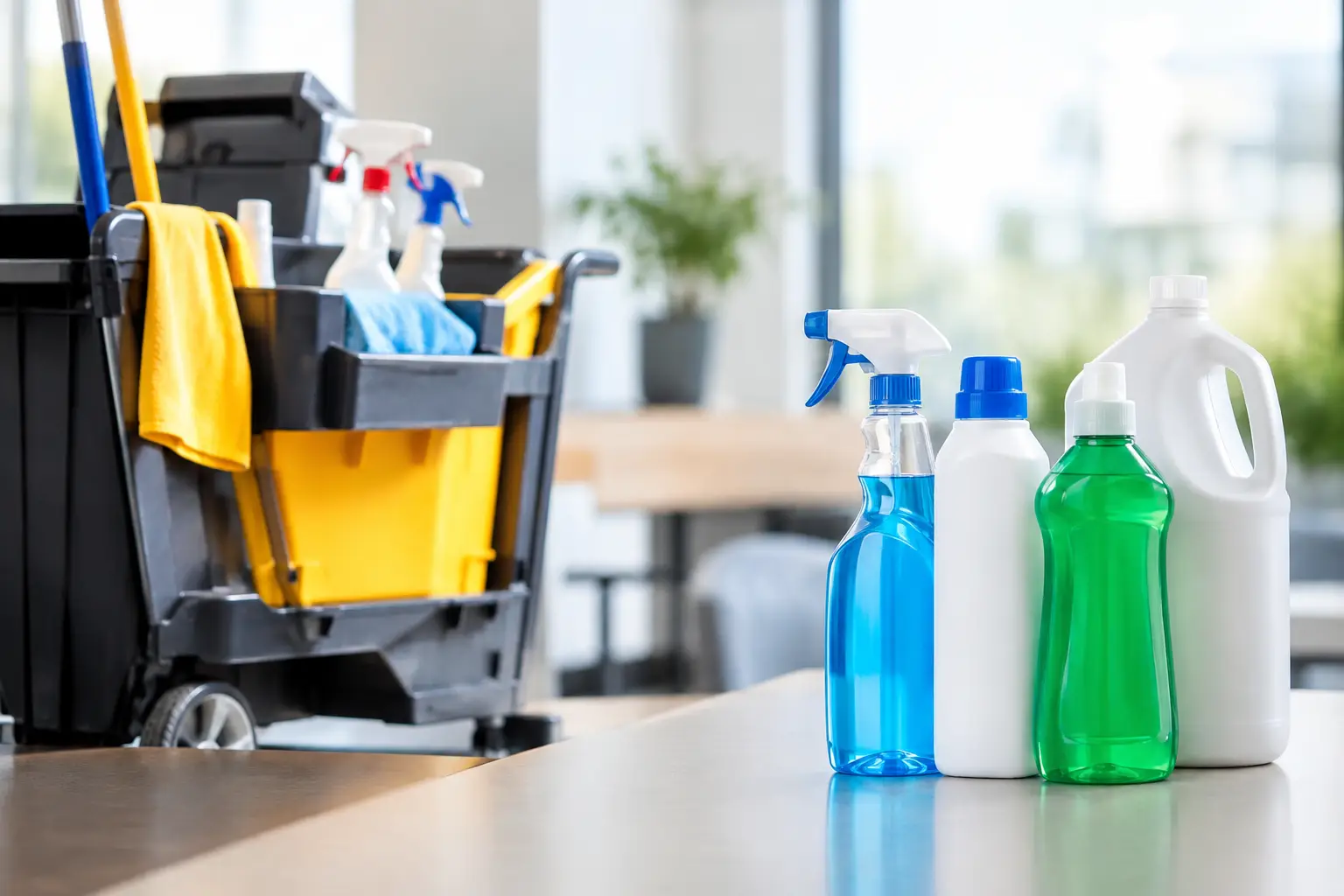
A janitorial closet full of half-used bottles is more than a storage problem. It is money tied up in inventory, a source of purchasing headaches, and one more variable for staff to manage correctly. The decision around on site versus bottled cleaners comes down to a practical question: should your operation keep buying, receiving, storing, and replacing ready-to-use products, or make a versatile cleaning and deodorizing solution when it is needed?
There is no single answer for every home, office, school, hotel, restaurant, or growing facility. Bottled products can be convenient in the right circumstances. But for organizations that clean frequently, cover multiple areas, or need dependable access to sanitation supplies, on-site hypochlorous acid production can change the economics and the daily workflow.
On-Site Versus Bottled Cleaners: The Real Difference
Bottled cleaners arrive with the solution already made. That is familiar and simple: order cases, put them away, train staff on the label directions, and reorder before supplies run low. For a low-volume user with a narrow need, this can be perfectly reasonable.
On-site generation changes the supply model. A generator uses water, salt, and a small amount of organic vinegar to produce pH-neutral hypochlorous acid, or HOCl, at the concentration needed for the job. Rather than bringing in case after case of mostly liquid, the facility produces fresh solution close to where it will be applied.
That distinction affects far more than the container. It affects cost per usable batch, storage demands, purchasing time, exposure to shipping delays, and the amount of harsh chemistry employees and families handle. It also gives a facility more control over when solution is made and how much is made.
Cost Is Bigger Than the Bottle Price
A bottle’s purchase price is easy to see. Its full cost is not. Ready-to-use cleaning products carry manufacturing, packaging, shipping, warehousing, distributor markup, and delivery costs. When the product is water-heavy, your operation is routinely paying to move water in plastic containers.
There are also the less visible costs: staff time spent receiving deliveries, checking stock, moving cases, organizing shelves, placing emergency orders, and disposing of empty packaging. A single bottle may feel inexpensive, but a high-use facility can go through hundreds or thousands of bottles over a year.
An on-site system requires an upfront equipment investment, so it is not automatically the lower-cost choice on day one. The value builds with regular use. Once the system is in place, the recurring inputs are simple and inexpensive. For operations producing meaningful volumes each week, that can reduce the cost per batch to pennies while making spending more predictable.
The break-even point depends on cleaning volume, current product costs, and the equipment size selected. A home, small office, or boutique service business may need a compact generator. A property with multiple departments, a large floor plan, or recurring odor-control needs may justify systems designed for commercial-scale output, such as 360, 144, or 1440 configurations. The right comparison is not bottle price versus machine price. It is total annual product cost and operating effort versus total annual on-site production cost.
Storage, Shipping, and Supply Reliability
Bottled products demand storage space before they can do any useful work. That means crowded closets, back rooms, loading areas, and carts. It can also mean inventory uncertainty. If a shipment is delayed, a supplier is out of stock, or demand spikes unexpectedly, the operation has fewer options.
On-site production reduces dependence on a steady flow of packaged ready-to-use cleaners. Water, salt, and organic vinegar take up little space compared with cases of bottled solution. For facilities that have experienced shortages or delivery disruptions, that independence is a meaningful operational advantage, not just an environmental preference.
This does not mean planning disappears. Equipment needs routine care, staff need to understand how to produce and dispense solution, and operations should maintain the necessary inputs. The difference is control. Instead of hoping the next truck arrives on schedule, teams can make fresh HOCl on their own site.
For mobile cleaning and deodorizing providers, this can be especially powerful. Carrying a production system and refillable applicators can reduce the need to transport large inventories of finished chemical products from job to job. It also creates a clearer, more sustainable service story for clients who want effective sanitation without harsh chemical residue or excessive plastic waste.
Safety Changes the Day-to-Day Cleaning Experience
Traditional cleaning programs often rely on products with strong fragrances, corrosive ingredients, or warnings that require careful ventilation and personal protective equipment. Those products may have a role in specialized situations, but they can complicate routine work in spaces occupied by children, patients, guests, customers, pets, and employees.
Properly generated, pH-neutral HOCl offers a different path for everyday cleaning, deodorizing, and pathogen control. HOCl is based on a compound produced naturally by the human immune system. It is powerful against unwanted microbes while offering a more people- and surface-conscious alternative to many conventional chemical cleaners.
Safety still requires discipline. Teams should follow equipment instructions, use the appropriate concentration for the intended application, label secondary containers clearly, and train staff on correct use. A safer chemistry is not a reason to abandon good procedures. It is a reason to build a cleaning program that is easier to operate responsibly.
Microbe Ninja systems can produce 200, 500, and 1,000 ppm HOCl solutions, allowing users to match production to cleaning, deodorizing, and higher-demand sanitation tasks. That flexibility matters because one facility rarely has one cleaning need. Restrooms, food-service support areas, patient-facing spaces, classrooms, animal areas, trash rooms, and high-touch surfaces all create different demands throughout the day.
When Bottled Cleaners Still Make Sense
On-site generation is not a mandate to replace every bottle immediately. A business that uses only a small amount of specialty cleaner each month may not recover the cost of equipment quickly. Certain tasks may require a product with a specific function, such as a mineral remover, degreaser, or surface-specific treatment. In those cases, a targeted bottled product may remain the sensible choice.
Bottled products can also be useful as a short-term bridge while a new cleaning program is being introduced. Facilities may choose to phase in on-site HOCl production area by area, measure product consumption, train teams, and adjust their dispensing workflow before reducing legacy inventory.
The strongest approach is often not an all-or-nothing decision. It is a product rationalization exercise. Identify the high-volume, repeatable work where on-demand HOCl can handle regular cleaning and odor control. Then keep only the specialty products that serve a clear, necessary purpose. This reduces clutter and complexity without forcing a one-product answer to every task.
Questions to Ask Before You Choose
Start with consumption. How many ready-to-use bottles, gallons, wipes, and odor-control products does the site use in a typical month? Then look at the operational footprint: how much space does that inventory occupy, how often do deliveries arrive, and how often do teams run out unexpectedly?
Next, consider the people doing the work. Are employees managing multiple chemical labels and dilution instructions? Are strong odors generating complaints from staff, guests, or residents? Is the facility trying to reduce plastic waste or limit the use of harsh cleaners around sensitive populations? Those answers reveal whether the benefit is primarily financial, operational, safety-focused, or all three.
Finally, size the solution to the actual workload. A generator should support the volume and deployment style of the operation, whether that means spray bottles for a household, refill stations for a small business, or dedicated dispensing applicators for a large facility. Equipment that is too small can create frustration. Equipment that is oversized can delay return on investment.
Build a Cleaning Supply Model You Control
The best cleaning system is one that your team can use consistently, safely, and affordably. Bottled cleaners offer familiarity, but familiarity can come with recurring shipping, storage, plastic, and supply-chain costs. On-site HOCl generation replaces much of that dependency with a simpler input model and fresh solution made where the work happens.
If your closets are crowded, your supply orders keep rising, or your team needs a safer everyday approach to cleaning and deodorizing, start by tracking what you use for 30 days. That small audit can show exactly where on-site production can deliver the most practical value.
Comments are closed