

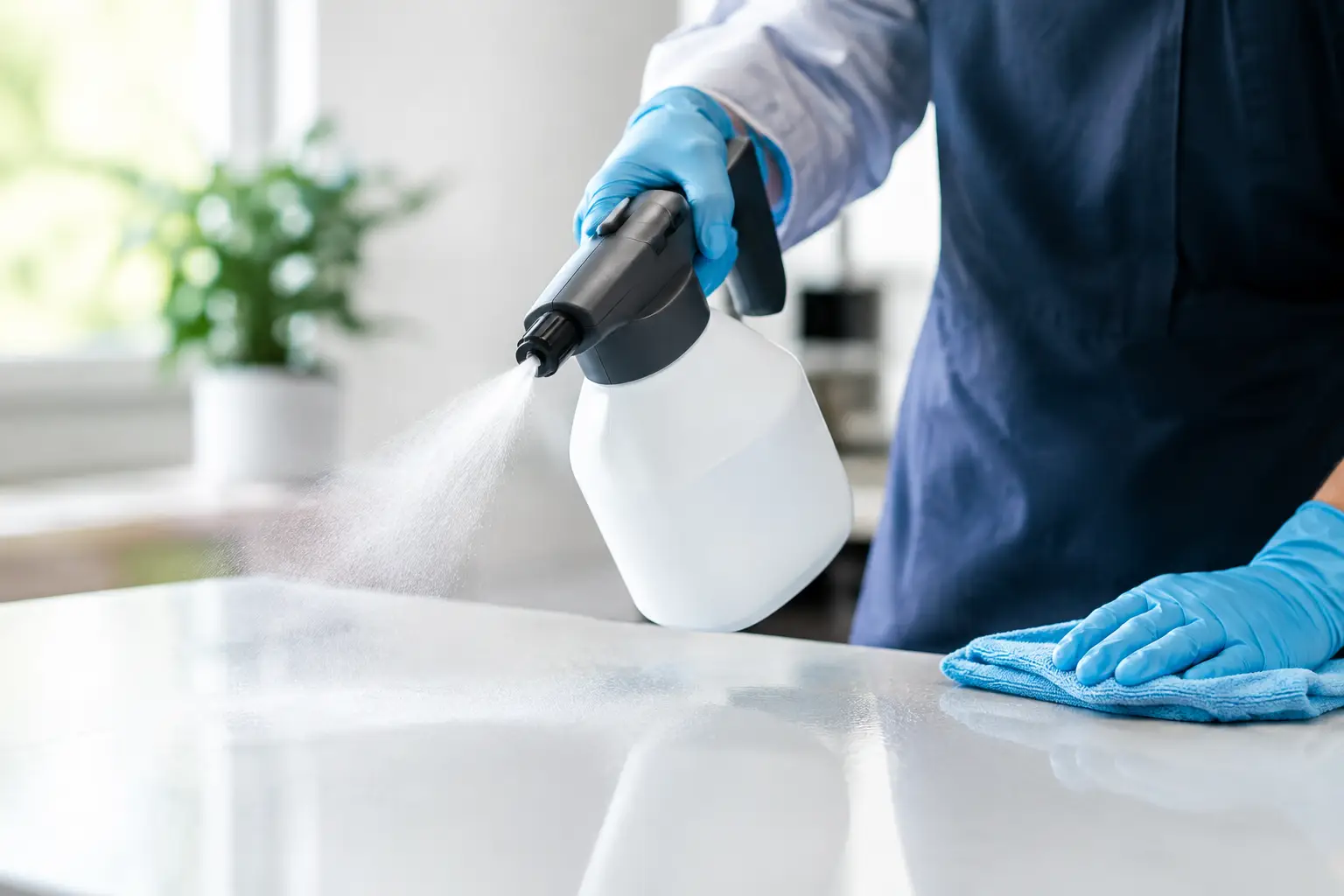
A sanitation solution is only as useful as the way it reaches the surface. HOCl applicators turn pH-neutral hypochlorous acid into a practical daily tool, whether the job is deodorizing a locker room, cleaning food-prep surfaces, treating high-touch areas, or supporting healthier conditions in a greenhouse. The right applicator helps teams use the right amount of solution, cover the intended area, and reduce waste without bringing harsh chemical fumes into the process.
For homeowners, that may mean a dependable trigger sprayer near the kitchen or pet area. For a facility manager, it can mean configuring refillable bottles, electrostatic equipment, or larger application systems around a repeatable cleaning program. The best choice depends on the space, the surfaces, the work pace, and how much solution is being used each day.
What HOCl Applicators Actually Do
Hypochlorous acid is a powerful cleaning, deodorizing, and pathogen-control solution that can be made on-site from water, salt, and a small amount of organic vinegar. When produced at a pH-neutral range, it offers an approachable alternative to conventional chemical cleaners for many routine sanitation needs.
Applicators are the delivery tools that make that chemistry useful. They determine where the solution goes, how evenly it is applied, and whether the cleaning team can work efficiently. A well-matched applicator can reduce overspray, simplify refill routines, and make consistent surface coverage easier across shifts.
That distinction matters. Producing an effective HOCl solution is one part of the system. Applying it correctly is what connects on-site generation to real results in homes, offices, schools, restaurants, medical settings, hospitality properties, and agricultural operations.
Choosing HOCl Applicators by the Job
There is no single applicator that is ideal for every environment. A small office restroom, a commercial kitchen, and a grow room all have different coverage, access, and workflow requirements. Start with the task rather than the equipment.
Trigger Sprayers for Targeted Daily Cleaning
Refillable trigger sprayers are often the most practical starting point. They are easy to train on, simple to carry, and well suited to counters, fixtures, break rooms, equipment exteriors, trash areas, pet zones, and other targeted surfaces. For homes and small businesses, a labeled spray bottle creates an accessible routine: spray the intended surface, allow appropriate contact time based on the cleaning protocol, then wipe when needed.
Sprayers also make sense when surface care matters. A controlled spray pattern lets users apply solution without soaking electronics, delicate materials, or nearby inventory. The trade-off is speed. Trigger bottles are not the most efficient choice for covering a large gym floor, warehouse, or long run of restroom stalls.
Foaming Applicators for Vertical Surfaces
Foam applicators can be useful on vertical or irregular surfaces where visible coverage is helpful. A clinging foam can make it easier for staff to see where solution has been applied on restroom partitions, tile, shower areas, walls, equipment housings, and certain food-service surfaces.
Foam is not automatically better. It uses a different delivery pattern and may be unnecessary for a smooth, flat countertop or quick touch-up. It is most valuable when coverage visibility supports better cleaning habits or when the surface shape makes a standard spray run off too quickly.
Misters and Electrostatic Equipment for Broad Coverage
For large or complex spaces, powered application equipment can help operators cover more area with less manual repetition. Misters create fine droplets for broad application, while electrostatic equipment charges droplets to encourage attachment to surfaces. These tools can be useful for classrooms, hotel rooms, vehicle interiors, waiting areas, athletic facilities, and spaces with many high-touch points.
The advantage is reach and speed, especially around hard-to-access shapes. The trade-off is that broad-coverage equipment requires stronger operating discipline. Teams need to prevent unnecessary exposure to occupied spaces, protect sensitive equipment, avoid over-application, and follow the equipment manufacturer’s operating instructions. Fine droplets are not a substitute for physically removing heavy soil, grease, or buildup before sanitation work begins.
Pumps, Buckets, and Dedicated Floor Tools
Some work is better handled with controlled dispensing rather than spraying. Pumps, buckets, refill stations, and dedicated floor-care tools help keep high-volume operations organized. They can support routine floor cleaning, mop systems, cloth saturation, and repeatable dilution-free dispensing when using ready-to-use HOCl.
This approach is especially useful for restaurants, retail stores, schools, medical offices, and larger facilities where many employees need access to solution throughout the day. Standardizing containers and labels helps prevent mix-ups while reducing the pileup of single-use chemical bottles in storage rooms.
Match the Applicator to Your HOCl Output
On-site generation gives operators flexibility, but it also calls for clear procedures. A solution produced at 200 ppm may fit a different routine than one produced at 500 or 1,000 ppm. The appropriate concentration depends on the application, the material being treated, soil load, operating protocol, and any applicable product guidance.
Microbe Ninja NinjaGen systems produce pH-neutral HOCl at 200, 500, and 1,000 ppm, allowing homes and commercial teams to build a more intentional supply plan. Instead of ordering, storing, and rotating multiple conventional chemical products, an operator can make solution on demand and fill the applicators that suit the day’s work.
That does not mean every bottle should hold the same solution. Clear labeling should identify the contents, production date, intended use, and any internal handling instructions. In multi-site or multi-shift operations, color-coded bottles and dedicated storage locations can further reduce confusion.
Build an Application Routine That Holds Up
The most effective sanitation programs are simple enough to be followed during a busy shift. Applicators should support the actual way people work, not add steps that staff will bypass. Put smaller bottles where quick response is needed, such as entrances, restrooms, break rooms, front desks, and food-prep zones. Position larger refill stations where teams can replenish without walking across the building.
Before applying HOCl, remove visible debris and heavy soil. Cleaning is not just a spray-and-go activity. Soil can block a solution from reaching the surface beneath it, so wiping, scrubbing, or rinsing may still be necessary depending on the condition of the area.
Then train for consistency. Staff should know how to adjust a nozzle, apply enough solution for full coverage, avoid cross-contamination between zones, and maintain applicators after use. Replace worn spray heads, rinse equipment as appropriate, and inspect hoses, seals, and tanks on powered units. A failing nozzle can quietly undermine an otherwise well-designed program.
Practical Questions Before You Buy
When evaluating HOCl applicators, ask how much area must be treated per shift, whether employees need portable tools, and what surfaces create the biggest cleaning challenge. Also consider storage, refill access, user training, and how often the equipment will be cleaned and maintained.
For a home or small office, a set of durable refillable trigger bottles may be all that is needed. For a school, hotel, clinic, or service business, a mix of portable bottles and broad-coverage equipment may be a better fit. Agricultural teams may need tools that reach benches, equipment, entry points, and odor-prone areas without disrupting a fast-moving operation.
Cost should be measured beyond the price of the applicator. Consider labor time, product waste, shipping dependence, storage needs, and how often disposable containers are purchased and discarded. An on-site HOCl system paired with reusable applicators can lower recurring supply pressure while supporting a cleaner, more sustainable operation.
The right applicator does not need to be complicated. It needs to put fresh HOCl exactly where your people need it, in a format they will use correctly every day.
Comments are closed