

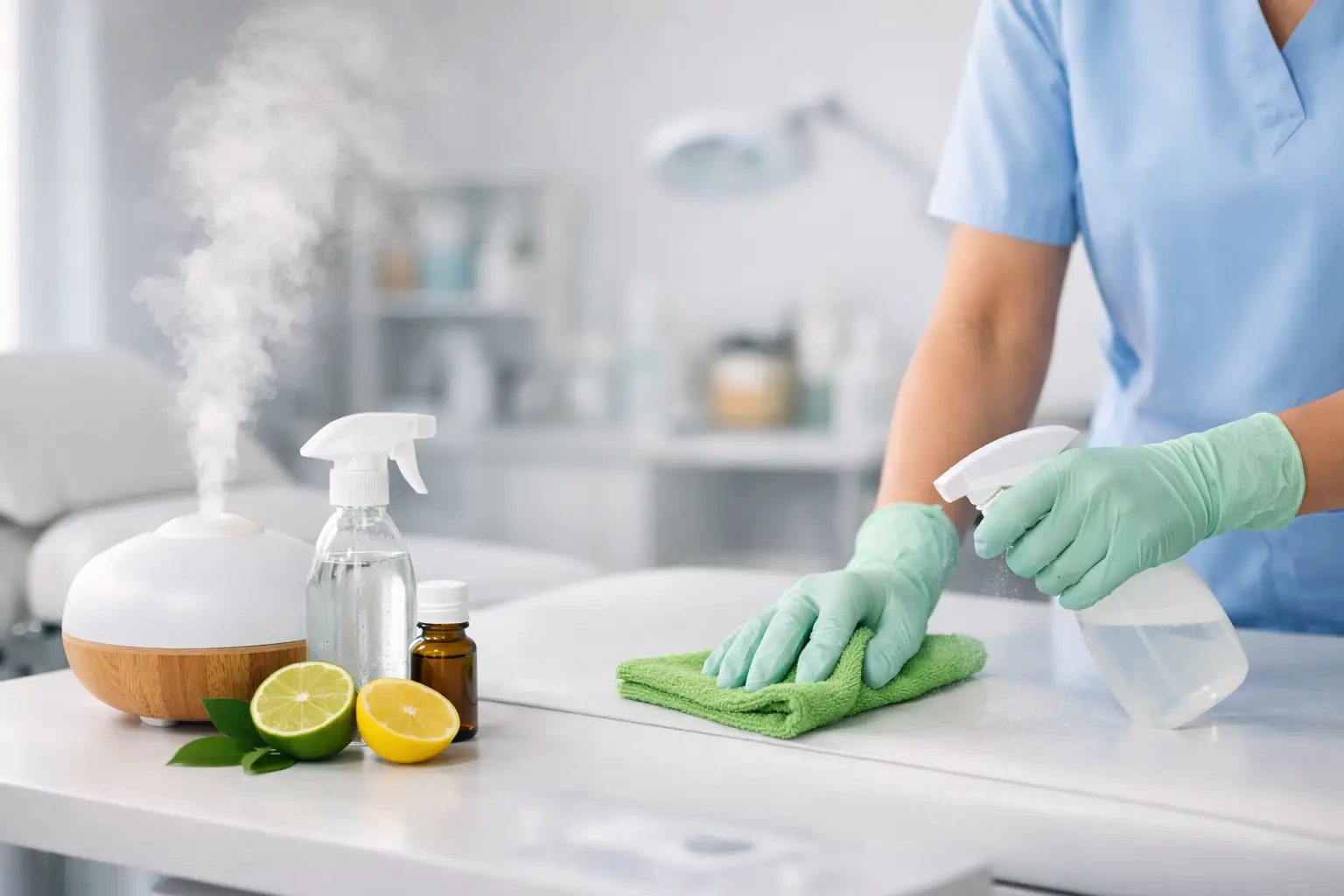
A medical office can look spotless at 8:00 a.m. and still be overwhelmed by touchpoints, spills, odors, and turnover by noon. To sanitize medical offices effectively, teams need more than a bottle under the sink. They need a repeatable process that fits patient flow, protects staff, respects sensitive surfaces, and does not depend on harsh chemical fumes or unpredictable supply deliveries.
Hypochlorous acid (HOCl) offers a practical alternative for many daily cleaning and sanitation tasks. It is the same chemistry produced by the human immune system, and when generated correctly at a pH-neutral level, it can support a safer, more sustainable approach to maintaining clean patient-care environments. The right workflow matters as much as the solution itself.
Start With the Real Risk Map
Not every surface in a medical office carries the same exposure level. A reception counter may see dozens of hands each hour, while a storage-room shelf may need only routine attention. Treating every area exactly the same wastes labor and product. Treating high-contact areas too casually creates gaps patients and staff will notice.
Walk the office from the patient’s perspective, then from the staff’s perspective. Track the surfaces people touch, the spaces where care is delivered, and the places where organic residue or odors can build up. This creates a practical risk map for daily sanitation.
High-contact zones usually include door handles, check-in counters, payment terminals, waiting-room armrests, elevator buttons, light switches, restroom fixtures, and shared pens or tablets. In clinical spaces, add exam-table controls, chair arms, cabinet pulls, keyboards, phones, and other noncritical equipment surfaces permitted by the equipment manufacturer.
The key distinction is simple: visible soil must be removed before a surface can be properly sanitized. A product cannot work through grime, tape residue, makeup, food spills, or dried biological material. Build cleaning into the process instead of treating it as a separate, optional task.
Build a Medical Office Sanitation Schedule
A reliable schedule removes guesswork. It also prevents staff from rushing through critical areas because they are trying to remember what was done earlier. The best cadence depends on patient volume, services offered, office layout, and local requirements, but most offices benefit from three levels of attention.
Before opening, focus on resetting the patient experience. Clean and sanitize waiting areas, restrooms, check-in stations, break areas, and exam rooms. Refill dispensers and prepare enough solution and applicators for the day so staff are not searching for supplies during a room turnover.
Between patients, concentrate on the touchpoints and surfaces associated with the visit. The exact scope should match the procedure, the room, manufacturer instructions for equipment, and the office’s written protocols. Keep the steps short enough that staff can perform them consistently without delaying care.
At close, handle the broader reset: floors and high-touch surfaces, waste-area exteriors, restrooms, staff spaces, shared devices, and odor-prone areas. A closing routine is also the best time to inspect spray bottles, microfiber cloths, and storage practices.
For busy facilities, use a visible checklist or digital log. This is not busywork. It makes responsibilities clear, helps supervisors spot recurring trouble areas, and provides a useful record of routine facility care.
Choose a Solution That Works for People and Operations
Medical offices have a difficult balancing act. They need a high standard of sanitation, but they also need products that are practical around patients, staff, furnishings, and frequently used equipment. Strong-smelling conventional chemicals can create an unpleasant arrival experience, trigger complaints, require more protective handling, or leave staff reluctant to use them often enough.
pH-neutral HOCl is a compelling option because it can be used for everyday cleaning, sanitation, and deodorizing across many compatible hard surfaces. It does not rely on heavy fragrances to mask odors. Instead, it supports cleaner spaces without leaving behind the sharp chemical smell many patients associate with industrial cleaning.
Compatibility still matters. Always follow the instructions for medical devices, electronics, upholstery, flooring, and specialty finishes. For a new surface, test a small inconspicuous area first. On-site sanitation does not mean spraying every object with the same method.
The strongest operational advantage of on-site HOCl generation is consistency of supply. Rather than repeatedly ordering, storing, and replacing multiple conventional cleaners, a facility can create solution from water, salt, and a small amount of organic vinegar. That reduces storage pressure, shipping dependence, and the chance that a team runs out of a core sanitation product at the wrong time.
Use the Right Application Method
A good sanitation solution can be undermined by poor application. Overspraying wastes product and can leave surfaces too wet. Underapplying creates coverage gaps. The goal is controlled, even coverage followed by the appropriate dwell time for the intended use and product directions.
For counters, chairs, door hardware, and other durable hard surfaces, apply solution with a spray bottle or a pre-moistened microfiber cloth. A cloth-first approach is often better around keyboards, monitors, and small equipment because it keeps liquid out of openings. Use enough solution to wet the surface, then allow it to remain wet for the stated contact period before wiping if needed.
Color-coded microfiber cloths are worth the small investment. Assign separate colors to restrooms, patient-care spaces, reception, and break areas. This reduces cross-use and makes training easier. Replace cloths when they become visibly soiled, and launder them according to the facility’s process.
For larger offices, dispensing applicators can help staff cover broad surfaces efficiently and reduce repetitive manual mixing. The best setup depends on square footage, staffing, and how many rooms turn over each day. A two-provider practice has different needs from a high-volume urgent care center.
Train for Consistency, Not Complexity
The sanitation plan should be easy to explain in a few minutes and easy to verify on a busy afternoon. Give each team member a clear answer to four questions: Which surfaces do I own? When do I clean them? Which tool do I use? Where do I document completion?
Training should also cover what not to do. Staff should not mix cleaning products, transfer solution into unmarked containers, use one cloth across unrelated zones, or apply liquid directly to sensitive electronics unless the manufacturer permits it. These small errors can create bigger problems than choosing the wrong bottle.
A brief monthly review is usually more useful than a long annual lecture. Ask where the workflow slows down, which areas get missed, whether odors return in certain spaces, and whether supplies are positioned where people actually need them. The answers often reveal simple fixes, such as adding a wall-mounted applicator near exam rooms or keeping a dedicated caddy at reception.
Make Sustainability Part of the Standard
Medical offices generate enough waste without adding cases of single-use chemical containers to the routine. On-site HOCl generation can reduce the transportation, packaging, and storage burden tied to conventional cleaning supply chains. It can also lower per-batch costs, helping an office maintain higher sanitation frequency without treating every refill as a budget problem.
Microbe Ninja systems produce pH-neutral HOCl solutions at 200, 500, and 1,000 ppm concentrations, allowing facilities to match the solution to their cleaning, deodorizing, and pathogen-control needs. Smaller practices may value compact generation and simple dispensing. Larger facilities may need a commercial-scale system that supports multiple departments, refill stations, or service carts.
That flexibility matters because sanitation is not a one-time project. It is an operating standard. A cleaner-smelling reception area, a well-maintained exam room, and staff who can respond quickly to the next turnover all send the same message: this office is prepared, thoughtful, and committed to patient care.
The most effective way to sanitize medical offices is to make the safer choice the easier choice – available on demand, simple to apply, compatible with the workflow, and dependable enough to use every day.
Comments are closed