

A facility hygiene guide should not begin with a product closet. It should begin with the places where people, moisture, food, waste, equipment, and shared surfaces meet. That is where odors develop, soils build up, and a small lapse in routine can quickly become a customer complaint, a safety concern, or an expensive interruption.
For facility managers, owners, and cleaning teams, the goal is not to create a complicated chemical program. The goal is to build a repeatable system that keeps spaces visibly clean, controls odors, supports healthier daily operations, and gives staff the right tools at the right time.
Start With Risk, Not Room Names
A restroom, break room, front desk, patient waiting area, classroom, warehouse, or greenhouse may all need attention, but they do not carry the same hygiene risks. A smarter program ranks areas by what happens there, how often people touch surfaces, and whether moisture or organic debris is present.
High-traffic touchpoints deserve frequent attention because many hands contact them throughout the day. Think door handles, elevator buttons, shared keyboards, faucet handles, checkout counters, railings, appliance controls, carts, and light switches. These surfaces are often missed when teams focus only on what looks dirty.
Moisture-prone areas need a different lens. Restrooms, locker rooms, kitchens, janitorial closets, drains, and areas around ice machines can develop odor and buildup even when they appear orderly. Here, consistent cleaning, drying, and odor control matter more than occasional deep-cleaning events.
Food-contact and food-adjacent areas require their own documented procedures. Follow applicable local, state, and federal requirements, along with product-label directions, for the surfaces and processes in use. A one-size-fits-all routine can create unnecessary risk when a facility handles food, provides care, or serves vulnerable populations.
Build a Facility Hygiene Guide Around Real Workflows
The best hygiene plan fits the way a facility actually operates. If a process adds too many steps, requires hard-to-find supplies, or forces staff to stop during peak activity, it will be skipped when the building gets busy.
Begin by mapping the day. Identify opening tasks, shift-change tasks, high-traffic periods, spill response, end-of-day cleaning, and weekly deep-cleaning work. Then assign ownership. A task that belongs to “everyone” often belongs to no one.
Use clear frequencies rather than vague instructions such as “clean regularly.” For example, a lobby counter may need attention after heavy customer waves, while a storage-room shelf may need weekly cleaning. Frequency should rise when traffic, moisture, odor, or visible soil rises. It can be reduced in low-use spaces, provided the decision is based on observation rather than guesswork.
A practical written plan should identify the area, task, responsible role, frequency, tools needed, and completion method. It does not need to be a binder full of jargon. A short, visible checklist can be more effective than a detailed policy nobody uses.
Separate Cleaning From Surface Treatment
Soil removal comes first. Dust, grease, food residue, mineral deposits, and organic matter can interfere with the performance of any surface-treatment product. Staff should understand that spraying over visible grime is not a cleaning process.
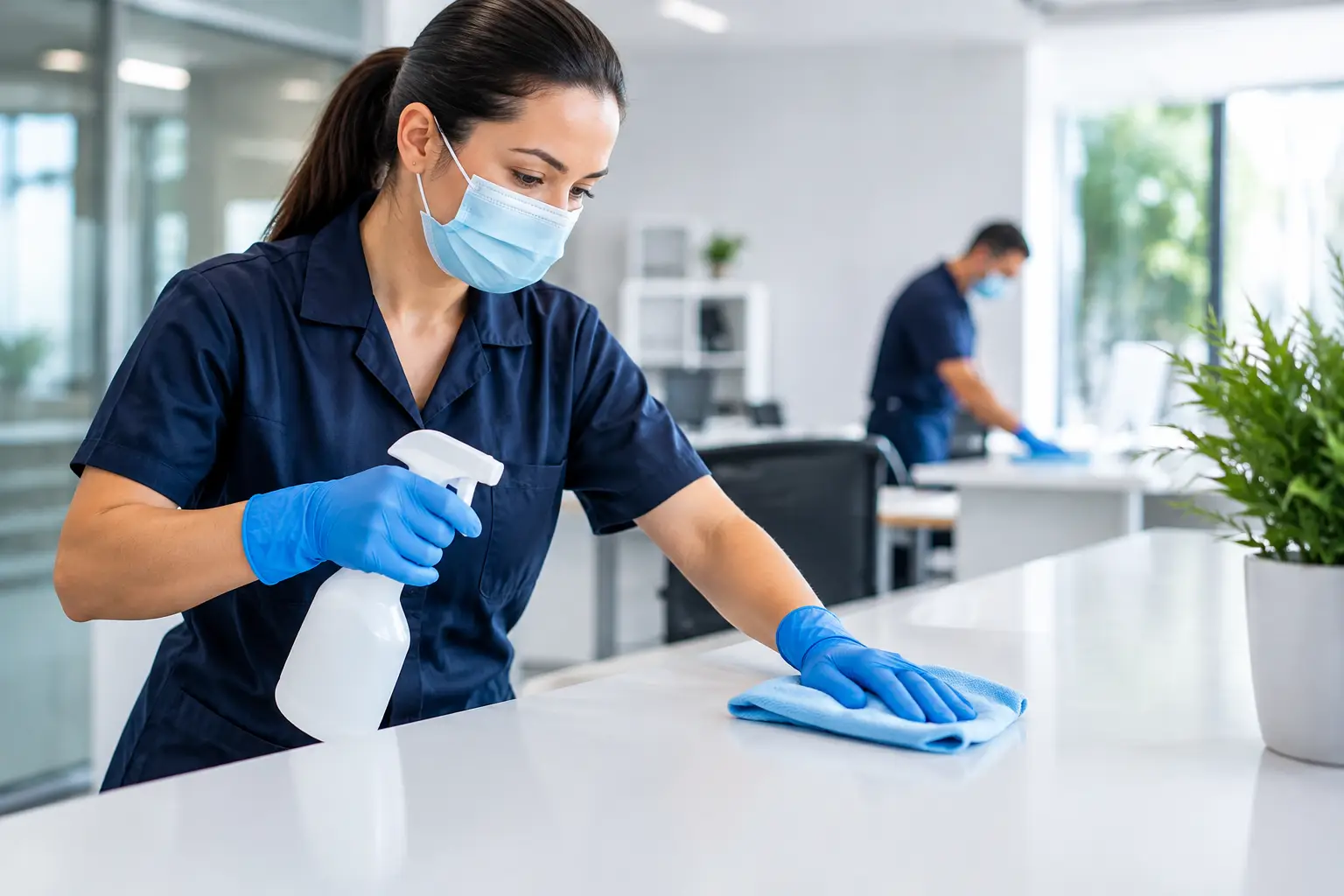
For most routine work, remove debris, apply the appropriate cleaner, wipe or scrub as needed, and allow the surface to dry according to the procedure. When using a sanitation product, follow its label directions exactly, including dilution, application method, and required contact time where applicable.
This distinction also protects budgets. Using a higher-cost solution on a surface that first needed basic soil removal wastes product and labor. The right sequence produces better results with less rework.
Choose Safer Chemistry Without Sacrificing Results
Conventional cleaning programs often accumulate too many products: one for floors, another for glass, another for odor, another for restrooms, plus concentrated chemicals that require mixing and special storage. More containers do not automatically create a better hygiene program. They can create training gaps, incompatible-use risks, and supply shortages.
Hypochlorous acid, commonly called HOCl, offers a practical alternative for many everyday cleaning, deodorizing, and sanitation applications. It is made from simple inputs and can be used in workflows where teams need an effective solution without the harsh smell and handling burden associated with many traditional cleaners.
The trade-off is discipline. HOCl solutions should be produced, stored, and used according to equipment guidance and the intended application. Concentration matters. A facility may need different ppm levels for different cleaning and odor-control tasks, and staff should not assume that more concentration is always better.
On-site generation can give larger operations more control over cost and availability. Microbe Ninja NinjaGen systems create pH-neutral HOCl from water, salt, and a small amount of organic vinegar, with 200, 500, and 1,000 ppm solution options. For facilities that use significant volumes of cleaning solution, producing what is needed on-site can reduce recurring container purchases, simplify replenishment, and limit dependence on conventional chemical supply chains.
That approach will not replace every specialized product in every building. Facilities may still need degreasers, descalers, or task-specific products for difficult soils and regulated applications. The opportunity is to replace unnecessary complexity with a safer, lower-cost everyday foundation.
Make Odor Control Part of Hygiene Control
Fragrance is not odor control. Heavy scents may temporarily cover a problem, but they do not address the residue, moisture, or source creating it. In hospitality, retail, healthcare settings, schools, gyms, agricultural facilities, and offices, persistent odors shape how people judge the entire operation.
When an odor appears, locate the source before increasing product use. Check drains, floor edges, trash receptacles, soft surfaces, mop heads, restroom fixtures, break-room appliances, and areas behind equipment. In agricultural and growing environments, inspect standing water, plant waste, containers, and traffic paths.
Then correct the condition that allows the odor to return. That may mean improving cleaning frequency, changing waste-removal timing, drying tools more thoroughly, repairing a leak, or using a deodorizing solution as part of a defined procedure. The strongest odor program is preventative because it reduces emergency labor and customer-facing problems.
Train for Consistency, Not Just Compliance
A hygiene program is only as reliable as the person carrying it out on a busy afternoon. Training should show staff what good work looks like in the actual space, with the actual tools they will use. Demonstration beats a stack of handouts.
Teach teams why sequence matters, where high-touch surfaces are located, how to avoid cross-contamination between areas, and when to replace cloths, mop water, or applicators. Color coding can help separate restroom tools from food-service or general-area tools. Simple visual cues also reduce errors for multilingual teams and new hires.
Build quick verification into the routine. Supervisors can inspect a small rotating group of areas each day, looking for residue, missed touchpoints, odor, supply availability, and correct tool use. The purpose is not to catch people doing something wrong. It is to find process failures before they become recurring problems.
Measure What Matters
Track a few meaningful indicators: customer complaints, restroom checks, supply consumption, labor hours spent on rework, odor incidents, and completion rates for scheduled tasks. If a facility uses excessive amounts of product but still receives complaints, the issue may be process design rather than effort.
Review the results monthly and adjust. A school may need a stronger focus on classrooms during respiratory-illness season. A restaurant may need extra attention to back-of-house floors after a menu change. A warehouse may need more frequent cleaning during wet weather. Hygiene standards should remain high, while the workflow adapts to actual conditions.
A dependable facility hygiene program is built in the small moments: a clean entry handle, a dry restroom floor, an odor-free break room, and a team that never has to wonder what solution is available. Give people a practical system they can follow, and cleaner operations become easier to sustain every day.
Comments are closed