

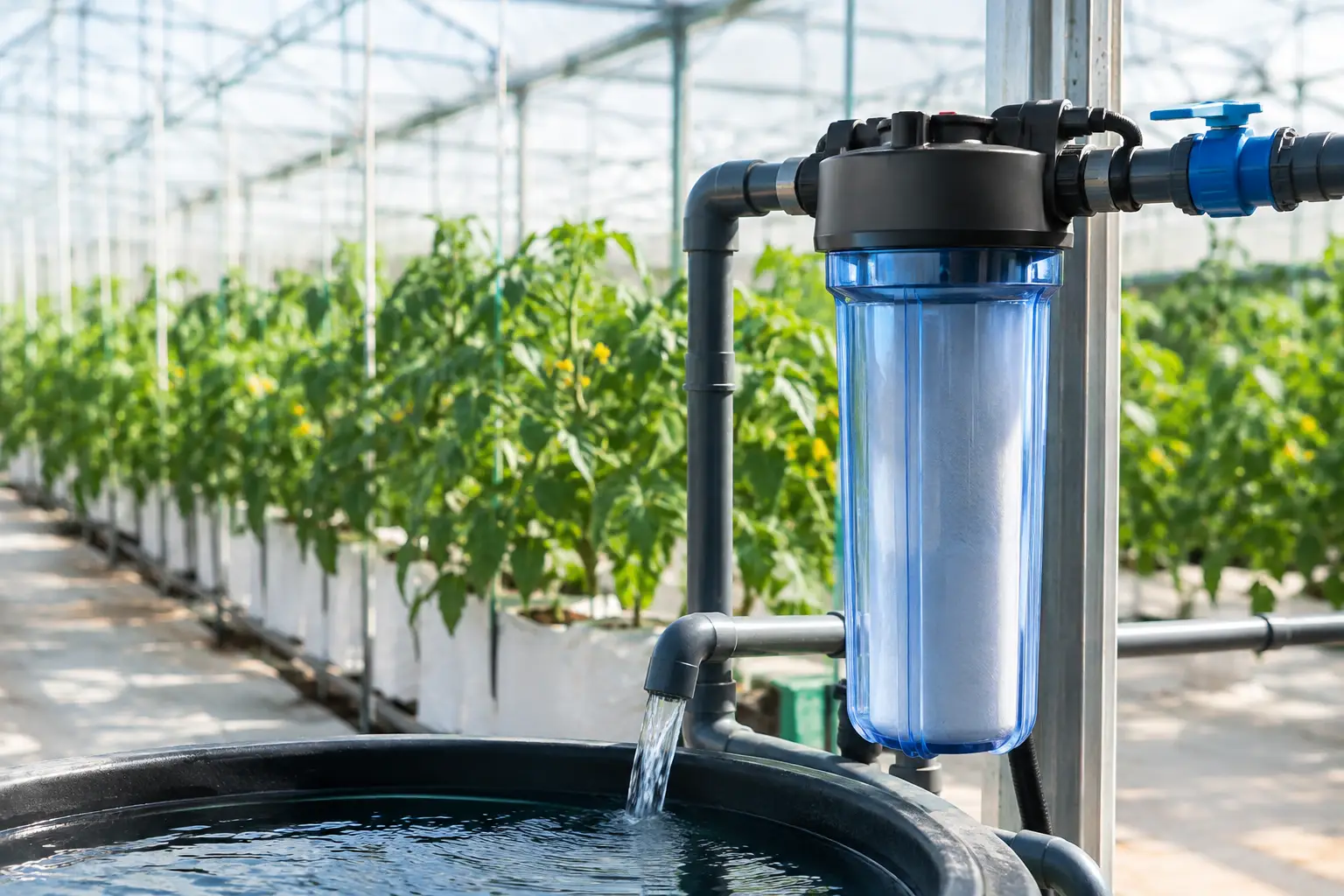
A clogged emitter rarely starts as a dramatic failure. It starts with uneven flow, a little slime inside a line, a filter that needs attention sooner than usual, or a crop row that looks slightly less uniform than the rest. This greenhouse water sanitation guide is built around stopping those small sanitation problems before they become labor-intensive resets, crop-quality concerns, or recurring maintenance costs.
For greenhouse operators, water is not just an input. It moves through reservoirs, injectors, filters, lines, emitters, benches, tools, drains, and sometimes recirculation systems. A practical sanitation program protects that entire path while keeping daily work safer for employees, more sustainable for the operation, and easier to manage than a chemical cabinet full of specialty products.
Start With the Water Path, Not the Product
The right sanitation approach depends on where water enters your operation, where it is stored, and where it travels next. Well water, municipal water, surface water, and captured rainwater each bring different variables, including mineral content, suspended solids, organic matter, and microbial pressure. A solution that works well for a clean municipal supply may not perform the same way with water carrying sediment or high organic load.
Map the system from source to point of use. Include holding tanks, filters, pumps, fertilizer injectors, irrigation mains, drip lines, misting equipment, propagation areas, hand-wash stations, floors, and frequently handled tools. This simple exercise reveals the places where stagnant water, residue, and hard-to-reach surfaces can create recurring sanitation work.
Water quality should be measured, not guessed. Establish a baseline for pH, alkalinity, hardness, dissolved solids, iron, and visible sediment. If you recirculate irrigation water, test more often because nutrient carryover, plant debris, and changing reservoir conditions can affect performance over time.
Why Biofilm Changes the Sanitation Job
Biofilm is a protective layer formed when microorganisms and organic residue settle onto wet surfaces. It can develop inside irrigation lines, storage tanks, filters, emitters, drains, and equipment that stays damp between uses. Once established, it makes routine cleaning less effective because the problem is no longer only in the water moving through the system.
The warning signs are practical: uneven flow, pressure changes, emitters that clog repeatedly, slippery surfaces, persistent odors, or residue returning soon after cleaning. Do not treat these as separate annoyances. They often point to the same root issue – water and surface sanitation are not being managed as one system.
Mechanical cleaning still matters. Filtration removes particles before they settle, flushing moves loose debris out of lines, and physical scrubbing removes buildup from tanks and equipment. A sanitation solution works best as part of that routine, not as a substitute for basic maintenance.
Organic load affects results
Any sanitation chemistry has to contend with what is already in the water. Dirt, algae, fertilizer residue, plant material, and mineral scale can consume active chemistry or shield the surfaces that need attention. That is why a dirty tank should be cleaned before it is treated and why filters need a documented service schedule.
A useful rule is simple: clean first when visible soil is present, then apply the appropriate sanitation step. Skipping the first part may produce a short-lived improvement while leaving the underlying buildup in place.
Build a Routine Around Zones
Trying to treat the entire greenhouse as one sanitation task makes consistency difficult. Divide the facility into zones based on water use and risk. Propagation areas, reservoirs, irrigation equipment, harvest and packing areas, employee touchpoints, and drainage zones all need different frequencies and methods.
High-contact areas may need attention daily, while irrigation lines may follow a scheduled maintenance and flushing program. Reservoirs and storage tanks should be inspected routinely for sediment, film, light exposure, and areas where water does not circulate well. The goal is not to use more product. It is to use the right process at the right interval.
Document the routine in plain language. Record the date, zone, task, concentration, contact time where applicable, operator, and observations such as odor, buildup, clogs, or changes in water clarity. Good records turn sanitation from a reactive chore into an operational control.
Choose Water Sanitation Methods Based on the Job
No single method solves every greenhouse water challenge. Filtration is essential for sediment and particles. UV can be useful in specific water-treatment designs but requires clear water and proper maintenance. Ozone may be considered for some larger systems, though it demands specialized handling and careful process control. Conventional chemical programs can be effective in certain applications but may introduce corrosiveness, storage concerns, fumes, or supply dependence.
Hypochlorous acid, or HOCl, is a practical option for many daily cleaning and sanitation applications because it can be produced from water, salt, and a small amount of organic vinegar. When generated at a pH-neutral range and used according to the intended application, it provides a powerful, low-odor alternative to many harsh conventional cleaners.
For an operation evaluating HOCl, concentration matters. A 200 ppm solution may fit routine cleaning needs, while 500 ppm and 1,000 ppm solutions can support more demanding cleaning and deodorizing tasks. The correct concentration, application method, and contact time depend on the surface, soil level, equipment compatibility, and the operation’s standard procedures. More ppm is not automatically better if it leads to waste, improper use, or avoidable residue concerns.
On-site generation can reduce the need to store and repeatedly reorder packaged cleaning chemicals. It also gives greenhouse teams a more dependable way to make fresh solution as needed, from a compact system for a small grower to commercial-scale equipment for larger facilities.
Protect Irrigation Lines Without Ignoring Compatibility
Irrigation lines are the hidden backbone of greenhouse sanitation. They are also easy to overlook because the problem is out of sight until crops receive uneven water. Create a line-management schedule that includes filter inspection, flushing, emitter checks, pressure monitoring, and end-of-season cleaning.
Before introducing any sanitation solution into irrigation infrastructure, confirm compatibility with your injectors, seals, fittings, filters, fertigation equipment, and crop program. Review manufacturer guidance for equipment and follow crop-specific recommendations. Water chemistry can shift how materials behave, especially in older systems or systems with heavy mineral scale.
Avoid mixing sanitation products unless the manufacturer specifically instructs you to do so. Combining cleaners or adding them to fertilizer concentrates without verification can create unsafe conditions, reduce effectiveness, or damage equipment. Keep mixing, dispensing, and labeling procedures simple enough that every trained employee can follow them correctly.
Do not let reservoirs become holding ponds
A reservoir with poor circulation, light exposure, plant debris, or a dirty lid can undermine the rest of the irrigation program. Keep tanks covered where practical, remove debris promptly, clean surfaces on schedule, and inspect corners, valves, and low-flow areas where residue collects.
If your operation uses recirculated water, treat sanitation as a continuous management process rather than a one-time event. Monitor the system, maintain filtration, and respond quickly when water appearance, odor, flow, or plant uniformity changes.
Make Application Safer and More Consistent
The best sanitation plan is the one your team can execute correctly on a busy production day. Standardize dilution or generation procedures, label spray bottles and applicators, and assign clear responsibilities. A dedicated applicator for benches, tools, drains, and touchpoints reduces guesswork and prevents employees from reaching for an inappropriate product.
Training should explain the reason behind each step. Employees are more likely to flush lines thoroughly, clean a reservoir lid, or replace a filter on time when they understand how those tasks protect crop consistency and reduce rework. Safety still applies to every sanitation product: use the appropriate personal protective equipment, provide ventilation where needed, and follow product instructions and site policies.
Measure What Is Improving
Sanitation is an operating system, not a one-day cleanup. Track simple indicators that show whether the program is working: emitter clog frequency, filter service intervals, labor spent on line repairs, recurring odors, visible buildup, water-test trends, and crop uniformity observations.
If performance does not improve, investigate the whole chain. The issue may be source-water quality, insufficient filtration, stagnant storage, inconsistent flushing, a missed cleaning step, or an application method that does not reach the problem area. Changing products without identifying the failure point usually creates more cost without creating control.
A cleaner water system supports more than tidy infrastructure. It gives growers better visibility into the conditions their crops experience every day, and that is where dependable greenhouse management begins.
Comments are closed