

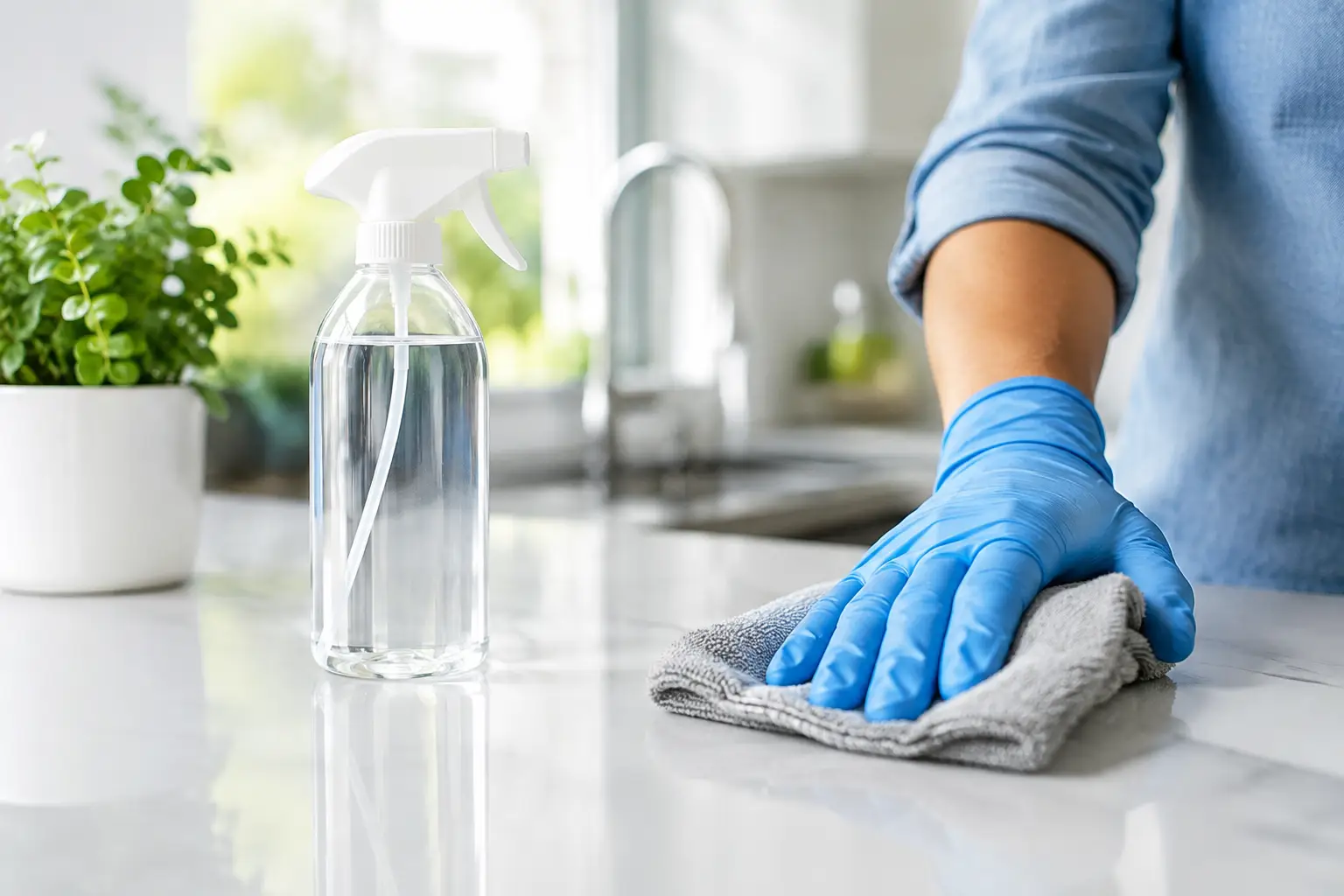
A cleaning program breaks down fast when the supply closet is full of products people do not want to use. Strong odors, harsh residues, complicated dilution instructions, empty spray bottles, and recurring orders all create friction. The practical value of HOCl cleaning benefits is that they address those daily problems with one versatile sanitation solution made from simple inputs.
Hypochlorous acid, or HOCl, is a compound associated with the body’s natural immune response. When generated correctly for cleaning applications, it provides a powerful option for cleaning, sanitation, and odor control without relying on the heavy chemical smell many people associate with conventional cleaners. For homes, that can mean a more comfortable cleaning routine. For facilities, it can mean a simpler, more dependable system that supports cleaner operations at a lower ongoing cost.
What Makes HOCl Different From Conventional Cleaners?
Conventional cleaning closets often contain separate products for floors, restrooms, kitchens, odor issues, high-touch surfaces, and general-purpose jobs. Each may have different handling requirements, dwell times, dilution ratios, compatibility limits, and purchasing schedules. That complexity costs time and invites mistakes.
HOCl offers a more streamlined approach. An on-site generator can create a pH-neutral HOCl solution using water, salt, and a small amount of organic vinegar. Microbe Ninja systems produce solutions at 200, 500, and 1,000 ppm, allowing users to select an output suited to their cleaning, deodorizing, and sanitation workflow.
The result is not magic, and it is not a substitute for removing visible soil. Grease, food residue, dust, and buildup still need to be physically cleaned away. But once surfaces are properly cleaned, HOCl can support the next stage of a thoughtful sanitation routine without introducing a harsh-smelling chemical cloud into the space.
HOCl Cleaning Benefits That Matter Day to Day
The biggest advantage is not simply what is inside the bottle. It is how HOCl changes the way people can run a cleaning program.
A people-conscious option for frequent use
Cleaning should not force homeowners, staff members, students, guests, or customers to tolerate overpowering fumes. HOCl is valued for being non-toxic when produced and used as directed, making it a practical fit for frequent cleaning in occupied environments.
That matters in medical offices, schools, hospitality settings, retail spaces, food-service areas, and homes with children or pets. A people-conscious cleaning solution helps teams stay consistent. When a product is unpleasant to use, people often use too little, skip steps, or reach for an easier but less appropriate option.
As with any cleaning product, users should follow equipment instructions, product directions, and facility procedures. Safety also depends on proper generation, storage, labeling, and application.
Effective sanitation without the lingering chemical odor
A clean-looking room is not always a fresh-smelling room. Restrooms, trash areas, locker rooms, pet spaces, break rooms, food-prep zones, and agricultural facilities can all develop persistent odors. Those odors are often treated with fragrance, which can cover a problem rather than address it.
HOCl is useful because it supports odor control at the source. Instead of layering perfume over unpleasant smells, users can apply a solution designed for cleaning and deodorizing. This creates a more neutral environment, which is especially valuable where fragrance-sensitive employees, customers, patients, or family members spend time.
Fewer products and simpler training
The more chemicals a team uses, the more training it needs. Staff must know which product belongs on which surface, what it should never be mixed with, where it can be stored, and how it should be diluted. Small errors can turn into wasted product, damaged surfaces, or inconsistent outcomes.
A well-designed HOCl program can reduce that clutter. Facilities may still need specialty products for jobs such as heavy degreasing, mineral removal, or drain maintenance. HOCl is not a universal replacement for every chemical in every situation. Its strength is providing a dependable everyday solution for a broad range of cleaning, sanitation, and deodorizing tasks.
For managers, a simpler system means easier onboarding and better accountability. For homeowners, it means less cabinet space devoted to products with confusing labels.
On-demand supply and lower operating costs
Ready-to-use cleaning products seem inexpensive until a facility orders them week after week. The total includes not only the product itself, but also freight, storage, ordering time, stockouts, packaging waste, and the risk of buying too much before a product expires.
On-site HOCl generation changes the supply model. Instead of continually purchasing and storing multiple cases of conventional chemicals, users can produce solution when they need it from readily available inputs. The per-batch cost can be pennies, depending on the system, production volume, and local operating conditions.
This is a major advantage for high-use environments such as hotels, schools, grocery stores, offices, farms, and cleaning service businesses. A compact generator can support a home or small business, while larger systems can supply a commercial operation with consistent volume. The right choice depends on usage, not on a one-size-fits-all promise.
Less packaging and less dependence on chemical deliveries
Every case of prepackaged cleaner brings more plastic, more cardboard, more transportation, and more storage demands. Reducing that flow is a practical sustainability decision, not just a marketing statement.
Producing HOCl on site lets organizations refill reusable bottles and applicators instead of constantly disposing of single-use packaging. It also reduces dependence on conventional chemical supply chains that can be delayed by shipping disruptions or inventory shortages. For a facility manager, reliable access to cleaning solution is operational resilience. For a family, it is the convenience of not running out of a basic household essential at the worst possible time.
Where HOCl Fits Best
HOCl works especially well where regular sanitation and odor control are part of the operating routine. Think high-touch surfaces, restrooms, classrooms, patient-facing areas, guest rooms, checkout counters, offices, kennels, greenhouses, and food-adjacent workspaces.
The right application method matters. A spray bottle may be ideal for a countertop, while a larger facility may need dispensing equipment, refill stations, or purpose-built applicators to cover broad surface areas efficiently. Teams should use clean bottles, clearly label containers, and follow established procedures for contact time and surface compatibility.
Storage also deserves attention. HOCl is best treated as a fresh, purpose-made solution rather than something to make once and forget in a back closet. Light exposure, heat, contamination, container type, and time can affect solution quality. Producing only what your operation can use within the recommended window helps maintain reliable performance.
How to Evaluate an HOCl System
A good buying decision starts with the workflow, not the machine. Estimate how many gallons of solution your household or facility uses each week, where that solution will be applied, who will prepare it, and how it will be stored and dispensed. A home user may prioritize a compact, simple generator. A multi-site business may need higher output, standardized bottles, staff training, and documented procedures.
Ask whether the system provides the concentrations your applications require. Consider the total cost of ownership, including generator capacity, inputs, reusable containers, maintenance, and labor. A low-cost solution is only valuable if it is convenient enough for people to use consistently.
For entrepreneurs, on-site generation can also create a differentiated service model. Sustainable cleaning and deodorizing services are easier to scale when operators can produce their core solution locally rather than build their business around recurring case deliveries.
The most useful cleaning system is the one that turns good intentions into a repeatable routine. HOCl gives homes and organizations a practical way to clean, control odors, reduce waste, and maintain dependable supply – without making harsh chemical exposure the price of a sanitary space.
Comments are closed