

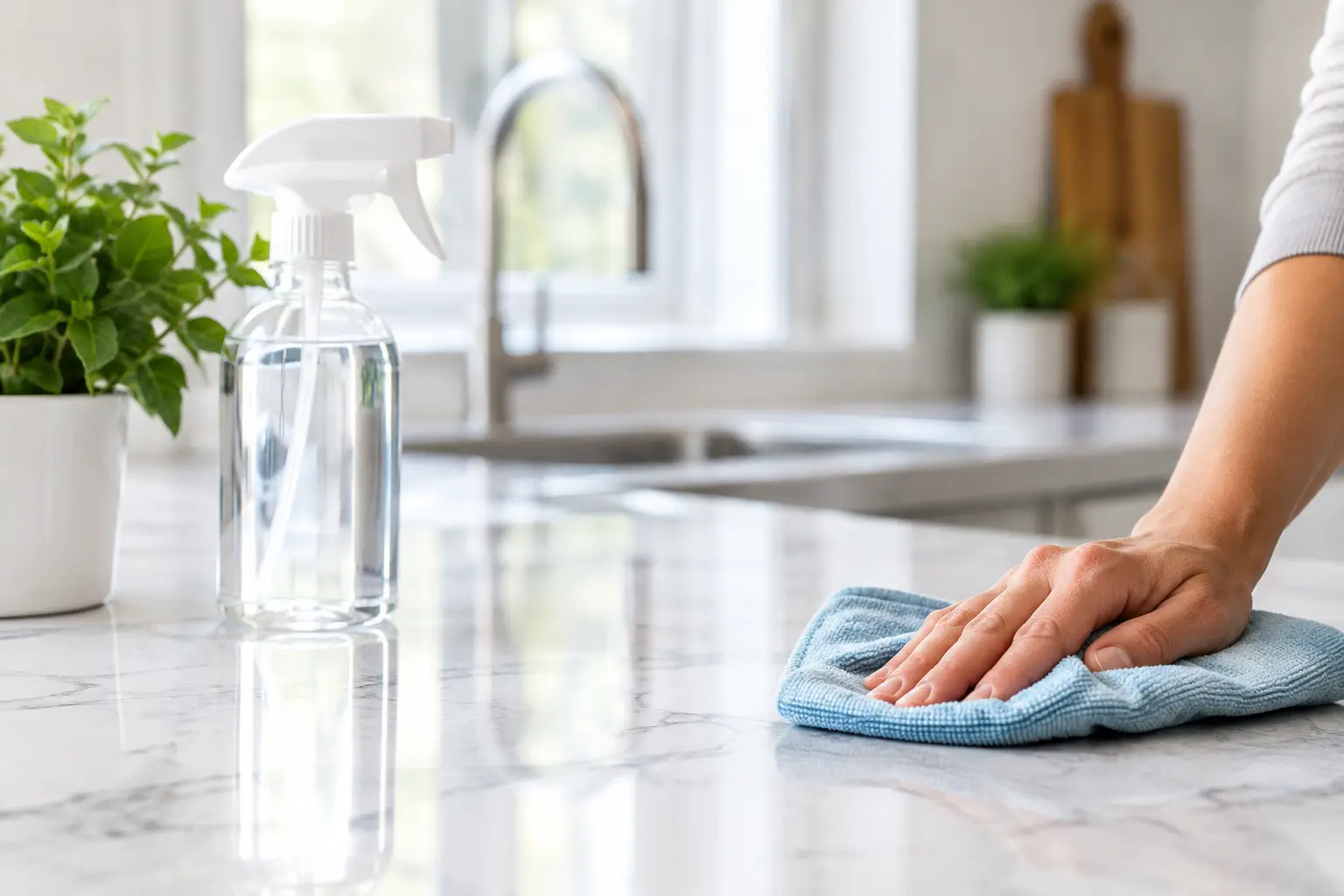
A countertop cleaner has to do more than smell fresh. It has to handle daily food prep, spills, fingerprints, and the steady traffic of a busy kitchen or facility without leaving behind harsh fumes or damaging the surface. So, is HOCl safe for countertops? In most cases, yes: properly made, pH-neutral hypochlorous acid can be a practical, surface-friendly option for routine countertop cleaning and sanitation.
That answer comes with one necessary qualifier. Countertops are not all made from the same material, and no cleaner is a free pass to ignore manufacturer care instructions. The formulation, concentration, dwell time, and condition of the surface all matter. Used correctly, HOCl offers a powerful, low-residue alternative to many conventional chemical cleaners.
Why HOCl works well on hard surfaces
Hypochlorous acid, commonly called HOCl, is a chlorine-based compound that can be produced from water, salt, and a small amount of acid through electrolysis. It is also a compound naturally produced by the human immune system as part of its response to microbes. That does not make every HOCl product identical, but it helps explain why properly formulated HOCl has earned attention as a gentler cleaning and sanitation chemistry.
For countertops, pH is a major part of the story. Highly acidic or highly alkaline cleaners can dull finishes, etch sensitive stone, weaken sealers, or create a sticky residue that attracts more soil. A pH-neutral HOCl solution is designed to avoid those extremes. It can support effective daily sanitation while being easier on people, surfaces, and the indoor environment than many harsh cleaning products.
HOCl is also low odor and does not rely on heavy fragrances to signal that a surface is clean. That matters in kitchens, break rooms, medical offices, schools, restaurants, and homes where strong chemical smells can linger long after the cleaning task is finished.
Is HOCl safe for countertops made of stone, laminate, or wood?
The short answer is that HOCl is generally suitable for many common countertop materials when the solution is pH-neutral and used as directed. Still, the material in front of you should guide the process.
Sealed granite, quartz, and engineered stone
Sealed granite and most quartz or engineered-stone countertops are commonly good candidates for routine HOCl use. A pH-neutral solution is less likely to create the etching concerns associated with acidic cleaners or the finish damage associated with abrasive powders.
The key word is sealed. Natural stone is porous to varying degrees, and worn or damaged sealer can make any surface more vulnerable to staining and moisture absorption. If a granite countertop has not been maintained or its finish is uncertain, test a small inconspicuous area first. Then wipe the surface dry rather than allowing cleaning solution or food spills to sit indefinitely.
Laminate, solid surface, and stainless steel
Laminate and solid-surface countertops are often well suited to HOCl-based cleaning. These materials are common in homes, schools, offices, food-service areas, and health-focused facilities because they are durable and relatively easy to maintain. Spray or apply the solution evenly, allow the appropriate dwell time, and wipe with a clean cloth when needed.
Stainless steel is also typically compatible with pH-neutral HOCl for everyday cleaning and odor control. For a polished finish, wipe in the direction of the grain with a clean microfiber cloth. This simple step helps prevent streaks and removes loosened residue.
Butcher block and unfinished natural materials
Wood requires more caution. Finished and properly sealed butcher block may tolerate light, routine application, but unfinished wood, cracked surfaces, and heavily worn cutting boards can absorb moisture. Saturating those materials is not a good practice with any water-based cleaner.
Apply sparingly, avoid pooling, and wipe dry promptly. If the countertop manufacturer recommends a specific wood-care product or treatment schedule, follow it. HOCl can support a safer cleaning routine, but it cannot replace maintenance that protects the material itself.
The right way to use HOCl on a countertop
HOCl is not a shortcut around basic cleaning mechanics. If a counter has grease, dried food, flour, syrup, or visible grime, remove that soil first. Organic buildup can block a sanitizer from reaching the surface evenly, and no spray performs at its best through a layer of residue.
Start by clearing the counter and wiping away crumbs or spills. For heavier messes, clean with a suitable surface cleaner and a cloth, then apply the HOCl solution to the visibly clean surface. Ensure full coverage instead of misting one small section and assuming the entire counter has been treated.
Next, allow the product to remain wet for the dwell time stated by its manufacturer. This is where many cleaning routines fall short. A cleaner wiped away immediately does not get the same opportunity to work as one left on the surface for its intended contact period.
Afterward, wipe dry if the application instructions call for it, if the countertop is sensitive to standing moisture, or if you are preparing the area for food service. Use a fresh cloth rather than one that has already collected grease or soil from another part of the kitchen.
Concentration and freshness matter
Not every HOCl solution has the same concentration or intended use. HOCl is commonly measured in parts per million, or ppm. A solution made for light daily cleaning may differ from one intended for higher-demand sanitation tasks. The right concentration depends on the operating environment, the surface, the cleaning goal, and the product’s use directions.
For businesses, consistency matters as much as chemistry. A school cafeteria, restaurant prep area, hotel kitchen, or medical office benefits from a repeatable process: clean visible soil, apply the correct solution, allow proper dwell time, and use clean tools. That process helps teams reduce guesswork and avoid reaching for a different harsh chemical for every task.
Freshness also deserves attention. HOCl can lose strength over time, particularly when exposed to heat, sunlight, contamination, or improper storage. Store prepared solution in an appropriate closed container, away from direct light and excessive heat. On-site generation gives homes and facilities a practical way to make fresh solution as needed without relying on a constant stream of prepackaged chemical products.
Microbe Ninja systems are built around that advantage, producing pH-neutral HOCl solutions on demand at 200, 500, and 1,000 ppm for cleaning, deodorizing, and pathogen-control applications. For operators managing multiple rooms or large facilities, that can mean more dependable supply, lower per-batch cost, and fewer harsh products competing for storage space.
A few countertop mistakes to avoid
The biggest mistake is mixing products. Do not combine HOCl with bleach, ammonia, acids, vinegar, or other cleaners. Mixing chemicals can create unwanted reactions and makes it impossible to know what is actually on the surface. Use one product at a time, and rinse or wipe a surface clean before switching products.
Another mistake is assuming a gentle chemistry means careless use is fine. Do not spray directly onto food, electronic controls, unsealed cracks, or areas where liquid can run into appliances. Avoid abrasive scrub pads unless the countertop manufacturer specifically allows them. Often, the damage blamed on a cleaner is actually caused by aggressive scrubbing or neglected surface maintenance.
Finally, do not treat a countertop as clean simply because it looks clean. High-touch kitchen zones benefit from a regular routine, especially after handling raw ingredients, preparing meals, emptying trash, or hosting a busy shift of customers or employees.
A smarter everyday countertop routine
For most households and facilities, HOCl fits best as part of a simple, repeatable routine rather than an occasional emergency cleaner. Clear and clean visible messes, apply fresh pH-neutral HOCl to the surface, give it its stated dwell time, and wipe as appropriate for the material. This approach keeps daily maintenance practical without filling the room with heavy chemical odor.
The best countertop cleaner is one your team or household will use consistently and correctly. Choose a solution that matches the surface, keep it fresh, respect dwell time, and let safer chemistry do the everyday work.
Comments are closed