

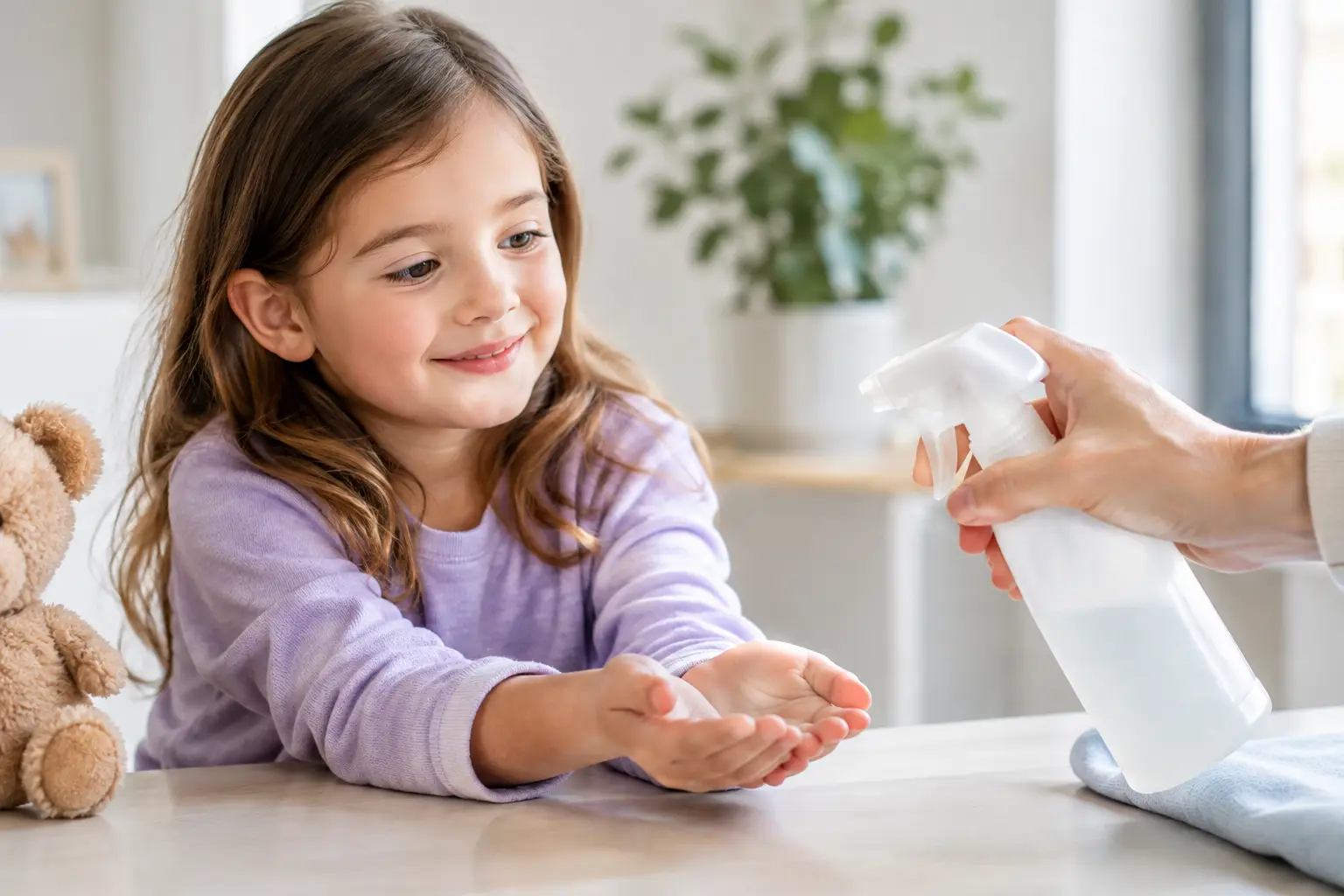
A toddler touches the kitchen floor, then reaches for a snack. A preschooler grabs the table edge after art time. For families, the question behind every cleaning bottle is simple: what will be left on the surfaces children touch most? That is why parents often ask, is hypochlorous acid safe for children?
For normal surface-cleaning use, a properly made, pH-neutral hypochlorous acid solution can be a practical lower-harshness option around children. It is not a free pass to ignore labels, storage, or common sense. But compared with products that leave behind strong fragrances, corrosive ingredients, or heavy chemical residue, HOCl gives families a powerful way to clean and control odors with a simpler chemistry.
What hypochlorous acid is – and why it is different
Hypochlorous acid, usually called HOCl, is a compound made from water, salt, and electricity under controlled conditions. It is also related to a substance the human immune system produces as part of its natural response to microbes. That does not mean every liquid called “HOCl” is automatically suitable for every purpose. Concentration, pH, freshness, and how the solution was produced all matter.
The appeal is straightforward. A well-formulated, pH-neutral HOCl solution can clean hard surfaces and help manage everyday odors without relying on the sharp fumes and complicated ingredient lists common in conventional cleaners. For homes with crawling babies, curious children, pets, or family members sensitive to strong scents, that difference can make daily cleaning easier to live with.
Microbe Ninja systems create on-site HOCl from water, salt, and a small amount of organic vinegar. That gives households and facilities more control over what they use and reduces the need to store a cabinet full of harsh, single-purpose chemical products.
Is hypochlorous acid safe for children? The practical answer
Yes, when it is a properly formulated product used as directed, hypochlorous acid is generally considered a safer choice for cleaning child-contact surfaces than many harsh chemical alternatives. The word “generally” matters. Safety is never just the name of an ingredient. It comes from the finished solution, its concentration, the way it is applied, and the behavior around it.
A pH-neutral HOCl solution designed for everyday cleaning is intended for surfaces, not for drinking, mixing into beverages, or replacing personal-care products unless its specific label says otherwise. Children should not play with any cleaning bottle, even one containing a lower-harshness solution. Put bottles away after use, keep sprayers pointed away from faces, and teach older children that cleaning products are tools, not toys.
For most families, the best use case is refreshingly ordinary: high-touch surfaces, bathroom fixtures, play tables, sealed countertops, doorknobs, trash cans, pet areas, and odor-prone spaces. Clean the visible soil first when needed, then apply the solution according to its directions and allow the stated contact time. A clean surface gives any sanitation step a better chance to work as intended.
Why pH and ppm matter
Not all HOCl solutions perform or feel the same. Two numbers tell much of the story: pH and ppm.
pH describes how acidic or alkaline a solution is. A pH-neutral solution is closer to the balance people expect from a gentler everyday cleaner. This is especially relevant in homes and child-centered facilities, where frequent use on common touchpoints should not mean constant exposure to harsh fumes or irritating residues.
PPM means parts per million, or the concentration of active HOCl in the solution. The right concentration depends on the task. A light deodorizing job does not necessarily need the same strength as a high-traffic restroom, childcare common area, or commercial food-prep environment. More is not automatically better. An appropriate concentration used correctly is the smarter standard.
Microbe Ninja’s NinjaGen equipment produces pH-neutral solutions at 200, 500, and 1,000 ppm, allowing users to match output to real cleaning and odor-control needs. For a household, that can reduce the urge to overbuy specialty products for every room. For a school, clinic, restaurant, or facility team, it supports a more consistent process across large numbers of surfaces.
What “safe around kids” does and does not mean
Parents deserve clear language, not blanket promises. “Safe around children” should mean the product can be used responsibly in spaces where children live, learn, and play. It does not mean a child can handle it unsupervised, spray it into their eyes, ingest it, or use it on every material without checking directions.
Take a few sensible precautions. Avoid spraying directly toward a child’s face or hands. If you are cleaning a toy that goes into a child’s mouth, follow the product directions for that exact use and any required drying or rinsing step. Keep the bottle closed and stored out of reach. If accidental eye contact or swallowing occurs, follow the label’s first-aid instructions and contact a medical professional or Poison Control when appropriate.
The same approach applies to sensitive skin, asthma, allergies, and infants. HOCl is valued because it can avoid the strong perfume and caustic feel associated with many conventional products, but every child is different. When a child has a known medical sensitivity, talk with their pediatrician about the products used most often in their environment.
Choosing and using HOCl responsibly
The strongest safety plan starts before the first spray. Choose a solution from a manufacturer that clearly states its intended use, concentration, and handling directions. Freshness matters because HOCl can lose strength over time, particularly when exposed to heat, sunlight, or improper storage. A bottle left in a hot car or on a bright windowsill may not perform the way it should.
Do not mix HOCl with bleach, ammonia, acids, or other cleaning chemicals. Mixing products is unnecessary and can create avoidable hazards. If a surface was recently treated with another cleaner, wipe away residue before switching products.
For daily use, apply only as much as the surface needs. Wipe counters after food preparation as directed, clean up spills promptly, and let treated areas dry before children return to active play when practical. This is not about making a home sterile. It is about maintaining a cleaner, more comfortable space without turning routine sanitation into a chemical event.
A better fit for homes, schools, and shared spaces
The case for HOCl becomes even stronger in environments where children are not the only people affected. Daycares, classrooms, pediatric waiting rooms, gyms, youth programs, and family restaurants need cleaning routines that staff can repeat throughout the day. They also need solutions that do not create a strong chemical odor each time a table, restroom, or high-touch area is addressed.
On-site generation can help these operations avoid running out of core cleaning supplies or paying for frequent shipments of prepackaged chemicals. Water, salt, and the right equipment can produce ready-to-use solutions where they are needed. That means fewer containers to transport, less plastic waste, and a more dependable process for teams that cannot pause sanitation work because of a supply delay.
There are still trade-offs. Large facilities need training, documented procedures, correct storage, and clear responsibilities. Surface compatibility should always be verified, particularly for natural stone, unsealed wood, delicate finishes, and electronics. HOCl is a modern, practical tool, not a substitute for sound cleaning practices.
The standard parents should expect
Families should not have to choose between effective cleaning and a home that feels comfortable for children. A properly made, pH-neutral HOCl solution offers a compelling middle ground: strong everyday sanitation support, odor control, and a lower-harshness profile that fits real family life.
Use it with the same care you would bring to any household cleaner – read the directions, store it responsibly, and select the right strength for the job. When those basics are in place, hypochlorous acid can help make the spaces children touch every day feel cleaner, fresher, and far less dependent on harsh chemical routines.
Comments are closed