

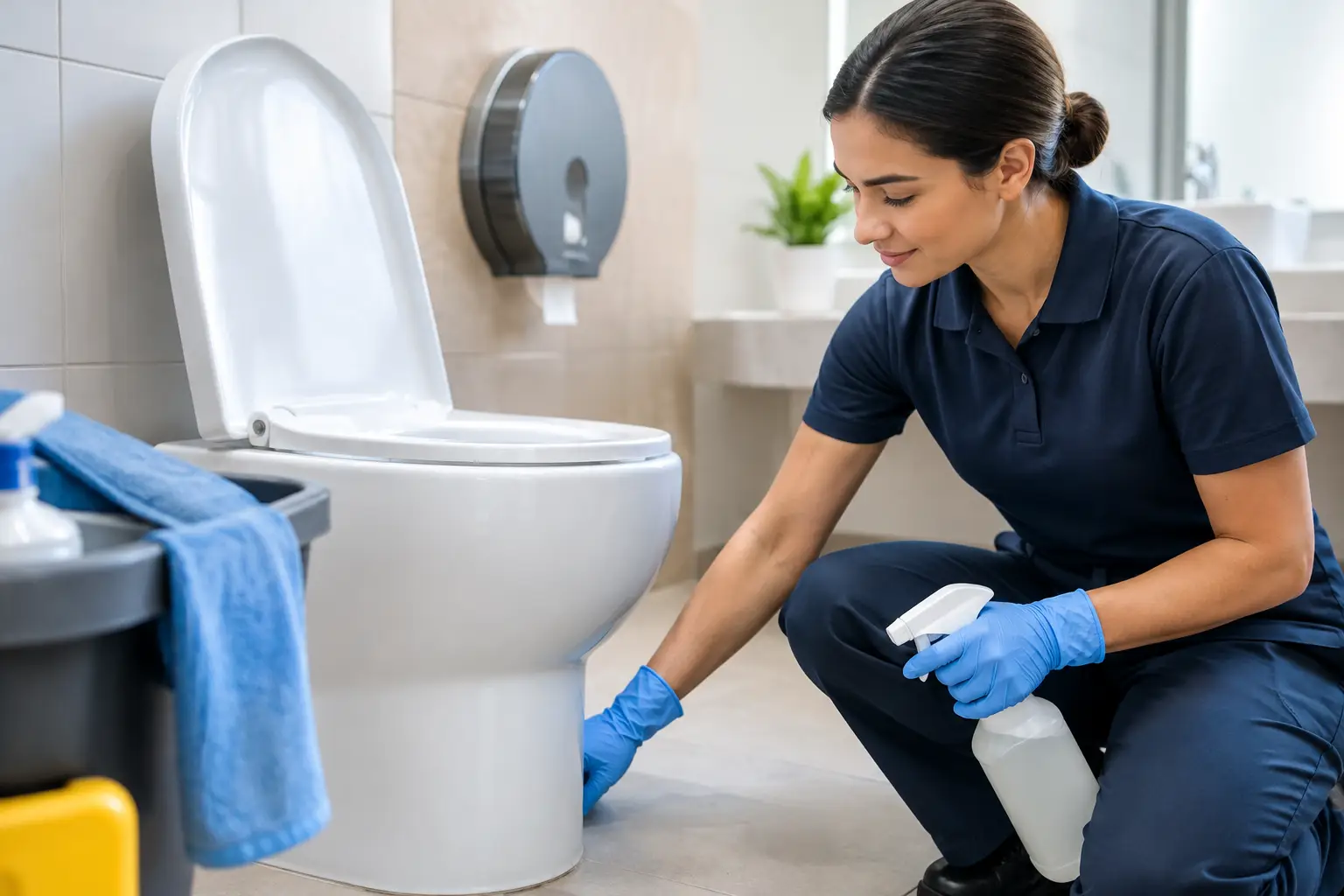
A restroom can look freshly cleaned and still smell like a problem. That usually means the cleaning process has covered the odor instead of removing what is creating it. To reduce restroom cleaning odors reliably, facilities need to address moisture, residue, drains, fixtures, and the cleaning products themselves – not simply add more fragrance.
For schools, medical offices, restaurants, hotels, retail locations, and busy workplaces, restroom odor is more than a housekeeping complaint. It affects how visitors judge the entire operation. For homeowners and small businesses, it can make a clean space feel less healthy and less cared for. The good news is that persistent odors are usually traceable, and they can be managed with a practical routine and the right cleaning chemistry.
Why Restrooms Keep Smelling After Cleaning
Restroom odors typically come from organic residue interacting with moisture and microbial activity. Urine splashback around toilet bases, under urinals, on grout lines, and behind fixtures can become a recurring source. So can residue in drains, floor mats, waste receptacles, mop heads, and cleaning tools that were not washed and dried properly.
The issue is often worse in high-traffic restrooms because small amounts of residue build up between service intervals. A strong perfume may briefly make the room smell different, but fragrance does not remove the material feeding the odor. In some cases, heavily scented cleaners create a second problem: a sharp chemical smell that occupants associate with poor air quality.
Ventilation matters, but it cannot compensate for an incomplete cleaning process. Exhaust fans move air. They do not clean the undersides of fixtures, the grout at the wall-floor junction, or the drain surfaces where odor-causing buildup collects.
Find the Source Before Changing Products
When a restroom smells bad immediately after it has been serviced, start with a short inspection. Walk the room at floor level as well as standing height. Odors often concentrate close to drains, toilet bases, urinal splash zones, and trash cans.
Check for damp floor mats, standing water around fixtures, leaking valves, and water trapped beneath dispensers or behind toilets. In men’s rooms, urinal partitions and the wall and floor areas beside urinals deserve particular attention. In accessible stalls, inspect the floor behind and around the toilet where routine mopping may not reach.
Drains are another frequent culprit. A dry floor drain can allow sewer gases to enter the room, while a neglected drain can hold residue that contributes its own odor. The response depends on the cause. A dry trap may need water added, while a dirty drain needs physical cleaning and a product appropriate for the surface. If plumbing issues are suspected, cleaning alone will not solve them.
Do Not Forget Cleaning Tools
A mop that smells sour can transfer odor-causing residue from one restroom to the next. The same is true of reusable cloths, dirty buckets, and spray bottles that have been left open or refilled without being cleaned. Color-code restroom tools, launder or replace reusable items on schedule, and allow equipment to dry completely between uses.
This is a simple operational change, but it prevents a common cycle: the staff cleans, the room initially looks better, then the odor returns because the tool itself reintroduced residue.
Build a Routine That Removes Residue
The most effective restroom programs separate touch-up service from true source removal. A quick service may empty waste, wipe visible surfaces, restock paper, and spot-clean spills. That work matters, but it should not replace scheduled detail cleaning.
During detail cleaning, focus on the areas that collect residue outside the obvious bowl or basin. Clean the exterior of toilets and urinals, including hinges, bases, flush handles, plumbing connections, and nearby walls. Treat the floor around fixtures as a splash zone rather than a general floor. Work into grout lines, corners, partitions, and the underside of dispensers.
For facilities with constant traffic, the right frequency depends on use. A small office restroom may need one thorough daily service and periodic detail work. A restaurant, school, or transportation facility may need several touch-ups a day plus a nightly deep clean. If odor consistently returns before the next scheduled service, increase attention to the source area rather than relying on a stronger scent.
Use enough contact time for the cleaning solution to work according to its label directions, then wipe or agitate as needed. Spray-and-walk-away routines can leave loosened soil behind. Mechanical action from a brush, cloth, or floor pad is especially useful on textured tile, grout, and fixture bases.
Choose Cleaning Chemistry That Does Not Add to the Problem
Harsh cleaners can create their own unpleasant fumes, leave residues, or require extra ventilation precautions. They may be useful for specific soils when used correctly, but stronger is not automatically better for daily restroom odor control. Mixing conventional chemicals is never a solution and can create dangerous vapors.
Hypochlorous acid, commonly called HOCl, offers a practical alternative for routine cleaning and deodorizing. It is a pH-neutral solution that can be applied to hard, nonporous restroom surfaces to help clean away odor-causing residue without relying on heavy perfumes or harsh chemical smells. It is particularly useful for frequent service in spaces where staff and occupants need a more comfortable cleaning experience.
Microbe Ninja systems produce HOCl on site from water, salt, and a small amount of organic vinegar. That gives homes, facilities, and cleaning service operators a dependable supply of fresh cleaning and deodorizing solution without waiting on recurring shipments of conventional chemicals. Depending on the operation, 200, 500, or 1,000 ppm output can support different cleaning and deodorizing needs.
The trade-off is straightforward: HOCl works best as part of a disciplined process. It is not a substitute for removing heavy scale, repairing leaks, scrubbing neglected grout, or maintaining drains. The strongest results come from pairing the right solution with targeted application, adequate contact time, and physical removal of loosened soil.
Apply Solution Where Odors Actually Start
A restroom deodorizing program should concentrate on surfaces people overlook. Apply cleaning solution to toilet and urinal exteriors, bases, surrounding walls, partition edges, floor seams, and the area behind fixtures. Use a dedicated brush or pad for grout and textured flooring. Wipe high-touch surfaces with clean cloths, then replace cloths before they become saturated with soil.
For drains, follow the building’s maintenance procedures and product instructions. Surface treatment can help with routine cleanliness, but recurring drain odors, slow drainage, or backups require a closer look at the plumbing system. Do not use a cleaning product as a workaround for a mechanical problem.
Waste bins should be emptied before they become a source of odor, then cleaned inside and out. Liners reduce mess, but they do not eliminate residue on the bin itself. If sanitary disposal containers are present, ensure they are serviced on a predictable schedule.
Make Odor Control Measurable
Odor complaints can feel subjective, but the underlying program can be measured. Track where complaints occur, what time of day they appear, and whether they follow a specific traffic pattern or cleaning shift. This helps reveal whether the issue is a missed splash zone, insufficient service frequency, an aging drain trap, or a supply and training problem.
Facility managers should also give staff clear standards for what “clean” means. A checklist should describe the critical zones around each fixture, not just say “clean toilet” or “mop floor.” For multi-site operations, consistent tools, dilution practices, and training reduce variation from one location to another.
A clean restroom should smell neutral, not perfumed and not chemically aggressive. When the odor source is removed, occupants notice the difference without needing to be told why. Start with the overlooked surfaces, keep tools clean, maintain drains and ventilation, and use a safer cleaning approach that supports the work instead of masking it.
Comments are closed